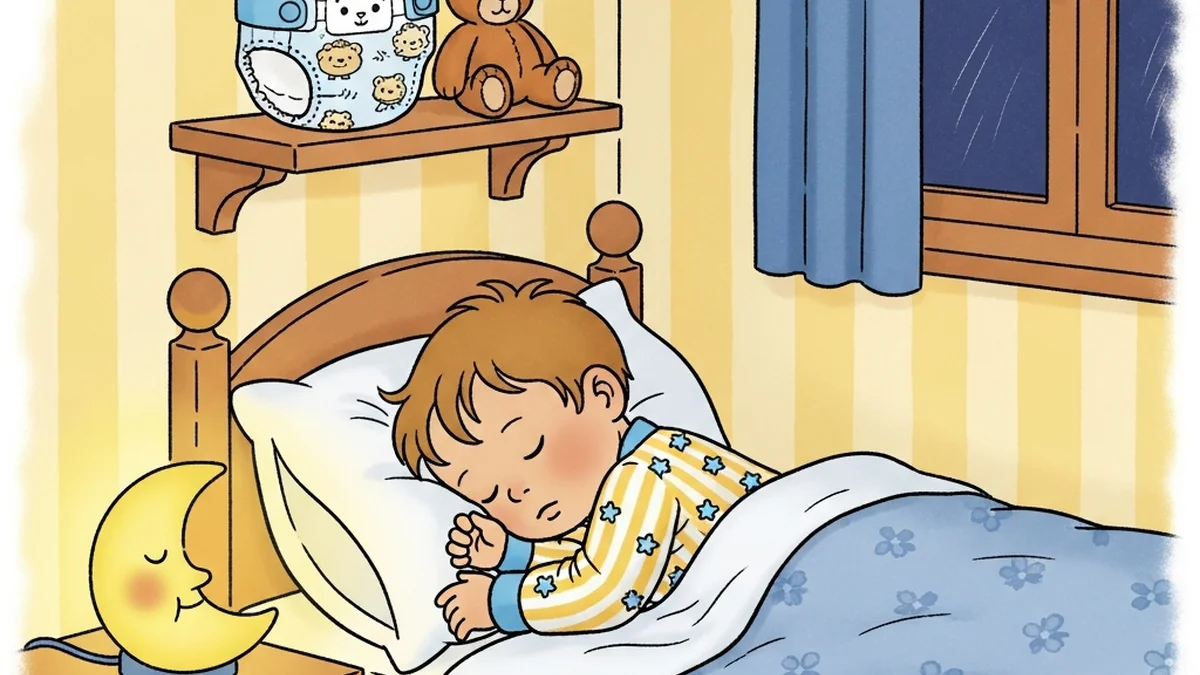
The 6 AM Wake-Up Nobody Asked For
It's 6 AM. You reach into the crib and your hand lands on a cold, soaked onesie. The sheet's wet. The mattress pad's wet. Their pajamas are damp up to the shoulder blades.
And the diaper? Still on. Just completely overwhelmed.
If your toddler pees through their diaper at night, you're not doing anything wrong, and neither are they. Overnight diaper leaks are almost always a gear and fit problem, not a behavior problem. Better still, most of them are fixable in a night or two.
Why Your Toddler's Diaper Leaks at Night
A diaper holds a fixed amount of liquid. When your toddler sleeps 11 or 12 hours and drinks a normal amount during the day, a regular daytime diaper can hit its ceiling by 4 AM. After that, the extra pee has nowhere to go but out the leg holes.
Three things usually cause the flood:
- Not enough absorbency. Daytime diapers aren't built for a 12-hour stretch.
- Poor fit. Gaps at the legs or a loose waistband let pee escape before the diaper can soak it up.
- Tossing and turning. A wiggly sleeper shifts the diaper out of position, and a tummy sleeper pools pee at the front where there's less padding.
Notice what's not on that list: your toddler doing something wrong. Heavy overnight wetting is normal, especially between ages 2 and 4. It's a stage, not a red flag.
How to Stop Overnight Diaper Leaks
Work through these in order. Most families stop the leak with the first two.
1. Size up at night
This is the fastest fix. Go one size larger than your toddler's daytime diaper for nighttime only. A bigger diaper simply holds more liquid.
If your child wears a size 4 during the day, try a size 5 at bedtime. It'll look a little baggy. That's fine. You want the extra capacity, not a runway fit. Keep the regular size for daytime, when a snug fit matters more.
2. Switch to overnight diapers
Overnight diapers (think Huggies OverNites, Pampers Swaddlers Overnights, and most store brands' nighttime lines) hold roughly 20 to 25 percent more than regular diapers. They're built for a 10- to 12-hour stretch.
You can stack this with sizing up. A size-5 overnight diaper on a daytime size-4 kid is the combo that ends most leaks.
3. Add a booster pad
Still soaking through? Drop a diaper booster pad inside the diaper. These are thin, doubler-style inserts that tuck in and catch the overflow, roughly doubling the capacity.
In a pinch, a regular maxi pad does the same job. Lay it toward the front for boys and through the middle for girls.
4. Fix the fit
Pull the leg cuffs out so the ruffle sits outside the leg, not tucked in. Tucked-in cuffs are the number one cause of leg leaks. Run a finger around each leg opening after you fasten the diaper to check the ruffle is out.
The waistband should sit just below the belly button, snug enough that you can slip two fingers under it but no looser. For boys, point everything down before you close the diaper so pee aims into the absorbent core instead of up toward the waistband.
5. Shift fluids earlier in the day
Don't slash total fluids, since a thirsty kid is a cranky kid. Just move more drinks to the morning and early afternoon, then ease off in the last hour or two before bed. We break down the timing in our guide to cutting off drinks before bed.
Protect the Bed While You Sort It Out
Until the leaks stop, set up the bed so a 3 AM accident takes 90 seconds to fix instead of 20 minutes. Layer a waterproof mattress protector, then a fitted sheet, then a second waterproof pad and a second sheet on top. When the top layer gets wet, you peel it off and the dry layer underneath is already made.
Our full waterproof mattress setup walks through the exact layering. It's the single best thing you can do for your own sleep right now.
When It's Not the Diaper
Most overnight leaks come down to capacity and fit. But a sudden change deserves a closer look.
Call your pediatrician if the soaking starts out of nowhere after a stretch of normal nights, or if it shows up with any of these:
- Fever, or pain and crying when they pee
- Cloudy, pink, or strong-smelling urine
- Sudden, intense thirst or drinking much more than usual
- Constipation, since a full bowel presses on the bladder and cuts how much it can hold
A jump in wetting can point to a urinary tract infection, constipation, or, rarely, something that needs a doctor's eyes. Our post on potty training and UTIs covers the warning signs. When in doubt, a quick call settles it.
Is This a Sign They're Ready to Ditch the Night Diaper?
Usually it's the opposite. A diaper that's soaked every single morning means your toddler's body is making more pee overnight than their bladder can hold. That's a normal stage of development, not a readiness cue.
Nighttime dryness is a different process from daytime training. It depends on the bladder growing bigger and on a hormone called vasopressin that tells the body to make less urine during sleep. Both arrive on their own timeline, often months or years after daytime training is done. Plenty of kids stay wet at night until age 5, 6, or even 7, and that's still within the normal range. We get into the why in dry all day but soaked at night.
The real green light to drop the night diaper is a run of dry mornings, not a string of soaked ones. Once you start seeing those, our guide on when to drop the overnight pull-up tells you exactly what to look for.
So if the diaper's leaking every night, the move isn't to push night training. It's to make the diaper work better and give their body time to catch up.
Key Takeaways
- Size up one size at night. It's the single fastest way to stop leaks.
- Use overnight diapers, which hold 20 to 25 percent more, and stack a booster pad if you still leak.
- Pull the leg cuffs out and keep the waistband snug below the belly button to stop side leaks.
- Shift fluids earlier in the day instead of cutting them, and protect the bed with layered waterproof pads.
- A nightly soak is normal between ages 2 and 4. It means their body isn't ready for night training yet, not that something's wrong.
Frequently Asked Questions
Should I size up my toddler's diaper just at night?
Yes. Go one size larger than the daytime diaper for bedtime only, and keep the regular size for daytime when a snug fit prevents leaks during active play. The bigger nighttime diaper simply holds more for the long stretch.
Are overnight diapers actually worth the extra money?
For a heavy nighttime wetter, usually yes. Overnight diapers hold about 20 to 25 percent more than standard ones and are made for 10 to 12 hours. If sizing up alone fixes the leak, you may not need them, but they're the next step if it doesn't.
My toddler soaks through every night. Is something wrong?
Almost always no. Heavy overnight wetting is normal through the toddler and preschool years because the bladder is still small and the body hasn't ramped up the hormone that slows urine at night. Call your pediatrician only if the soaking is new, or comes with fever, pain, cloudy urine, or sudden thirst.
Will cutting off water before bed stop the leaks?
It helps a little, but it won't fix a capacity problem on its own. Shift more fluids to earlier in the day and ease off in the last hour before bed, without leaving your child thirsty. The diaper changes above do most of the heavy lifting.
Can constipation cause nighttime diaper leaks?
Yes. A backed-up bowel presses on the bladder and shrinks how much it can hold, which can trigger more accidents day and night. If your toddler is constipated and leaking, clearing up the constipation often improves both.