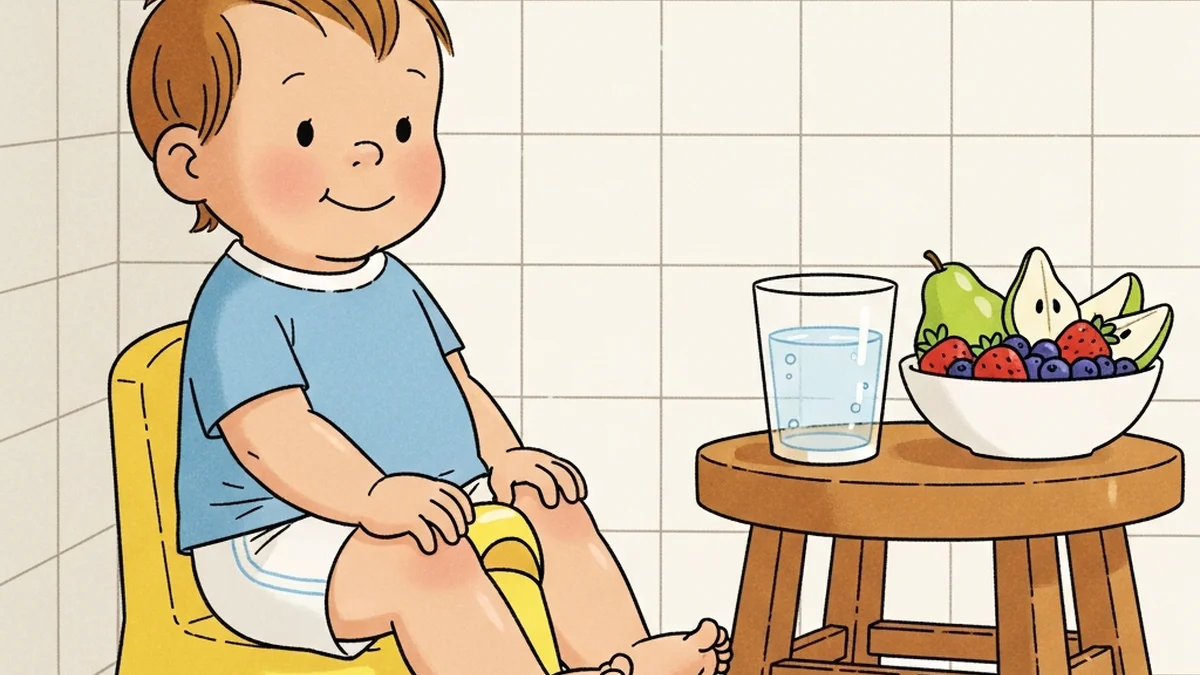
It's 11 AM at the playground. Your 2-year-old is doing the pee dance, that little hop-and-wiggle every parent learns to read in their sleep. You ask if she needs the potty, but she says no and keeps climbing. Forty minutes later she finally goes, and three days after that, she's crying that it hurts.
That exact stretch, where toddlers learn they can hold it, is when urinary tract infections spike. Potty training and UTIs are linked, and it's not because you did anything wrong. It's because the new skill your child is practicing, holding their bladder, is the same habit that gives bacteria a place to settle.
Here's what's actually going on, the symptoms that are easy to miss, and how to lower the risk without turning potty training into a fight.
Why Potty Training and UTIs Show Up Together
UTIs peak right around the time kids are toilet training. About 8 in 100 girls and 2 in 100 boys get one before age 5, and the toddler years are the busiest stretch.
The reason has a name doctors use: voiding dysfunction. In plain terms, your kid figures out they can ignore the urge to pee, so they do. They're mid-game and don't want to stop. Urine sits in the bladder longer than it should, and a bladder that rarely empties all the way is a comfortable spot for bacteria to grow.
Girls get them more often. A girl's urethra is shorter and sits closer to the bottom, so bacteria have a shorter trip to make. That's anatomy, not anything you missed.
Boys can get them too, especially in the first year of life. After age 1, the odds tilt heavily toward girls.
The Constipation Connection Nobody Warns You About
This one surprises almost every parent. Constipated kids are roughly 7 times more likely to get a UTI.
The plumbing explains it. The rectum sits right behind the bladder. A backed-up rectum presses on the bladder so it can't empty fully, and it nudges bacteria closer to where they shouldn't be. The more constipated the child, the worse the infections tend to get.
This matters during potty training because withholding poop is incredibly common right when you're working on pee. If your toddler is holding bowel movements, you're not just fighting a poop battle. You're raising UTI risk at the same time. We go deep on the fix in breaking the constipation cycle and why poop withholding happens.
UTI Symptoms in a Potty Training Toddler
This is the tricky part. A 2-year-old can't say "it burns when I pee." The signs are usually quieter than you'd expect, and some look like ordinary toddler moods.
Watch for:
- Pain or crying while peeing. Sometimes only a few drops come out at a time.
- Suddenly wetting again after being dry. A child who was reliably dry and starts having daytime accidents may have an infection, not a behavior problem.
- Going constantly, or racing to the potty. Urgency and frequency are classic signs.
- Cloudy, dark, or strong-smelling pee.
- Fever with no obvious cause. In younger toddlers this is sometimes the only sign.
- Fussiness, low appetite, belly or low back pain, or just seeming off.
- Holding even harder than before. If peeing hurts, kids avoid it, which makes everything worse.
One trap worth naming out loud: a sudden run of accidents after weeks of dry days looks exactly like a regression. Before you treat it as a setback or a behavior issue, rule out a UTI. From the outside, an infection and a regression can look identical.
When to Call the Pediatrician
A UTI will not clear up on its own. It needs antibiotics, and a quick urine test is the only way to know for sure. This is the point where we stop coaching and tell you to pick up the phone.
Call promptly if you notice:
- Pain or crying with peeing
- An unexplained fever, especially with shaking chills or back pain
- Cloudy or foul-smelling urine along with fussiness
- A child who was dry and is suddenly soaking through again
Don't wait it out. Untreated infections can move up to the kidneys, and that's a much bigger problem than a few wet days. The reassuring part: caught early, a UTI is simple to treat, and most kids feel better within a day or two of starting antibiotics.
Potty Pal gives coaching, not medical care. When peeing hurts or a fever shows up, your pediatrician is the right call, every single time.
How to Lower the Risk Without Stressing Potty Training
You don't have to choose between training your toddler and protecting their bladder. The same handful of habits do both.
Build in potty trips every 2 hours
Don't wait for the pee dance. Offer the potty every 2 hours, whether or not they say they need to go. Timed trips beat waiting for a toddler to self-report, because self-reporting is the exact skill they haven't mastered yet.
Coach a full empty, not a quick escape
Half the problem is the rushed pee. Kids dribble a little and bolt back to playing with a half-full bladder. Have them stay until they're actually done, lean slightly forward, and try once more after a few seconds. A calm "let's count slowly to ten and try one more time" works far better than nagging.
Push fluids during the day
More water means more flushing through the system. Offer water with every meal and a cup or two between meals. Ease off in the hour before bed so you're not trading a UTI worry for a bedwetting one. Water beats juice for this job.
Treat constipation like part of potty training
Soft, regular poops lower UTI risk directly. Fiber, water, and active play all help things move. If your child poops fewer than 3 times a week or strains hard every time, bring it up with your pediatrician rather than waiting.
Wipe front to back, and skip the bubble bath
For girls, wiping front to back keeps bacteria away from the urethra, especially after a poop. Strong soaps and bubble baths can irritate the area, so plain water baths are a safe default while you're in the thick of training.
Loosen the clothes and drop the pressure
Tight clothes and damp underwear trap bacteria against the skin, so change wet undies fast. And don't punish accidents. Punishment teaches kids to hold longer so they don't get in trouble, which is the precise behavior that causes UTIs in the first place. A relaxed approach to building a potty routine protects the bladder better than a strict one ever will.
A Quick Word of Reassurance
Most kids go through potty training and never get a single UTI. If yours does, it doesn't mean you pushed too hard or missed a sign. It's common, it's treatable, and one infection now doesn't predict a lifetime of them.
What helps most isn't doing everything perfectly. It's catching the holding habit early and gently loosening it. That's the whole game.
Key Takeaways
- UTIs peak around potty training because kids learn to hold their pee. About 8 in 100 girls and 2 in 100 boys get one before age 5.
- Constipated kids are roughly 7 times more likely to get a UTI, so treat withholding poop as part of training, not a separate issue.
- Sudden accidents after weeks of dry days can be an infection, not a regression. Rule out a UTI before treating it as behavior.
- Offer the potty every 2 hours and coach a full empty instead of a rushed dribble.
- Pain with peeing or an unexplained fever means call the pediatrician. UTIs need antibiotics and won't clear on their own.
Frequently Asked Questions
Can potty training itself cause a UTI?
Not directly. Potty training doesn't cause infections, but the holding habit that comes with it raises the risk. When a toddler ignores the urge to pee so they can keep playing, urine sits in the bladder longer and bacteria get a foothold. Timed potty trips every 2 hours are the simplest way to break that pattern.
My toddler was dry for weeks and is suddenly having accidents. Is it a UTI or regression?
It can be either, and they look identical from the outside. A sudden return of daytime wetting in a previously dry child is one of the most common signs of a UTI in toddlers. Before you treat it as a behavior issue, get a urine test. If it comes back clear, then you can work the underlying cause from the behavior side.
Are girls really more likely to get UTIs during potty training?
Yes. A girl's urethra is shorter and sits closer to the anus, so bacteria reach the bladder more easily. About 8 in 100 girls get a UTI before age 5, compared with roughly 2 in 100 boys. Front-to-back wiping and fully emptying the bladder help the most.
How much water should my toddler drink to prevent UTIs?
There's no single magic number, but water with every meal plus a cup or two between meals keeps things flushing. Ease off in the hour before bed so you're not creating a nighttime wetting problem instead. Plain water works better than juice for this.
Should I pause potty training if my child gets a UTI?
Usually no. Treat the infection with your pediatrician, keep offering the potty on a relaxed schedule, and drop any pressure or punishment. Pushing harder while it hurts to pee will backfire fast. Once the antibiotics kick in and peeing stops hurting, most kids get right back on track within a few days.