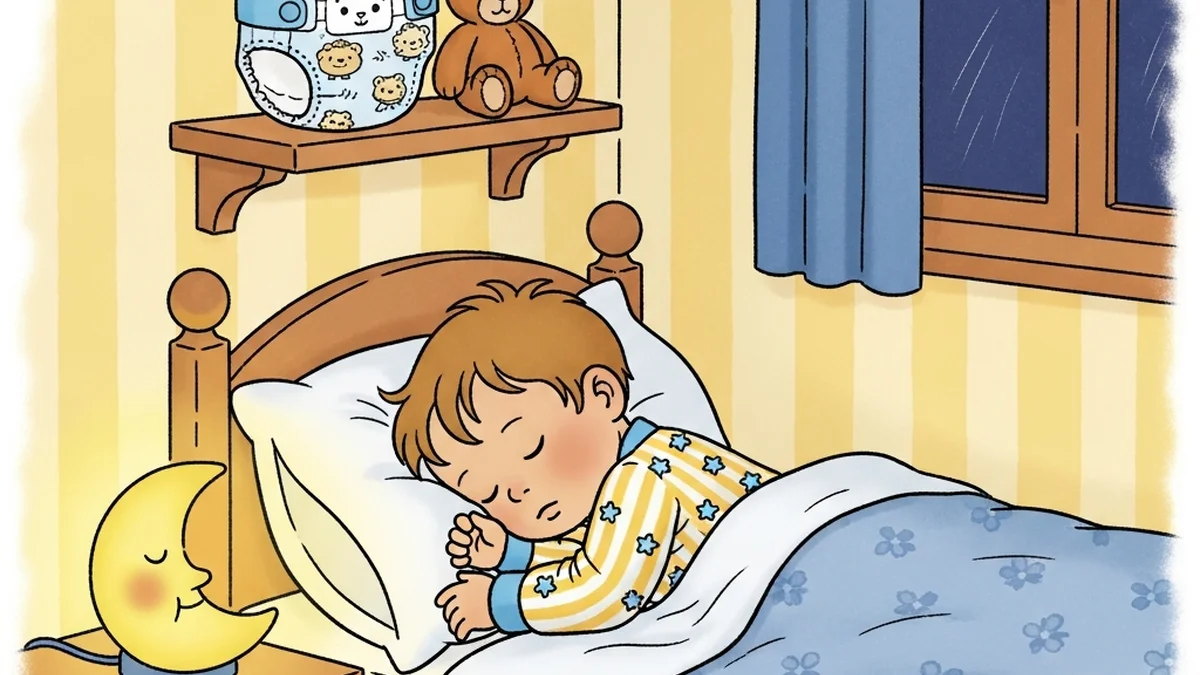
You pull off the overnight pull-up and it's dry. Again. That's three mornings in a row now, and you're staring at the half-empty box wondering: is it time? Dropping the overnight pull-up feels like a big move, and honestly, it is. But the good news is your child's body is already telling you the answer.
Nighttime dryness works differently than daytime potty training. It's not about willpower or reminders. It's biology. Your child's brain needs to produce enough anti-diuretic hormone (ADH) to slow urine production during sleep, and their bladder needs to grow large enough to hold a full night's worth. That process runs on its own clock, typically between ages 3 and 5, though some kids aren't ready until 6 or 7.
5 Signs Your Child Is Ready to Drop Overnight Pull-Ups
These are the signals that your child's body has caught up. Look for a pattern, not a single lucky morning.
1. Dry Pull-Ups for 5 to 7 Mornings Straight
This is the biggest one. If your child is waking up dry most mornings for a full week, their body is doing the work on its own. A couple of damp mornings mixed in? Still normal. But a solid stretch of dry pull-ups means the ADH hormone is kicking in and the bladder is holding through the night.
2. They Wake Up to Pee
Some kids start waking up in the middle of the night to use the bathroom before you even suggest it. This is a great sign. It means their brain is registering the "full bladder" signal even during sleep.
3. They've Been Day-Trained for at Least 6 Months
Night training shouldn't start too close to daytime training. If your child has been reliably dry during the day for six months or more, their body has had time to mature. Rushing night training before daytime habits are solid usually backfires.
4. They're Asking to Skip the Pull-Up
Sometimes kids take the lead. If your child says they don't want to wear a pull-up anymore, that confidence often comes with readiness. Trust it, try it, and see what happens.
5. They're Between Ages 3 and 5
Most children develop overnight bladder control somewhere in this range. Some are ready at 3. Others need until 5 or later. Both are completely normal. Age alone isn't the deciding factor, but when you see it paired with dry mornings, you've got a green light.
How to Make the Switch: A Step-by-Step Plan
Ready to go for it? Here's a plan that sets your child up for success without turning it into a stressful ordeal.
Step 1: Set Up the Bed
Before you even mention ditching the pull-up, protect the mattress. Layer a waterproof mattress protector under the fitted sheet. Some parents add a second waterproof pad on top of the sheet for fast middle-of-the-night swaps. Keep extra pajamas and a towel in the room so you're not fumbling through the house at 2 AM.
Step 2: Adjust the Bedtime Routine
The 90-minute rule: Cut back on big drinks about 90 minutes before bed. Water is fine in small sips, but skip the full glass of milk right at bedtime.
Double void: Have your child use the potty once when the bedtime routine starts, then again right before they get into bed. Two trips, 15 to 20 minutes apart. This empties the bladder as much as possible.
Step 3: Make It Exciting, Not Scary
Frame this as a milestone, not a test. "You've been waking up dry! Let's try underwear tonight and see how it goes." Keep it light. If they're nervous, let them pick out special nighttime underwear.
Step 4: Handle Accidents Without Drama
Accidents will happen. Maybe not the first night, maybe the fifth. When they do, keep your reaction calm and quick. Change the sheets, swap the pajamas, and say something like "No big deal. Your body is still learning." That's it. No lectures, no disappointment. This is about biology, not behavior.
When to Go Back to Pull-Ups (and That's OK)
If your child is wetting the bed most nights after two weeks of trying, they're not ready yet. That's not failure. Their body just needs more time to produce enough ADH overnight.
Go back to pull-ups without any shame. Say: "We'll try again in a few months. Your body is still growing." Most kids who aren't ready at 3 will get there by 4 or 5. If nighttime wetting continues past age 7, that's a good time to check in with your pediatrician to rule out anything medical.
What NOT to Do
- Don't restrict all fluids after dinner. Kids need hydration. Just avoid large amounts right before bed.
- Don't wake them up every two hours. A single "dream pee" 2 to 3 hours after bedtime can help some kids, but setting multiple alarms disrupts sleep for everyone.
- Don't compare them to siblings or friends. Nighttime bladder control is largely genetic. If you or your partner were late to dry nights, your child probably will be too.
- Don't punish wet nights. They can't control it. Shaming a child for bedwetting creates anxiety and actually makes the problem worse.
Key Takeaways
- Wait for 5 to 7 consecutive dry mornings before dropping the overnight pull-up.
- Nighttime dryness is driven by hormones and bladder growth, not willpower or training.
- Protect the mattress, limit big drinks 90 minutes before bed, and use a double-void bedtime routine.
- If accidents happen most nights after two weeks, go back to pull-ups and try again later without shame.
- Most kids achieve overnight dryness between ages 3 and 5, but some need until 6 or 7. All normal.
Frequently Asked Questions
How many dry mornings should I see before ditching the pull-up?
Look for at least 5 to 7 dry mornings in a row. A single dry morning here and there isn't enough. You want a consistent pattern showing that your child's body is reliably holding urine through the entire night before making the switch.
Is it true that pull-ups can delay nighttime dryness?
There's some debate on this. Some experts believe that pull-ups can reduce a child's awareness of wetness, making the brain slower to connect the "full bladder" signal during sleep. Others say it makes no difference because overnight dryness is hormonally driven. If your child is showing readiness signs, trying underwear is a reasonable next step.
My child is 5 and still wears overnight pull-ups. Should I be worried?
Not yet. About 15% of 5-year-olds still wet the bed at night, and most outgrow it without any treatment. Pediatricians generally don't consider nighttime wetting a concern until after age 7. If your child is otherwise healthy and dry during the day, their body just needs more time.
Should I do a "dream pee" to help my child stay dry?
A dream pee (waking your child to use the bathroom 2 to 3 hours after falling asleep) works well for some families as a short-term bridge. Keep the lights dim, don't fully wake them, and guide them to the bathroom. The goal isn't to do this forever. It's to help their body learn the pattern of waking when the bladder is full.
What if my child was dry at night and then started wetting again?
That's regression, and it's common. Stress, schedule changes, illness, or a new sibling can all trigger it. Go back to pull-ups temporarily, address the underlying cause, and know that kids who were dry before will almost always get back there. Check out our guide to potty training regression for more on this.