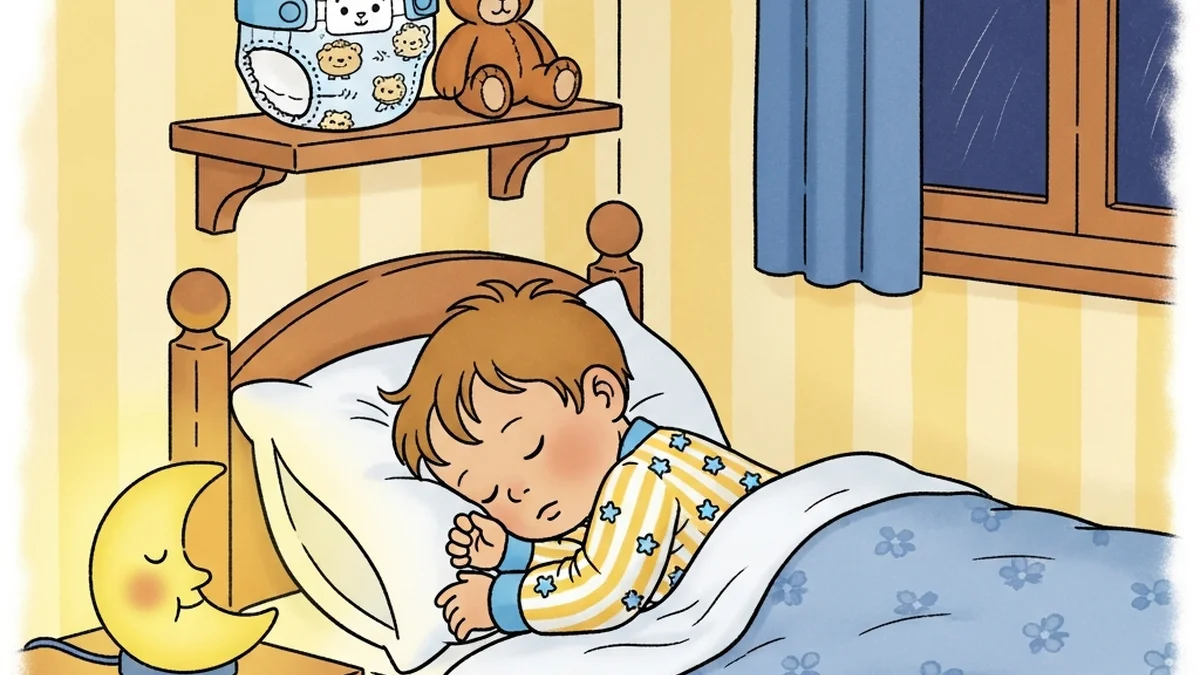
It's 7:45 PM. Your toddler just chugged half a sippy cup, you tucked them in twenty minutes ago, and now you're doing the math on whether the bed will be wet at 3 AM. Every parent who's tried potty training and bedtime drinks together has had this exact moment of panic.
The short answer is yes, you can taper drinks before bed, but how you do it matters more than the cutoff time on the clock. A blanket "no water after dinner" rule can leave a thirsty kid miserable and barely moves the needle on overnight accidents. A smarter front-loaded hydration plan does both jobs at once.
Why Bedtime Drinks Aren't Really the Villain
Most bedwetting through about age 6 has very little to do with the last cup of water your child sipped. Two bigger forces are at work. A toddler bladder is still small and stretchy, and the brain hasn't finished making enough of the nighttime hormone (called ADH) that tells the kidneys to slow urine production while they sleep.
So a 3-year-old who drinks nothing after 5 PM can still wake up soaked. And a 5-year-old who sips a half cup of water at bedtime might wake up dry. The fluid timing helps. It just isn't the whole story.
That said, "helps" isn't nothing. Lowering the volume in the last hour or two cuts how much your child's body has to process overnight. When dryness is on a knife edge, that buffer is what keeps the sheets clean.
The Front-Loaded Hydration Rule
The best fluid strategy for night training isn't restriction. It's redistribution. You want most of the day's water in their body before dinner, not after.
Pediatric sleep specialists and the American Academy of Pediatrics suggest a rough split that looks like this:
- Morning to early afternoon: 40 percent of daily fluids. Push water at breakfast, mid-morning, and lunch.
- Mid-afternoon to dinner: 40 percent. A big drink with dinner counts.
- After dinner to bedtime: 20 percent or less. Small sips only.
If your toddler drinks roughly five cups of fluid across the day, that means about a cup or less in the final two hours before lights out. Practical, not punishing.
What "Cut Off" Should Actually Mean
Hard cutoffs at dinnertime are why so many parents end up in a standoff with a thirsty kid at 7 PM. Try a soft taper instead.
The 90-minute taper
Aim to stop pouring full drinks about 90 minutes before bedtime. So if bed is at 8:00, the last real cup is around 6:30. Between 6:30 and bedtime, they can have small sips if they ask, but no chugging a cup right before brushing teeth.
Two pees, not one
Have your child pee about 30 minutes before bed, finish the bedtime routine, then pee again right before lights out. Two trips to the bathroom on either side of the story empties the bladder twice and is one of the single highest-payoff habits for dry nights. It costs you 90 seconds.
Sips for safety, not for entertainment
If your kid is genuinely thirsty, give them water. Dehydration is a bigger problem than a wet bed. The trick is calling out the difference between "I need water" and "I want to stay up." A few sips solves real thirst. A whole cup is stalling.
Drinks That Make Bedwetting Worse
Some drinks punch above their weight at night, and that's where a smart cutoff really helps. Bladder-irritating drinks tell the kidneys to keep working even after lights out.
- Caffeine: Soda, iced tea, chocolate milk in the evening. Caffeine is a mild diuretic and can keep urine production up for hours.
- Citrus juices: Orange, lemonade, and pineapple juice irritate some kids' bladders, even after the cup is empty.
- Sugary drinks: Sweetened beverages pull more water into the bladder and prompt more peeing.
- Cow's milk for some kids: A few children react to large evening servings of dairy with extra nighttime urination. If you suspect it, try cutting back the bedtime cup for two weeks and watch.
Water is almost always the right last drink. Boring. Effective.
The Salty Dinner Trap
This one surprises parents. What your child eats at dinner shapes how thirsty they are at bedtime. A meal of pizza, deli meat, packaged mac and cheese, or chicken nuggets sends a kid to the kitchen begging for water all evening.
You don't have to overhaul dinner. Just notice the pattern. On heavy salt nights, the "I'm so thirsty" routine at 8 PM isn't manipulation, it's a body asking for help. Move dinner 30 minutes earlier on those nights so the big drink lands well before bed.
The Pre-Bed Pee Strategy That Actually Works
Most parents do one bedtime pee. The kids who get dry fastest usually do two, with a small gap between them. The second pee catches the trickle that wasn't ready the first time.
Some families also use a "dream pee" (sometimes called a lift) about 90 minutes after the child falls asleep. You carry a half-asleep toddler to the bathroom, prop them on the potty, and they go on autopilot. It can keep the bed dry, but it doesn't actually teach the brain to wake up to a full bladder. Treat it like a tool for tonight, not a long-term solution. Pediatric urologists are mixed on whether it speeds true night training or delays it.
If you've already covered the basics and are still doing 2 AM sheet changes, our double-layer mattress setup guide can save your sanity while their body catches up.
What to Do When You've Tried Everything
If you're front-loading water, doing the double pee, skipping the soda, and your child is still soaking the bed several nights a week past age 5 or 6, you're past the limit of what fluid timing can fix.
At that point, the conversation belongs with your pediatrician. They'll want to rule out a urinary tract infection, constipation pressing on the bladder, or a slow-developing ADH response. None of these are emergencies, and all of them have answers. We talk through the timeline of when to call in our guide to bedwetting at age 5.
Pain with peeing, sudden bedwetting after months of dryness, or constant daytime dribbling alongside the wet nights all earn a same-week call. A UTI can announce itself as a sudden return to nighttime accidents.
What This Looks Like on a Real Night
Here's a sample evening for a 4-year-old in night training, dinner at 6:00 PM, bed at 8:00 PM:
- 6:00: Dinner with a full cup of water (the last big drink of the day).
- 6:30 to 7:30: Small sips if thirsty. No fresh cups poured.
- 7:30: Pee, then start bath and pajamas.
- 7:55: Final pee, even if they swear they don't need to.
- 8:00: Lights out. Pull-up or underwear on, waterproof pad under the sheet.
One sip of water on the nightstand is fine. The cup just shouldn't be full.
Reassurance Before You Reorganize the Whole Schedule
Night dryness is mostly a waiting game. Around 20 percent of 5-year-olds still wet the bed regularly, and that drops to about 10 percent by age 7, and 5 percent by age 10. Yours is almost certainly inside the normal curve.
The drinks-before-bed plan is one of the few things in your control. Use it, don't obsess over it. The bigger lever is patience while their body finishes the parts they can't will into existence.
Key Takeaways
- Front-load hydration so that 80 percent of daily fluids are in by dinner. The last hour or two should be sips only.
- Stop pouring full cups about 90 minutes before bed, and do two pees with a small gap between them.
- Cut bladder irritants in the evening: caffeine, citrus juice, soda, and sugary drinks. Stick to plain water.
- Watch salty dinners. Heavy salt at 6 PM creates a thirsty kid at 8 PM, and that drink will show up in the bed.
- If your child is still wetting most nights past age 5 or 6, talk to your pediatrician. UTI, constipation, or a slower ADH response are worth ruling out.
Frequently Asked Questions
How long before bed should I stop giving my toddler drinks?
Aim to stop pouring full cups about 60 to 90 minutes before bedtime. Small sips for genuine thirst are fine after that. A hard cutoff at dinnertime usually backfires by making your child fixate on water, and it doesn't actually move the dial much on overnight accidents.
Will cutting off drinks at night stop bedwetting?
It helps, but it isn't a cure. Most bedwetting in kids under 6 is driven by bladder size and a still-developing nighttime hormone called ADH, not by the last drink they had. Smart fluid timing reduces accident volume, but real overnight dryness usually arrives when their body is biologically ready.
Should I wake my toddler up to pee at night?
A dream pee about 90 minutes after they fall asleep can keep the bed dry, and some families swear by it. The catch is that it skips the part where the brain learns to wake up to a full bladder, so it may not speed true night training. Use it for occasional sanity, not as a long-term strategy.
What if my child is genuinely thirsty before bed?
Give them water. Dehydration is a bigger problem than a wet sheet, and a thirsty kid won't fall asleep anyway. The fix isn't refusing water, it's preventing the thirst in the first place by front-loading fluids during the day and watching how salty dinner is.
Is it bad to give milk before bed during night training?
For most kids, a small cup of milk at bedtime is fine. A subset of children react to a large evening dairy serving with extra nighttime urination. If your child is having a hard time getting dry and bedtime milk is part of the routine, try replacing it with water for two weeks and see if anything shifts.