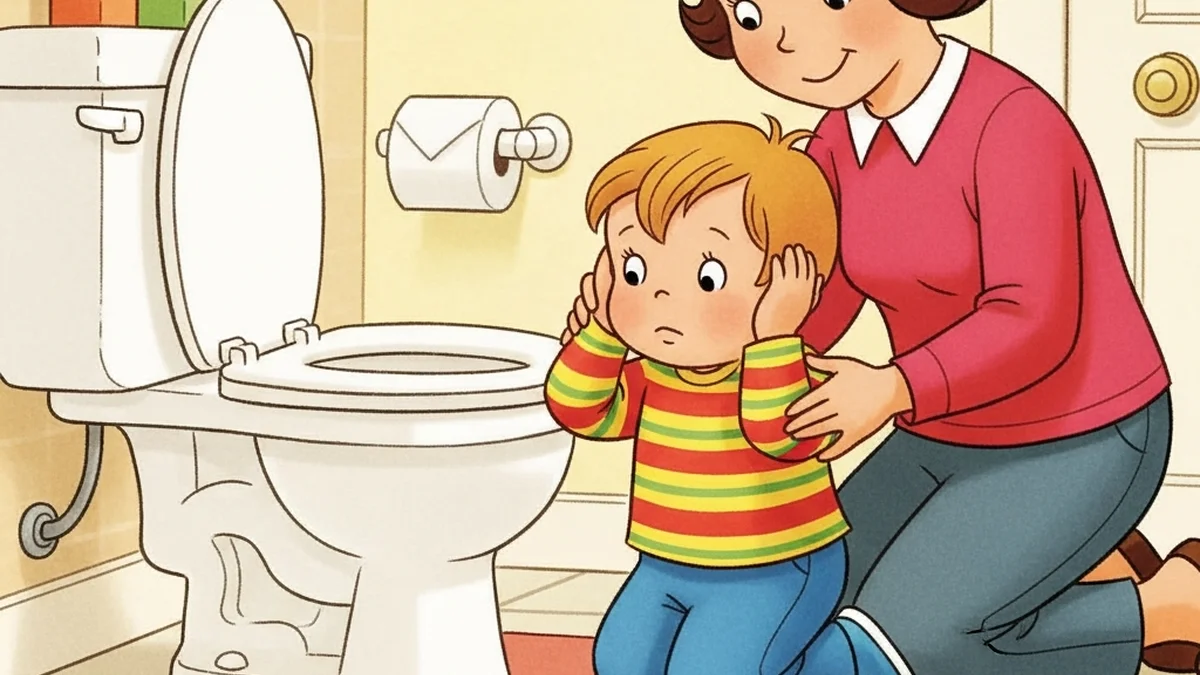
You set your toddler on the potty and the tears start before they've done anything. Back arched, legs kicking, the kind of scream that makes the neighbors wonder. Five minutes ago they were fine. Now they want their diaper back and they want it now.
When a toddler cries or screams on the potty, it almost always looks like defiance and almost never is. It's fear, or a loss of control, or sometimes a body that hurts. The good news: crying on the potty is normal, it's common, and it passes once you find the thing behind the tears.
Why Toddlers Cry on the Potty
Your toddler has pooped and peed into a warm diaper since the day they were born. That's the only system they know. Now you're asking them to do the most private thing they do in a brand new place, on a cold seat, with you watching. Big feelings are a reasonable response to that.
Most potty crying traces back to one of three things. Figuring out which one you're dealing with tells you what to do next.
Fear of the potty or toilet itself
If the crying starts before you even reach the bathroom, fear is usually the culprit. The big toilet is loud, the water moves, and to a 2-year-old the hole looks like it could swallow them. Some kids are scared they'll fall in. Others hate the echo of the flush.
Watch when the tears start. Crying at the doorway points to the room. Crying at the seat points to the seat.
Fear of letting go
Toddlers who cry right as they're about to release, or right after, are often grieving something. To them, their pee and poop are part of their body. Watching it leave and disappear can feel like losing a piece of themselves. It sounds strange to adults, but it's a very real worry around ages 2 and 3.
It actually hurts
If your child cries the moment they start to pee, or strains and cries trying to poop, pain may be the reason. Painful peeing can be a sign of a urinary tract infection. Painful pooping usually means constipation, and one hard, painful poop can teach a toddler to hold it, which makes the next one worse.
This is the one cause that needs a doctor. If you see crying with urination, or hard pellet-like stools and a child who clenches and hides, call your pediatrician. We cover the bowel side of this in our guide to why poop withholding happens and what to do, and the bladder side in what every parent should know about potty training and UTIs.
What to Do When the Tears Start
Your job in the moment isn't to win. It's to lower the temperature so the potty stops feeling like a fight.
Name the feeling out loud
Toddlers melt down partly because they can't say what's wrong. Do it for them. Try "Are you scared the potty is too big?" or "Are you mad we stopped playing?" Naming the emotion calms the storm faster than any sticker, because it tells your child you get it.
Make the seat feel safe
A dangling kid on a giant toilet feels unsteady, and unsteady feels scary. Give them a small potty chair on the floor or a toddler insert with a sturdy footstool so their feet are planted. Feet flat on something solid does two jobs at once: it calms the fear and it gives them something solid to push against. If you're stuck choosing gear, our breakdown of potty chair versus toilet seat insert walks through both.
Keep sits short and pressure low
Don't trap a crying kid on the potty until they produce. Set a tiny goal: sit for the count of 10, then you're free, no results required. A 30-second calm sit beats a 5-minute screaming one every time. Try sits after meals, when the body's natural urge to go is strongest, so success comes easier.
Don't fold, but don't force
If you hand the diaper back the second they scream, you've taught a fast lesson: screaming ends potty time. Stay warm and steady instead. "I know. We're all done sitting. We'll try again later." You're not giving in, and you're not holding them down. You're calmly ending the moment.
Let them watch the system work
For a kid scared of the toilet, take the pressure off completely. Bring them in while you use the bathroom. Let them flush for you and wave bye to the water. Curiosity grows when nobody's asking them to perform. A child who's afraid of the flush specifically might find our post on when toddlers are afraid of flushing helpful.
When to Take a Step Back
If every single sit ends in a full-body scream for more than a few days, you're not failing. Your child may just not be ready yet, and pushing through panic only links the potty to fear. Back off to diapers or pull-ups for a week or two, keep things light, and try again. Readiness isn't a deadline you missed.
One thing that helps: a brief, boring response to accidents and tears in between. Big reactions, good or bad, can feed a power struggle. If the crying is tangled up with control battles, our guide to stopping potty training power struggles has more on staying neutral.
A Quick Word of Reassurance
Crying on the potty is one of the most common things parents email us about. It feels huge in the moment and it rarely lasts. Most kids who scream their way through the first week of sits are using the potty without a fuss a few weeks later. The tears are information, not a verdict.
Key Takeaways
- Potty crying is almost always fear or discomfort, not defiance. Find the cause before you react.
- Crying before the bathroom points to fear of the room; crying during release points to letting go; crying while peeing or pooping points to pain.
- Name the feeling out loud, plant their feet on a footstool, and keep sits to a 10-count with no pressure to produce.
- Stay warm but don't reward screaming by ending potty training entirely; calmly end the sit and try again later.
- Call your pediatrician if your child cries during urination or has hard, painful poops.
Frequently Asked Questions
Is it normal for my toddler to cry every time they sit on the potty?
Yes, especially in the first week or two of potty training. Crying usually comes from fear of the new routine or the seat, not from doing something wrong. It typically fades as your child learns the potty is safe and predictable. If it lasts more than a couple of weeks with no progress, take a short break and try again later.
Should I force my toddler to sit on the potty if they scream?
No. Forcing a screaming child to stay on the potty links the potty to fear and can stall training for weeks. Instead, calmly end the sit, name what they're feeling, and offer another try later. Keeping it low-pressure works far better than a standoff.
When should I worry that crying on the potty is medical?
Call your pediatrician if your child cries the moment they start to pee, which can signal a urinary tract infection, or if they strain, clench, and cry while passing hard stools, which points to constipation. Pain-driven crying needs a doctor, not a behavior fix.
My toddler was fine and now cries on the potty out of nowhere. Why?
A sudden change often follows a scary moment, like a loud public flush, a painful poop, or a stressful week such as a new sibling or a move. Look for what changed right before the crying started. Once you address the trigger, most kids return to where they were.
How long does it take for potty crying to stop?
For most toddlers, the tears ease within one to three weeks once the seat feels safe and the routine becomes familiar. Steady, calm responses speed this up. If there's no improvement after about two weeks, a short reset is usually more effective than pushing harder.