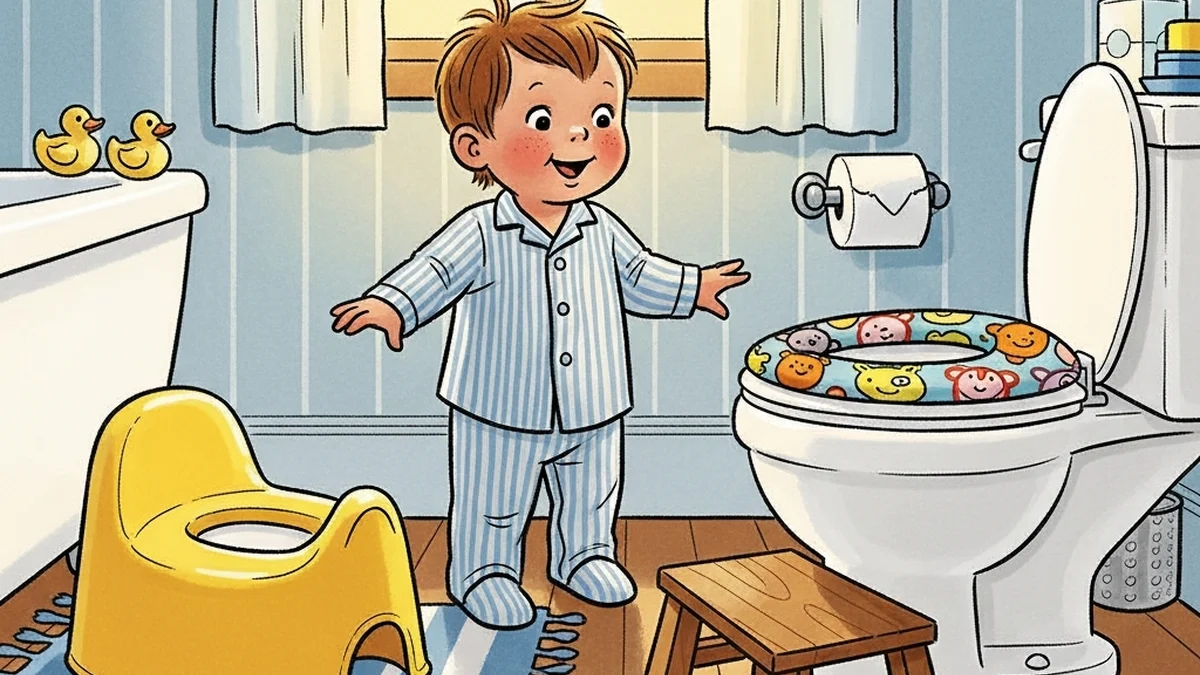
You're standing in the baby aisle staring at a wall of potty chairs, toilet seat inserts, and combo gadgets that look like they belong on a spaceship. Your toddler is screaming for goldfish crackers. You just need to pick one and get out of here.
Good news: there's no wrong answer. Both potty chairs and toilet seat inserts work. But one will probably fit your kid, your bathroom, and your sanity better than the other. Here's how to figure out which.
What's the Actual Difference?
A potty chair is a small, standalone seat that sits on the floor. Your toddler can walk up to it, sit down, and use it without help. It has a removable bowl you dump and clean after each use.
A toilet seat insert (also called a potty seat or reducer) sits on top of your regular toilet. It makes the opening smaller so your toddler doesn't feel like they're going to fall in. You'll almost always need a step stool alongside it.
When a Potty Chair Makes More Sense
For most toddlers under 2 and a half, a potty chair is the easier starting point. Here's why.
It's less scary. A floor-level seat doesn't feel like climbing a mountain. Toddlers between 18 and 24 months especially prefer something they can reach on their own. That independence matters when you're trying to build confidence around using the potty.
Their feet touch the ground. The Mayo Clinic and pediatric physical therapists both stress that kids need flat feet on a surface to bear down properly for bowel movements. A potty chair gives them that automatically. No stool required.
You can put it anywhere. Some parents keep a potty chair in the living room during the first few days of training. When your toddler has about 10 seconds between "I need to go" and actually going, proximity wins. If you're potty training in a small apartment, this flexibility is huge.
They can use it alone. A 2-year-old can pull down their pants, sit on a potty chair, and do their thing without you lifting them onto anything. That's one less step between the urge and the potty.
When a Toilet Seat Insert Works Better
Seat inserts aren't just for older kids. In the right situation, they're a smart first choice too.
Your toddler wants to be like you. Some kids are motivated by doing what the grownups do. If your 2- or 3-year-old watches you use the bathroom and wants to copy you, a seat insert taps into that motivation. Don't fight it.
You skip the transition step. Kids who start on a potty chair eventually need to switch to the real toilet. That transition can cause setbacks for some children. Starting on the toilet means there's nothing to switch to later.
No bowl to dump. This is the big one for a lot of parents. With a seat insert, everything goes straight into the toilet. No scooping, no rinsing, no "I forgot to empty the potty chair and it's been sitting there for three hours." If cleanup is a dealbreaker for you, this matters.
It takes up zero floor space. Seat inserts hang on the wall or lean behind the toilet when not in use. If your bathroom is the size of a closet, that's a real advantage.
The Step Stool Factor
If you go with a seat insert, you need a step stool. Period.
Your toddler needs to climb up safely, and their feet need to rest flat on something while they're sitting. A dangling-feet situation makes it harder to poop and can actually contribute to poop withholding. Dr. Gary Kirkilas, a pediatrician and AAP spokesperson, recommends looking for setups where the child can brace their feet while sitting.
Budget for a good step stool if you're going the insert route. It's not optional. The stool plus insert combo usually costs about the same as a standalone potty chair.
What About Age?
Here's a rough guideline based on what most families find works:
- 18 to 24 months: Potty chair is usually the better bet. Kids this age are shorter, less coordinated, and more easily spooked by the big toilet.
- 2 to 2 and a half: Either can work. Follow your kid's lead. If they're tall, steady on their feet, and interested in the real toilet, go for it.
- 2 and a half to 3 and a half: Many kids this age actually prefer the real toilet. A seat insert with a stool is often the fastest path. Check our guide on potty training at different ages for more on timing.
These aren't hard rules. You know your kid.
Features That Actually Matter
Skip the musical potties and the ones with tablet holders. Here's what to look for.
For Potty Chairs
- Splash guard: Especially for boys. You'll thank yourself later.
- Removable bowl: Makes cleanup faster and less gross.
- Non-slip base: Rubber grips on the bottom keep it from sliding on tile floors.
- Simple design: Fewer crevices means less buildup and easier cleaning. Pediatricians recommend keeping it simple so the bells and whistles don't distract your kid from the actual task.
For Toilet Seat Inserts
- Rubber grips underneath: The insert shouldn't slide around on the toilet seat. That's terrifying for a toddler.
- Side handles: Gives your kid something to hold onto. This builds confidence and stability.
- Easy to remove and clean: You'll be taking it on and off the toilet constantly if other people in the house need to use the bathroom.
- Fits your toilet: Round and elongated toilets need different inserts. Check before you buy.
Can You Use Both?
Absolutely. Plenty of families start with a potty chair for the first week or two, then introduce a seat insert once their kid is comfortable with the routine. Others keep a potty chair upstairs and a seat insert on the downstairs bathroom.
There's no rule that says you have to pick one. If your budget allows and you have the space, having both gives your toddler options. And toddlers love having options.
Key Takeaways
- Potty chairs work best for toddlers under 2 and a half who need a low, reachable option with feet on the ground.
- Toilet seat inserts are great for older toddlers, small bathrooms, and kids who want to copy the grownups.
- Always pair a seat insert with a step stool so your child's feet are flat and stable.
- Skip the fancy features. Simple, sturdy, and easy to clean wins every time.
- Using both is a perfectly good strategy. Start with whatever your kid responds to.
We've picked out our favorite potty chairs and seat inserts on our Essentials page if you want a head start on shopping.
Frequently Asked Questions
Is a potty chair or toilet seat insert better for potty training boys?
For boys, a potty chair with a built-in splash guard is usually easier in the beginning. Sitting down to pee is the simplest starting point, and the splash guard keeps messes contained. Some parents find that toilet seat inserts cause more spray issues. Once your son is comfortable peeing while seated, you can teach standing later.
How long will my toddler use a potty chair before switching to the toilet?
Most kids use a potty chair for 3 to 6 months before they're ready to move to the regular toilet. Some switch faster, especially if they see older siblings using the bathroom. When your child starts asking about the big toilet or seems bored with the potty chair, that's your cue to introduce a seat insert for the transition.
What if my toddler is scared of the toilet?
Start with a potty chair. It takes the big, loud, flushing toilet completely out of the equation. Once your child is confident and successful on the potty chair for a few weeks, let them watch you flush, sit on the toilet with the lid down, and explore at their own pace. If your toddler has developed a real fear, check out our tips on rebuilding potty training confidence.
Do I need to buy a potty for every bathroom in the house?
During the first week or two of active training, having a potty within quick reach matters. After that, one bathroom setup is usually fine. If you have a two-story home, keeping a potty chair on each floor for the first month can prevent a lot of accidents.
Are combo potty seats worth it?
Combo seats that work as both a standalone potty and a toilet seat insert sound great in theory. In practice, many parents find they're bulky and don't do either job particularly well. A simple, dedicated potty chair or seat insert is usually the better buy.