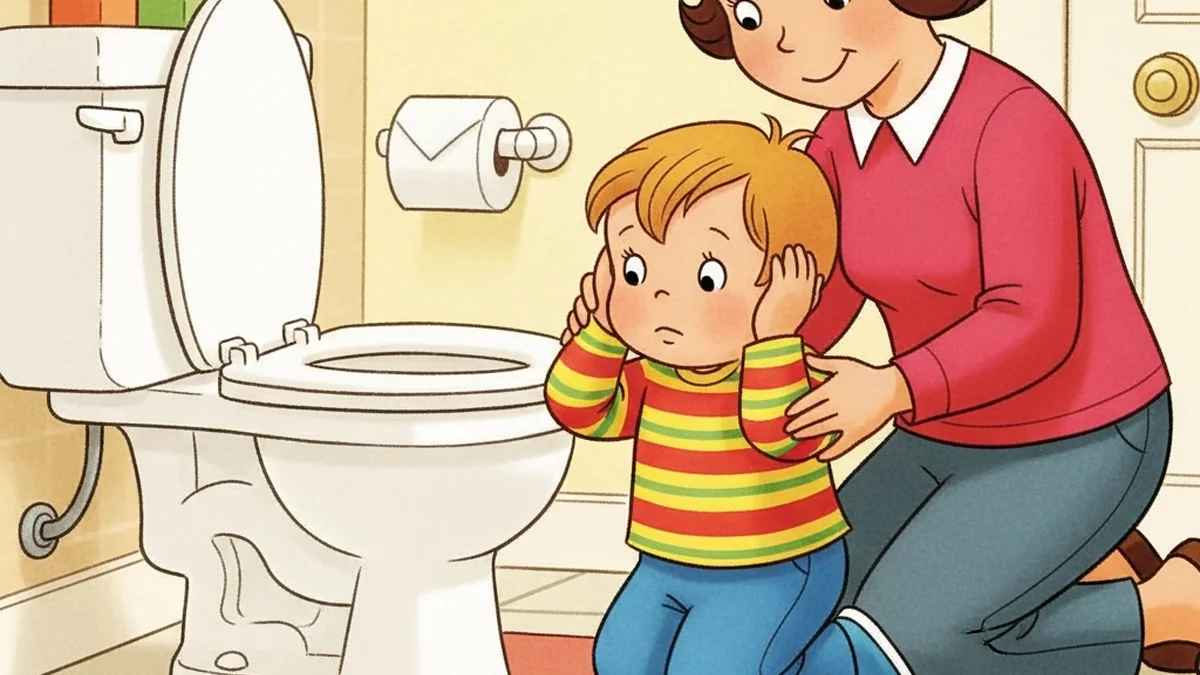
You did it. Your toddler actually sat on the potty, did their thing, and you're feeling like a champion. Then you reach for the flush handle. Cue the screaming.
If your kid goes from proud to panicked the second that toilet flushes, you're not alone. Flushing fear is one of the most common potty training hiccups, and it doesn't mean anything's wrong. It just means your toddler's ears work really well.
Why Toddlers Are Scared of the Flush
The toilet flush is genuinely loud. A standard home toilet produces about 75 to 80 decibels of noise, roughly the same volume as a vacuum cleaner. For a 2-year-old standing right next to it, that's a lot of sound hitting them all at once.
But it's not just the volume. The flush is sudden, unpredictable (from a toddler's perspective), and involves watching something disappear into a swirling vortex. That's startling when you're two.
Some kids also struggle with the idea of their poop or pee "going away." Toddlers don't fully grasp where things go when they disappear, and some children genuinely worry that part of them is being flushed away. It sounds funny to us, but it's very real to them.
Then there are automatic toilets in public restrooms, which flush without warning and are even louder. If your child had a bad experience with one of those, it can easily carry over to the toilet at home.
6 Ways to Help Your Toddler Get Comfortable with Flushing
1. Don't Flush While They're in the Room
Start here. After your toddler finishes on the potty, close the lid together, say goodbye to the pee or poop, and wait until they've left the bathroom to flush. You can even wait until they're in another room entirely.
This removes the pressure and lets them build positive associations with the potty without the scary ending.
2. Let Them Flush on Their Own Terms
Once they're comfortable using the potty without hearing the flush, give them control. Let them decide when they're ready to try it. Some kids want to flush from the hallway at first. Others want to close the lid and then flush. Let them pick their method.
Control reduces fear. When your toddler is the one pressing the handle, the sound becomes expected instead of startling.
3. Make It Silly
Kids respond to playfulness way more than logic. Try a "goodbye song" every time something gets flushed. It can be as simple as singing "bye-bye pee pee, bye-bye poo poo" in a goofy voice.
Some parents do a countdown: "3, 2, 1... whoooosh!" Others let their toddler wave at the toilet. The sillier, the better. You're replacing a fear response with a fun one.
4. Try Ear Coverage
If noise is the main issue, let your child cover their ears before you flush. You can also try kid-friendly earplugs or noise-reducing headphones for the first few weeks.
This works especially well for sensory-sensitive kids who react strongly to sudden loud sounds. Over time, as the fear fades, they'll stop needing the ear protection on their own.
5. Use a Potty Chair First
If your toddler is using a toilet seat insert and the flush is holding everything up, switch to a standalone potty chair for now. No flush needed. Your child does their business, you empty it later.
This takes flushing completely out of the equation and lets your child focus on the actual skill: recognizing when they need to go and getting to the potty in time. You can introduce flushing later when they're more confident. Check out our potty chair vs. toilet seat insert guide for help choosing the right setup.
6. Explain What Happens (Simply)
Toddlers around age 2 to 3 can understand basic cause and effect. Try explaining: "The water carries the pee to a big pipe underground, and it gets cleaned up. Nothing else goes down. You're totally safe."
You don't need a plumbing lesson. Just enough to take the mystery out of it. Some parents even pour a cup of water into the toilet and flush it together to show that only water goes down.
When Flushing Fear Stalls Potty Training
Here's what matters most: don't let the flushing fear stop potty training altogether. Flushing is separate from the actual skill of using the potty.
If your toddler will sit on the potty but refuses to let you flush, that's fine. Flush later. If they're avoiding the bathroom entirely because of a past flushing scare, you might need to rebuild their confidence with the whole bathroom environment first.
Most kids get over the flushing fear within 2 to 4 weeks once you stop making it a big deal. The more relaxed you are about it, the faster it fades.
If your child's fear is intense, lasts more than a couple of months, or extends to other loud sounds and sensory experiences, it's worth mentioning to your pediatrician. They can help rule out any sensory processing concerns.
The Automatic Toilet Problem
Public restroom automatic toilets deserve their own mention because they're responsible for a huge number of flushing fears. They're louder than home toilets, they flush without warning, and they sometimes go off while your child is still sitting down.
The fix is simple: carry sticky notes in your bag. Place one over the sensor before your child sits down. Remove it when they're done, step back, and let it flush after they've moved away. For more tips on handling public restroom fears, we've got a full guide.
Key Takeaways
- Don't flush while your toddler is on or near the toilet. Wait until they leave the room.
- Give them control over when and how they flush.
- Use silliness: songs, countdowns, and silly goodbyes work better than explanations.
- A potty chair removes flushing from the equation entirely while they build confidence.
- Most flushing fears resolve in 2 to 4 weeks with a low-pressure approach.
Frequently Asked Questions
Is it normal for a toddler to be afraid of flushing?
Very normal. The combination of loud noise, swirling water, and things disappearing is genuinely startling for kids between 18 months and 3 years old. Most children outgrow this fear with gentle exposure and patience.
Should I force my toddler to flush the toilet?
No. Forcing a flush often makes the fear worse and can lead to potty training resistance. Let your child set the pace. Flush after they leave the room, and gradually give them the option to do it themselves when they're ready.
What if my toddler is afraid of automatic toilets in public?
Automatic toilets are louder and flush without warning, which terrifies a lot of kids. Carry sticky notes in your bag and place one over the sensor before your child sits down. This prevents the toilet from flushing until you remove the note.
How long does flushing fear usually last?
With a relaxed, no-pressure approach, most toddlers get comfortable with flushing within 2 to 4 weeks. If the fear persists beyond 2 to 3 months or is part of a bigger pattern of sound sensitivity, talk to your pediatrician.
Can flushing fear cause potty training regression?
It can. If a child links the potty with the scary flush, they may start refusing to use it altogether. The fix is to separate the two: let them use the potty without any flushing required. Once they're confident again, slowly reintroduce flushing on their terms.