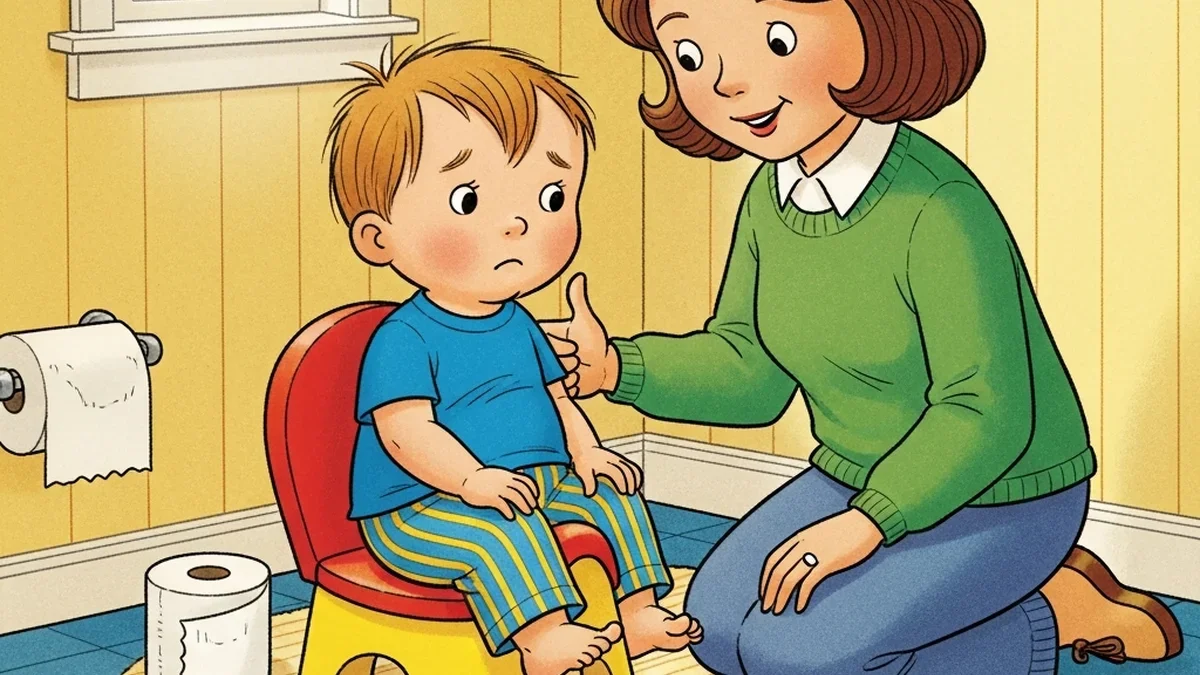
You get their pants down. You set them on the potty. Two seconds later they're up, waddling toward the door with their underwear around one ankle. Then they pee on the rug five minutes later.
If your toddler won't sit on the potty long enough to go, you're not doing anything wrong. This is one of the most common stalls in potty training, and it almost never means your child is being difficult on purpose. It usually means the sit itself feels boring, uncomfortable, or pointless to them. The good news is that all three of those things are fixable.
Why Your Toddler Pops Right Back Up
Toddlers don't hop off the potty to annoy you. There's almost always a reason, and once you spot it, the fix gets a lot clearer.
Here's what's usually going on:
- Their feet are dangling. On a big toilet with legs hanging in the air, kids can't brace or relax. They feel wobbly, so they want off.
- They're bored. An empty bathroom with nothing to do is a hard sell for a 2-year-old who was mid-play thirty seconds ago.
- They don't feel the urge yet. If there's nothing to push out, sitting feels random and they leave.
- It's about control. Toddlers have very little say over their day. Getting on and off the potty is one thing they can control, so they use it.
Notice that none of these are "my kid is behind." A child who pops up fast is usually a child who hasn't been given a reason to stay yet.
How Long Should a Toddler Actually Sit on the Potty?
Here's the number most parents are surprised by: 3 to 5 minutes is the sweet spot, and that's the maximum, not the goal. If your toddler sits for one or two minutes and nothing happens, that's fine. Get up, move on, and try again later.
Longer is not better. Making a child sit for 10 or 15 minutes usually backfires. Kids tense up when they feel pressure, and a tense body holds pee and poop in instead of letting it out. Long, forced sits also turn the potty into a place they dread.
So if your toddler is only staying for a few seconds, the answer isn't to force a longer sit. It's to make those few minutes worth staying for.
Make the Potty a Place They'll Stay
You can't logic a toddler into patience. But you can change the setup so sitting feels better. These are the moves that actually keep kids seated.
Get their feet on something solid
This is the single biggest fix. If your child is on a full-size toilet, put a sturdy step stool under their feet so their knees come up a little and their feet press flat. It steadies them and relaxes the pelvic muscles that need to let go. A low potty chair where their feet already reach the floor does the same job. Foot support also makes pooping easier, which matters a lot for kids dealing with constipation and the withholding cycle.
Give them one job to do while sitting
A sit with a purpose lasts longer than a sit with nothing. Try one of these:
- Keep 2 or 3 special books that only come out at the potty.
- Have them blow bubbles. Blowing out relaxes the pelvic floor, and you literally can't clench to hold pee while blowing air out.
- Let them "read" to a stuffed animal that's potty training too.
- Sing one short song together and make the deal that they sit until it ends.
Try the warm water trick
If your toddler will sit but won't release, run the sink or trickle a little warm water over their hand. The sound and sensation of warm water is a classic cue that nudges the bladder to let go, and it gives them a reason to stay put another minute.
Timing Beats Sitting Every Time
Here's the thing most "won't sit" problems really come down to: the timing is off, not the sitting. If you catch your toddler when they already need to go, they'll stay long enough because their body is doing the work for them.
Offer the potty at the moments a full bladder is most likely: right after waking up, about 20 to 30 minutes after a big drink, and after meals. That after-meal window is powerful because eating triggers the gut, which is why so many kids poop shortly after breakfast. Catch that wave and the sit takes care of itself.
If your child sits, gets up, and then pees minutes later, that's a timing gap, not defiance. We break that exact pattern down in our guide on why toddlers pee right after getting off the potty.
What Not to Do
A few well-meaning moves make the popping-up worse. Skip these:
- Don't hold them down. Physically pinning a child on the potty builds fear fast, and fear leads to holding and hiding. Always let it be their choice to sit.
- Don't stretch the sit to 15 minutes. Pressure creates tension, and tension keeps everything in.
- Don't hand over the phone every time. A screen can help once in a while, but as a daily bribe it teaches kids to zone out instead of tuning in to their body. If you're weighing this, our take on screens on the potty lays out when it helps and when it backfires.
- Don't react big to accidents. Clean up in a calm, boring voice. Frustration makes the potty feel high-stakes, and stakes make kids clench.
When It's More Than Impatience
Most of the time, a kid who won't stay seated just needs better timing and a footstool. But a few patterns are worth a closer look.
If your toddler seems to want to go but jumps up in pain, cries, or strains and nothing comes, they may be constipated or withholding. Backed-up poop presses on the bladder and makes sitting genuinely uncomfortable. If that sounds familiar, or if you see hard stools, belly pain, or peeing that burns, check in with your pediatrician. That's a body issue, not a behavior issue, and it's worth ruling out before you tweak anything else.
And if the resistance shows up as crying or panic the second they touch the seat, the problem might be fear rather than boredom. Our post on why toddlers cry or scream on the potty walks through that separately.
This Passes
A toddler who won't sit still today is not a toddler who will never be trained. The wiggling, the popping up, the "I'm done" after two seconds, all of it is a normal phase, not a sign you've hit a wall. Kids this age are wired to move, and sitting on demand is a skill they grow into.
Lower the pressure, fix the feet, catch the timing, and give them a reason to stay. Most kids go from two-second sits to real ones within a couple of weeks of these changes. You've got this.
Key Takeaways
- Aim for 3 to 5 minutes max, and never force a longer sit. Pressure makes kids clench and hold it in.
- Put a step stool under their feet so they feel steady and their muscles can relax. It's the single biggest fix.
- Give the sit a job: special books, bubbles, or one short song they sit through.
- Offer the potty when they actually need to go: after waking, 20 to 30 minutes after drinks, and after meals.
- Call your pediatrician if sitting seems painful or you see hard stools, straining, or burning pee.
Frequently Asked Questions
How long should my toddler sit on the potty?
About 3 to 5 minutes at most. If nothing happens after a minute or two, let them get up and try again later. Sitting longer than 5 minutes usually creates tension and makes it harder for them to go, not easier.
Should I make my toddler stay on the potty until they go?
No. Forcing a child to stay seated builds fear and power struggles, and a tense body holds urine and stool in. Keep sits short and voluntary, and focus on offering the potty at the right times instead of extending the sit.
Why does my toddler get off the potty and then pee a few minutes later?
Usually the timing is slightly off, so they sit before the urge has built and release once they relax off the potty. Try offering the potty after meals and about 20 to 30 minutes after a drink, when a fuller bladder makes it more likely they'll go while seated.
Does a footstool really help a toddler sit longer?
Yes. When feet dangle, kids feel unsteady and can't relax the muscles they need to let go. A step stool that brings the knees up and lets the feet press flat helps them feel secure and makes both peeing and pooping easier.
Is it normal for a 2-year-old to refuse to sit still on the potty?
Completely normal. Two-year-olds are built to move and have short attention spans, so sitting on demand is a skill they grow into. With better timing, foot support, and something to do while seated, most kids start sitting longer within a couple of weeks.