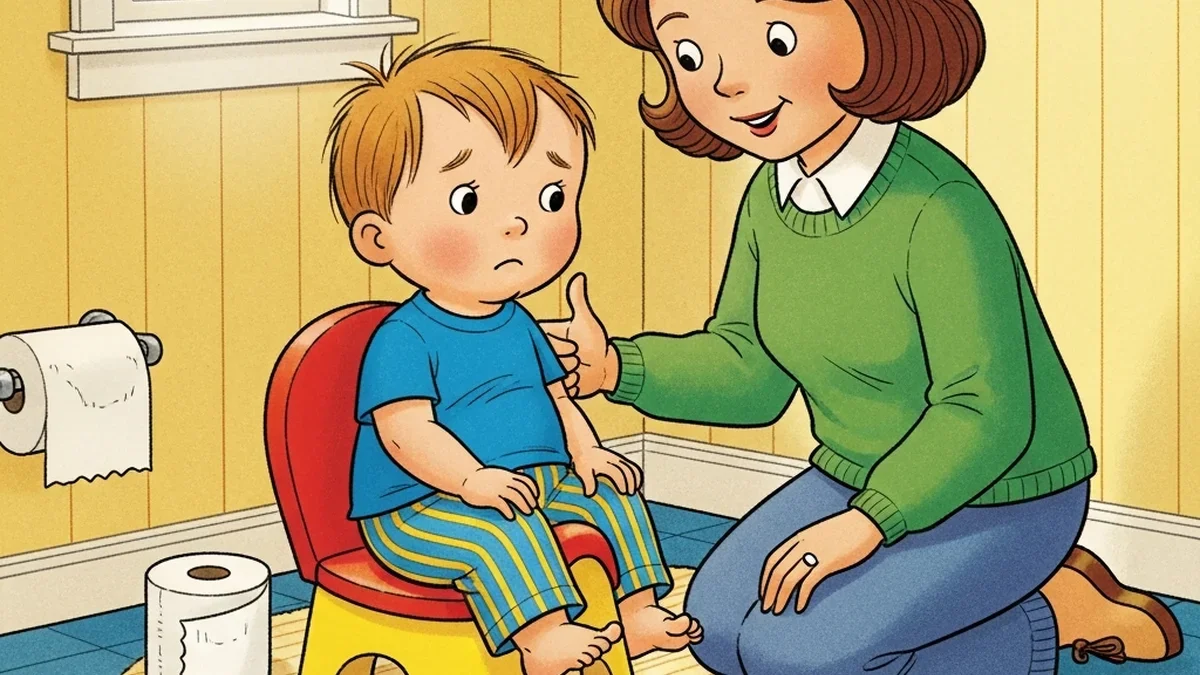
Your toddler sits on the potty. Nothing. They hop up, you pull their pants on, and ninety seconds later there's a puddle on the kitchen floor. You're not imagining it, and you're not doing anything wrong. When a toddler pees right after getting off the potty, it almost always means they got up before their bladder was empty.
This one drives parents up the wall because it feels like the kid is doing it on purpose. They're not. Their body just hasn't learned to fully let go yet. The good news is that it's a fixable timing problem, not a sign that potty training is failing.
Why your toddler pees right after the potty
A toddler's bladder doesn't always empty in one shot. They release a little, feel the urge fade, and assume they're done. Then they stand up, the muscles relax differently, and the rest comes out.
Most of the time this comes down to a few simple causes. Once you know which one you're dealing with, the fix is usually quick.
They get off the potty too fast
This is the big one. Toddlers are in a hurry to get back to playing, so they pop up after the first trickle. Their bladder is still half full. The sit was just too short to finish the job.
Their body isn't relaxed
If your child's feet are dangling off a big toilet, their pelvic floor can't fully relax, and a tense pelvic floor won't release all the way. The same thing happens when they're rushed, anxious, or perched awkwardly. Comfort and a relaxed bottom are what let the bladder drain.
Constipation is crowding the bladder
Here's the one parents miss most. The colon sits right behind the bladder, so a backup of hard stool presses on it and keeps it from emptying or filling normally. That leads to frequent, urgent, dribbly pees and accidents soon after a potty trip. If your child is also going days between poops or straining, constipation is worth ruling out first. Our guide on breaking the constipation cycle walks through what helps.
They're distracted
A toddler who's watching a video or chatting with you might pee a little, lose focus, and climb off before they're finished. Their attention left the bathroom before their bladder did.
How to help your toddler fully empty their bladder
You don't need anything fancy here. A few small changes to how your child sits and how long they stay usually solves it within a week or two.
Get their feet supported
Put a sturdy step stool under their feet so their knees end up higher than their hips. That position relaxes the pelvic floor and gives them something to push against. If you're using a toilet seat insert, a stool is not optional, it's the whole game. (Still deciding on gear? See our breakdown of potty chairs versus toilet seat inserts.)
Keep them sitting 30 to 60 more seconds
After your toddler says they're done, ask them to stay seated and try one more time. Count slowly to 20 together, sing a short song, or read one page of a book. That extra minute is often when the rest comes out.
Try the bubble trick
Hand your child a small bottle of bubbles and let them blow while they sit. Blowing out relaxes the pelvic floor and gently engages the muscles that help empty the bladder and bowel. It also turns a boring sit into something they'll actually stay put for.
Use a double void
Pediatric urologists call it double voiding: pee, stand up for a few seconds, then sit back down and try again. It catches the leftover urine that would otherwise end up on the floor. Make a little celebration out of the second go so it doesn't feel like a punishment.
Offer the potty on a clock, not on request
Don't wait for your toddler to tell you. Offer the potty about every two hours, plus after meals and before you leave the house. Regular, relaxed sits stop the bladder from getting so full that it overflows the moment they stand.
What not to do
Don't scold or sigh when the puddle shows up. Your toddler can hear the frustration, and the more pressure they feel, the tighter their body gets, which makes emptying harder, not easier.
Skip the running commentary too. "Are you done? Are you sure? Did you really go?" turns the bathroom into a quiz. Keep your voice calm and your face neutral, clean it up, and move on.
When to call your pediatrician
This pattern is normal in the early months of training and usually fades as your child's bladder control matures. A few signs are worth a phone call, though.
- Pain, crying, or straining when they pee, or cloudy or strong-smelling urine, which can point to a UTI. Here's what to watch for with potty training and UTIs.
- Constant dribbling or wet underwear all day, not just after potty trips.
- The pattern is still going strong past age 4 with daytime accidents for more than six months after training.
- Your child seems to have no idea when they need to go at all.
Your pediatrician can do a simple check, including a quick scan to see whether urine is being left behind. Most of the time everything's fine and it's purely a habit your child grows out of.
This is normal, and it passes
A toddler who pees right after the potty isn't behind, broken, or being difficult. Their bladder and brain are still syncing up, and that takes practice. Slow the sit down, support their feet, rule out constipation, and stay calm about the misses.
Give it a week or two of relaxed, unhurried potty trips. Most kids stop leaving that second puddle once they learn what "all done" actually feels like.
Key Takeaways
- Peeing right after the potty almost always means your toddler got up before their bladder was empty, not that training is failing.
- Support their feet on a stool so their knees sit higher than their hips and their pelvic floor can relax.
- Keep them seated 30 to 60 seconds longer after they say they're done, and try a double void.
- Rule out constipation first, since a backed-up colon presses on the bladder and causes frequent, dribbly accidents.
- Call your pediatrician if there's pain, all-day wetness, or the pattern continues past age 4.
Frequently Asked Questions
Why does my toddler pee on the floor seconds after the potty?
They almost certainly stood up before their bladder finished emptying. Toddlers feel the first urge fade and assume they're done, then the rest releases once they relax their muscles standing up. Keeping them seated a bit longer and supporting their feet usually fixes it.
How long should my toddler sit on the potty?
Aim for about three to five minutes, and ask for one more try after they say they're finished. Counting to 20, reading a page, or blowing bubbles helps them stay put long enough to fully empty.
Can constipation cause my child to pee right after the potty?
Yes, and it's one of the most overlooked causes. A full colon presses against the bladder, which makes pee feel urgent and prevents complete emptying. If your child poops infrequently or strains, treating the constipation often clears up the daytime accidents too.
Should I be worried or is this just normal?
It's usually normal in the early stage of potty training and fades as bladder control matures. Talk to your pediatrician if you see pain when peeing, all-day dribbling, or the pattern continuing past age 4.