Your toddler has been sitting on the potty for 45 seconds. They're already trying to stand up. You grab your phone, pull up a Cocomelon video, and suddenly they're planted there for 10 minutes. Success? Maybe. But maybe not in the way you think.
Screen time on the potty is one of those topics where every parent has an opinion and nobody agrees. Some swear it's the only thing that got their kid to sit still long enough to actually go. Others say it created a habit they couldn't break. The truth, as usual, is somewhere in the middle.
Why Parents Reach for the Screen
Let's be honest. Most parents don't plan to use screen time as a potty training tool. It happens out of desperation. Your 2-year-old won't sit for more than a few seconds. They're scared. They're bored. They'd rather be doing literally anything else.
So you hand them the tablet. And it works. They sit. They relax. Sometimes they actually go.
This is especially common with poop. Many kids between 2 and 3 need several minutes of sitting before their body relaxes enough to go. If your child is withholding poop, a screen can help them stop clenching and just let it happen. That's a real benefit, and it's okay to acknowledge it.
The Problem with Screens on the Potty
Here's where it gets tricky. When a toddler is zoned into a video, they're not paying attention to their body. Potty training expert Jamie Glowacki points out that children under 7 are essentially "inside" whatever they're watching. They're not focused on the feeling of needing to go.
That means the pee or poop might happen while they're sitting there, but it's happening subconsciously. Your child isn't connecting the sensation of a full bladder with the act of releasing. They're just sitting and something came out.
That connection matters. It's the whole point of potty training.
There's also the portability problem. You can bring a tablet to your bathroom. You can't bring it to daycare, preschool, or Grandma's house. If your child only goes when there's a screen, you've built a habit that doesn't transfer. And when it doesn't transfer, you get resistance in other settings.
When Screen Time Actually Helps
Not all screen time during potty training is created equal. There's a difference between parking your kid in front of a 30-minute show every time they sit down and using a short video strategically for a specific problem.
Watching potty training videos together
Shows like Daniel Tiger ("When you have to go potty, stop and go right away!") and Sesame Street's Elmo potty episodes can genuinely help. When your toddler sees a character they love using the potty, it normalizes the whole process. Watch these together, not on the potty, but on the couch. Let them soak it in before the real thing.
Short clips during poop anxiety
If your child is actively scared to poop on the potty, 3 to 5 minutes of a calm video can help their body relax enough to go. This is a temporary tool for a specific issue, not a permanent setup. Once they've had a few successful poops, start pulling back the screen.
The "earn it" approach
Some parents use screen time after a successful potty trip instead of during. "You went potty! Let's watch one Daniel Tiger song." This keeps the body awareness intact during the sit and still gives them something to look forward to. It's a reward strategy that works for screen-loving kids.
Better Alternatives to Screens on the Potty
If your main problem is that your toddler won't sit long enough, there are plenty of tools that keep them engaged without zoning them out.
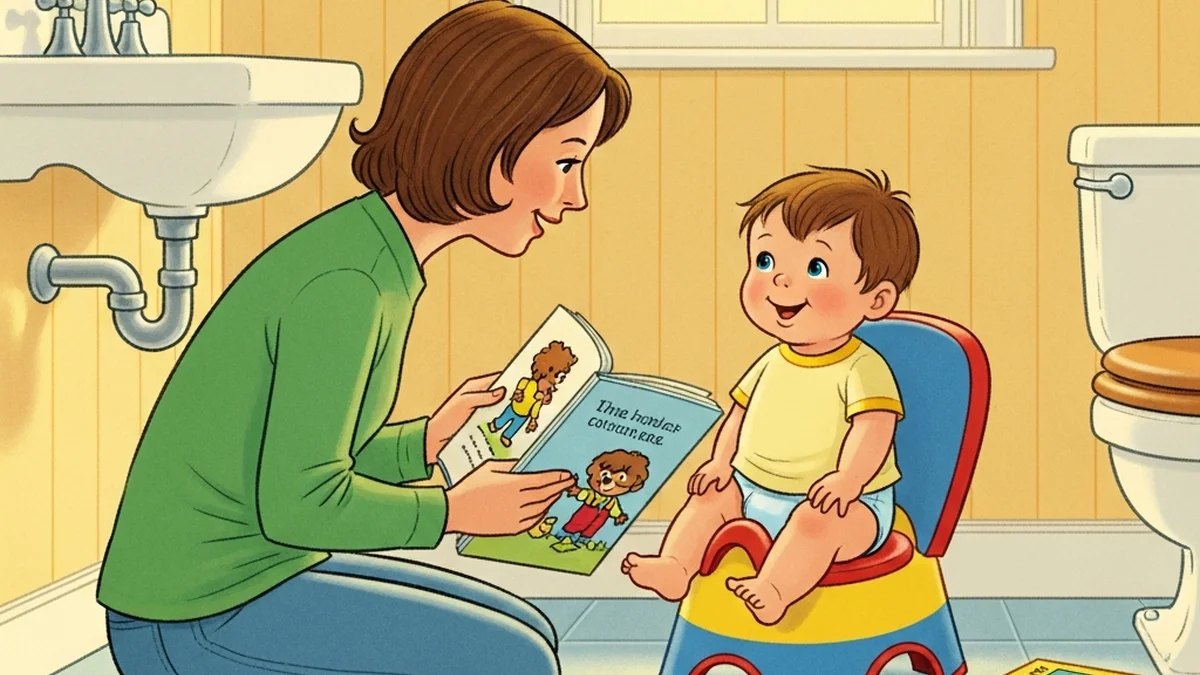
- Potty-only books: Keep 3 to 5 special books that only come out during potty time. The novelty keeps them interested.
- Sticker charts or coloring pages: Simple, hands-on activities that keep them occupied for a few minutes.
- Singing songs together: Silly potty songs keep the mood light and keep them present in their body.
- Blowing bubbles: This one sounds random, but blowing requires relaxing the pelvic floor. Some pediatric pelvic floor therapists actually recommend it.
- A small toy bin: Grab a few dollar-store toys and keep them in a basket by the potty. Rotate them every week or two.
The key is that these activities keep your child aware of what's happening below the waist. A book doesn't pull them into another world the way a screen does.
What the AAP Says About Toddler Screen Time
The American Academy of Pediatrics recommends no more than one hour of high-quality screen time per day for kids ages 2 to 5. Their updated guidance focuses less on strict time limits and more on quality, context, and co-viewing.
That means if your 2-year-old's daily hour includes 10 minutes of Daniel Tiger on the potty, the AAP isn't going to come knocking. But if potty screen time is stacking on top of an already full day of shows, that's worth thinking about.
The bottom line from pediatricians: screens shouldn't replace sleep, physical activity, family time, or free play. And they shouldn't replace body awareness during potty training, either.
How to Wean Off Potty Screen Time
Already deep in the tablet-on-the-potty habit? You're not stuck. Here's a 5-day plan to transition away from it:
- Days 1 to 2: Switch from a full video to a single short song (under 2 minutes). Tell them, "We're going to listen to one potty song today."
- Day 3: Replace the screen with a potty-only book. Let them pick one from a small stack.
- Days 4 to 5: Try sitting with just conversation or a small toy. Stay close and keep it casual.
If they resist, that's normal. Stay calm and don't make it a power struggle. You can say, "The tablet is charging. Let's read this one instead." Most kids adapt within a few days when the transition is gradual.
Key Takeaways
- Screens can help a toddler sit long enough to poop, but they prevent the body-awareness connection that makes potty training stick.
- Potty training videos like Daniel Tiger are best watched on the couch, not on the potty.
- If you use screen time on the potty, keep it under 5 minutes and treat it as a temporary tool for a specific issue like poop anxiety.
- Books, songs, bubbles, and small toys are better at keeping toddlers engaged on the potty without zoning them out.
- You can wean off potty screen time in about 5 days by gradually swapping in screen-free alternatives.
Frequently Asked Questions
Will using a tablet on the potty slow down potty training?
It can. If your child only goes while watching a screen, they're not building the body awareness needed to recognize when they have to go on their own. Short-term, it might get results. Long-term, it can create a dependency that makes training harder at daycare or away from home.
My toddler won't poop without a screen. What should I do?
This is common, especially for kids who are anxious about pooping. Use a short video (3 to 5 minutes) as a bridge while they build confidence. Once they've had several successful poops, gradually replace the video with a book or toy. Don't go cold turkey if there's real fear involved.
Are potty training videos on YouTube helpful?
Videos from shows like Daniel Tiger, Sesame Street, and Super Simple Songs can help normalize using the potty. They're most effective when watched together (not solo on the potty) and paired with real practice. They're a supplement, not a strategy.
At what age is screen time on the potty most risky?
For kids under 2, the AAP recommends avoiding screens almost entirely. Between ages 2 and 3, a few minutes during a tough potty moment isn't going to cause harm, but building it into every potty sit can interfere with learning. By age 3 to 4, most kids should be able to sit without a screen if given other engaging options.
What if screen time is the only thing that prevents potty training meltdowns?
If screens are preventing full-blown meltdowns, that tells you the real issue might be fear, anxiety, or a power struggle. Address the root cause first. A child who's truly scared of the potty needs reassurance and gradual exposure, not just a distraction.