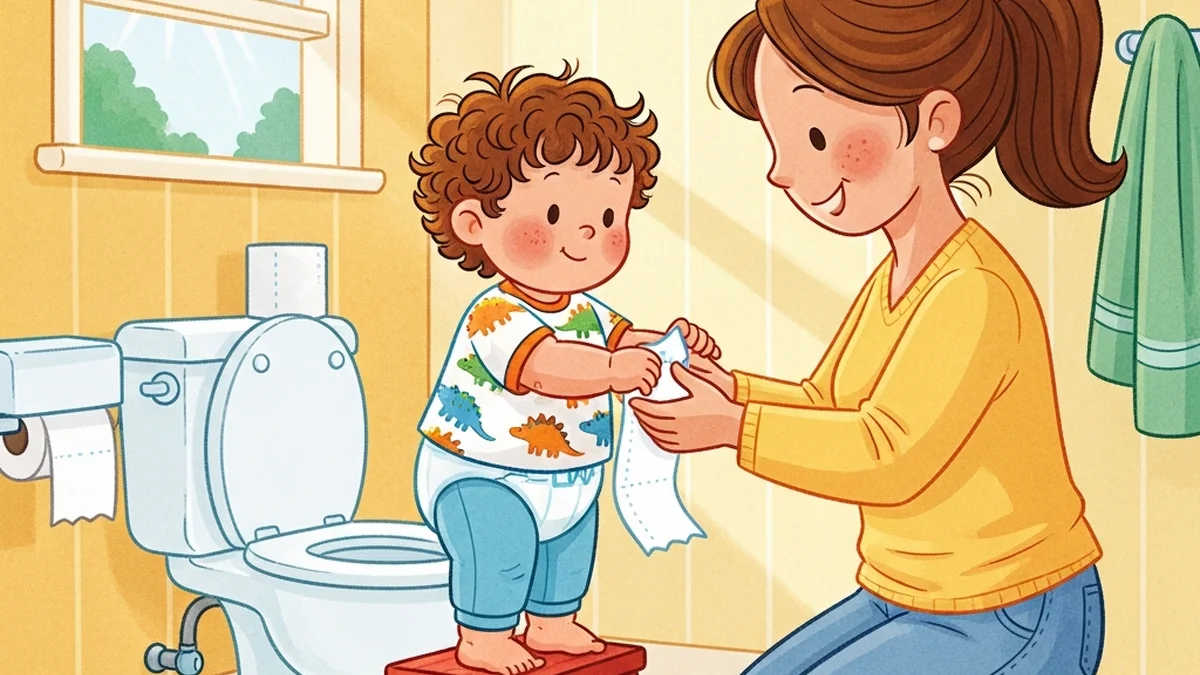
Your kid just used the potty all by themselves. You're thrilled. Then they stand up, pull up their pants, and walk away. No wipe. Nothing. And now you're wondering: when exactly are they supposed to learn that part?
You're not alone. Teaching a toddler to wipe is one of those skills that gets almost zero attention compared to the "getting them on the potty" part. But it matters, and it takes longer than most parents expect.
When Can Kids Actually Wipe Themselves?
Here's the honest answer: most children don't wipe well on their own until they're 4 or 5 years old. Some take even longer. That's completely normal.
The reason is physical, not behavioral. Toddlers' arms often aren't long enough to reach around properly until about age 3.5 to 4. The fine motor skills and coordination required to wipe, fold, and check take time to develop. It's actually the last potty training skill most kids master.
So if your 3-year-old is fully potty trained but still needs help wiping after a poop, that's exactly where they should be. No stress.
Signs Your Child Is Ready to Start Practicing
You don't need to wait until they're perfect at it. You're looking for signs that they can start trying, not that they're ready to go solo.
- They can reach around their body to touch their lower back or bottom
- They show interest in doing it themselves (grabbing the toilet paper, mimicking you)
- They have decent hand-eye coordination in other areas, like getting dressed or using utensils
- They can follow two- to three-step instructions ("pull some paper, fold it, wipe front to back")
Most kids hit these markers somewhere between 3 and 4. But there's no rush. Starting before they're physically ready just leads to frustration for both of you.
How to Teach Wiping: Step by Step
This isn't a one-day lesson. Think of it as a skill you'll build over weeks (sometimes months). Here's the progression that works.
Step 1: Let them watch
Kids learn by copying. Let them see you pull toilet paper, fold it, and wipe. Narrate what you're doing in simple terms. "I'm folding the paper. Now I wipe front to back. Then I check. Still dirty? Fold and wipe again."
Step 2: Hand-over-hand practice
Put the folded paper in their hand and guide their hand through the motion. This is the most effective way to teach the direction and pressure. Do this for a few days until they get the feel of it.
Step 3: Let them try first, then you finish
This is the key phase, and it lasts a while. Every time they use the potty, let them take the first wipe. Then you go in and do the real cleanup. This gives them practice without the pressure of getting it perfect.
Step 4: The check-and-confirm stage
Once they're wiping more consistently, switch to checking their work instead of redoing it. Look at the paper after their last wipe. If it's clean, they're good. If not, they try one more time. This builds the habit of checking before they're done.
The Technique That Actually Works
Teach them this sequence: wipe, fold, wipe, fold, check. They keep going until the paper comes away clean. That's how they know they're finished.
For body positioning, try the "tickle your toes" trick. Have them lean forward on the toilet until they can touch their toes. This opens up space and gives their arm better reach to get the paper where it needs to go.
For girls, front to back is non-negotiable. Wiping back to front can push bacteria toward the urinary tract and cause infections. Practice the direction early and reinforce it often. Girls also tend to pick up wiping faster because they practice every time they use the potty, not just after poops.
For boys, the direction matters less for pee, but front to back is still the cleanest habit for poops.
Practice Tricks That Make It Easier
If your kid is struggling with the real thing, try these lower-stakes ways to build the skill.
- The balloon method: Blow up a balloon halfway (so it's squishy, not taut). Spread a little peanut butter or chocolate pudding on it. Have your child practice wiping it clean with folded toilet paper. It mimics the shape and gives them visual feedback.
- Bath time practice: During baths, let them use a washcloth to clean their bottom with soap. It builds the muscle memory for the reaching-and-wiping motion.
- Flushable wipes as training wheels: Wet wipes are easier for small hands to use effectively than dry toilet paper. Start with wipes and transition to paper once they've got the motion down. Just make sure any "flushable" wipes are actually safe for your plumbing.
Common Mistakes Parents Make
A few things that slow the process down or backfire.
- Starting too early. If their arms can't reach, no amount of practice will work. Wait until the physical readiness is there.
- Taking over every time. It's tempting to just do it yourself because it's faster and cleaner. But they need the reps. Let them try first, even when it's messy.
- Making it a big deal. Shame or frustration around wiping can create resistance. Keep it matter-of-fact. "Let's check. Nope, one more wipe. There you go."
- Skipping the "check" step. Kids need to learn to look at the paper. Without that feedback loop, they'll wipe once and walk away every time.
When to Expect Independence
Here's a rough timeline so you know what's normal:
- Ages 2 to 3: You're doing all the wiping. They might grab paper and "help," but you're still the closer.
- Ages 3 to 4: They start practicing with hand-over-hand help. You still check and finish the job.
- Ages 4 to 5: They can wipe after pee independently. Poop wiping still needs a check from you most of the time.
- Ages 5 to 6: Most kids are handling it solo, including poops. Occasional spot checks are still a good idea.
If your child is heading into preschool or kindergarten, it's worth practicing before they start. They'll need to handle it on their own at school, and having some confidence with the skill makes a big difference.
What About Skin Irritation?
If your child is wiping too hard, too many times, or not well enough, you might see redness or irritation. A few quick fixes:
- Switch to unscented, alcohol-free wipes temporarily
- Apply a thin layer of barrier cream (like Aquaphor) after baths
- Make sure they're not using too little paper (a common kid move)
If irritation doesn't clear up within a few days, check in with your pediatrician. Persistent redness could signal something else, like a yeast infection or sensitivity to a product.
Key Takeaways
- Most kids can't wipe independently until age 4 to 5, and that's normal.
- Start with hand-over-hand guidance around age 3 to 4, then gradually let them take over.
- Teach the "wipe, fold, check" sequence and the right body position on the toilet.
- Girls must wipe front to back every time to prevent infections.
- Use low-stakes practice (balloon method, bath time) to build the skill without pressure.
Frequently Asked Questions
At what age should a child wipe themselves after pooping?
Most children start wiping independently after poops between ages 4 and 5. Before that, they'll need help or at least a parent checking their work. Some kids don't fully master it until closer to 6, and that's still within the normal range.
Should I use wet wipes or toilet paper for teaching?
Starting with wet wipes can make learning easier because they grip better and clean more effectively. Once your child has the motion down, transition to toilet paper. If you use "flushable" wipes, check your plumbing first because many aren't truly flushable.
My child refuses to wipe at all. What should I do?
Don't force it. If they're under 4, they may not be physically ready. If they're older, try the balloon practice trick to make it less intimidating. Keep offering the chance to try first, but do the cleanup yourself without making it a power struggle. They'll get there.
How do I know if my child is wiping well enough?
Check their underwear at the end of the day. If you're seeing streaks consistently, they need more practice or a refresher on the "wipe until clean" technique. Also check that they're using enough toilet paper. One square won't cut it.
Is it normal for a 5-year-old to still need help wiping?
Yes. Plenty of 5-year-olds still need a parent to check or finish the job, especially after poops. If you're concerned about how long potty training milestones take, talk to your pediatrician, but for most kids, this is just a skill that takes time.