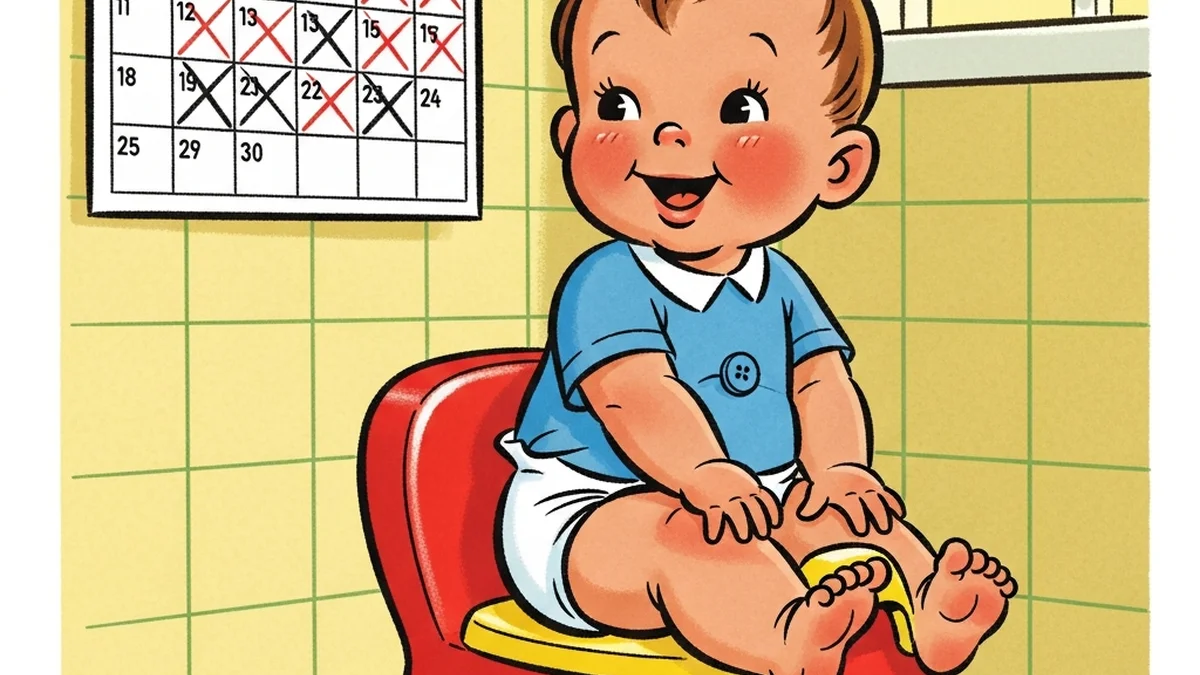
You bought the potty. You watched three YouTube videos. You cleared your weekend. And now it's Monday, your kid still won't sit on the thing, and you're wondering if you broke something.
You're not broken. Neither is your kid. Potty training just takes longer than most people expect.
How Long Does Potty Training Take on Average?
Most children need 3 to 6 months to become reliably dry during the day. That's the number backed by pediatric research and parent surveys alike. Not three days. Not one weekend. Months.
If your kid started showing signs of readiness around 24 months, the full process from "first time on the potty" to "I don't carry backup pants anymore" typically wraps up somewhere between 27 and 30 months. Start closer to 18 months, and studies show it can stretch to 13 or 14 months total. Start after 27 months, and it tends to move faster, often under 10 months.
The sweet spot, according to research? Somewhere between 27 and 32 months for most kids.
Why the "3-Day Method" Doesn't Tell the Whole Story
You've probably heard of the 3-day potty training method. It works for some families, and it's a solid way to kick things off. But "trained in three days" usually means "started using the potty sometimes in three days."
Full reliability? That takes weeks to months. Accidents don't disappear on day four. They taper off gradually.
Here's a rough breakdown of what to expect:
- Week 1 to 2: 5 to 10 accidents per day is completely normal
- Month 1: 2 to 5 accidents per day
- Months 2 to 3: 1 to 2 accidents per day
- Month 4+: Occasional accidents during stress, illness, or big changes
That progression? Totally normal. Your kid isn't failing. They're learning.
What Affects How Long Potty Training Takes
Not all kids move at the same pace, and that's got nothing to do with intelligence or parenting skill. Here's what actually affects the timeline.
Age at Start
Kids who start between 27 and 32 months tend to finish fastest. Starting earlier doesn't mean finishing earlier. In fact, research shows that children who begin training before 24 months often take the longest overall.
Readiness Signs
A child who can stay dry for two hours, pull their pants up and down, and tell you when they need to go is going to train faster than one who can't yet. Readiness matters more than age.
Temperament
Some kids are cautious and need extra time to feel safe trying something new. Others are strong-willed and need to feel like it's their idea. Both are normal. Both just need a different amount of time.
Consistency
If everyone in your kid's life is on the same page (daycare, grandparents, both parents), training moves faster. Mixed signals slow things down.
Gender
Girls tend to finish potty training about 2 to 3 months earlier than boys on average. It's a trend, not a rule. Plenty of boys train quickly and plenty of girls take their time.
Daytime vs. Nighttime: Two Different Timelines
Daytime dryness and nighttime dryness are controlled by different parts of the body. Daytime training is mostly about muscle control and habit. Nighttime dryness depends on a hormone called vasopressin that reduces urine production during sleep.
Most kids master daytime between ages 2 and 3. Nighttime dryness? That often doesn't click until age 5 to 7. Some perfectly healthy kids still wet the bed at 6. That's biology, not a training failure.
So if your 3-year-old is dry all day but soaking through at night, that's right on schedule. Check out our guide on dry during the day but wet at night for more on handling that gap.
When to Hit Pause
If you've been at it for 2 to 3 weeks with zero progress, that's a signal. Not a failure signal. A "not yet" signal.
Take a break. Two to three months off, then try again. Most pediatricians recommend this approach, and it works. Kids who aren't ready will resist. Kids who are ready will surprise you with how fast they pick it up.
About 80% of families hit at least one setback during training. If that happens to you, you're in the majority.
What "Done" Actually Looks Like
A lot of parents wonder what counts as "potty trained." Here's a realistic definition:
- Your child tells you (or goes on their own) when they need to use the bathroom
- Accidents happen less than once a week
- You don't need to prompt them every 30 minutes
- They can manage most of the process themselves (with help for wiping and hand-washing)
That doesn't mean perfection. Occasional accidents during exciting play, long car rides, or when they're getting over a cold are completely normal for months after training.
Key Takeaways
- Most kids need 3 to 6 months to become reliably daytime dry
- Starting between 27 and 32 months tends to result in the fastest training overall
- Nighttime dryness is separate and often doesn't happen until age 5 to 7
- If you're seeing zero progress after 2 to 3 weeks, pause and try again in a couple months
- Setbacks are part of the process for the vast majority of families
Frequently Asked Questions
Is it normal for potty training to take 6 months?
Yes. Six months is well within the normal range. Research consistently shows 3 to 6 months as the average. Some kids are faster, some take longer, and both are fine.
Why is my 3-year-old still not potty trained?
Plenty of 3-year-olds are still working on it. The average age for completing daytime potty training is around 36 months. If your child is showing no readiness signs at all, it's worth mentioning to your pediatrician, but most of the time it's just a matter of timing.
Does potty training take longer for boys?
On average, yes. Boys tend to finish about 2 to 3 months after girls. But it's a statistical trend, not a guarantee. Your individual child's readiness and temperament matter more than gender.
Should I go back to diapers if potty training isn't working?
If you've been trying for 2 to 3 weeks with no progress at all, taking a break is a good idea. That doesn't mean you failed. It means your child's body or brain needs a bit more time. Try again in 2 to 3 months.
When should I worry about potty training taking too long?
Talk to your pediatrician if your child is over 4 and showing no interest, if they're in pain during bowel movements, or if they were fully trained and suddenly regressed for more than a few weeks with no obvious cause.