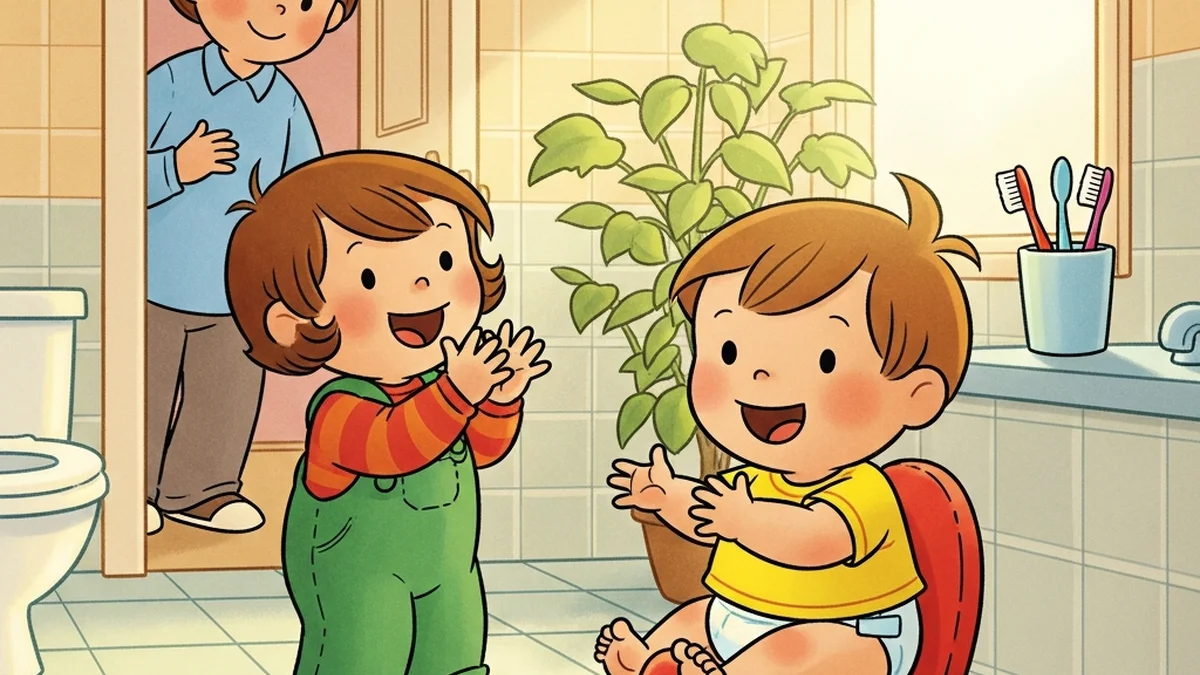
Your second kid just pulled their pants down, climbed onto the potty chair, and peed. No ceremony. No stickers. No 3-day bootcamp. They watched their big sibling do it about 400 times, and one day they decided they were ready too.
Meanwhile, you spent three weeks crying over your firstborn's progress chart.
If potty training your second child feels weirdly easy (or confusingly different), you're not imagining it. The process genuinely shifts the second time around, and not just because you've done it before.
Why the Second Kid Often Trains Faster
Younger siblings have a built-in advantage: a live-action role model who looks exactly like the person they most want to be. Toddlers copy their older siblings constantly. Eating, talking, pretending, dressing. Using the bathroom ends up on that list too.
Pediatric guidance from sources like Mayo Clinic points to observational learning as a real factor. Second children aren't smarter or more developmentally advanced. They just have better data.
Parents also approach it differently. You're calmer. You know accidents aren't a catastrophe. You've stopped believing the friend who swore her kid trained in a weekend at 20 months. That quieter energy rubs off on the kid.
The Range Is Wider Than You'd Think
Some second children train noticeably earlier than their older sibling did. Others take just as long, or longer. A few stall out even though they seemed "ready" at 22 months because a baby sister just arrived and everything feels unsteady.
Common patterns parents report:
- 2 to 6 months earlier than the first. The most common outcome when the older sibling is 2 to 4 years ahead.
- About the same age, but faster. Total training window shrinks from weeks to days.
- Later than expected. Usually because of a disruption (new baby, move, daycare change) or because the kid has a temperament that wants nothing to do with copying their sibling.
If your second is tracking slower than the first, don't panic. Personality matters more than birth order. A cautious second child will still train in their own time, and that time might be months after their sibling's was. That's normal.
What You Should Actually Do Differently
Most second-time training advice boils down to: do less. Your kid is doing half the work for you.
Let the older sibling be the model
You don't have to script this. Just let your younger child tag along when the older one uses the bathroom. Leave the door open. Narrate softly if it helps: "Look, your sister is going pee. When she's done, she'll wash her hands."
No pressure to sit. No demand to copy. Just exposure. Kids absorb more than you realize.
Skip the big intro speech
You probably gave your first kid the whole "big kid underwear" pitch with props. Don't bother this time. Your second already knows what a potty is and what happens on it. Just offer: "Want to try sitting on your potty too?"
Start at their pace, not your schedule
A huge mistake parents make with second children is pushing them to start earlier because the first one trained late. Readiness is individual. Watch for the 8 signs of readiness. If they're not there at 22 months, that's fine. Forcing it creates battles you don't need.
Stop using first-kid timelines as a benchmark
It's tempting. Resist it. Your second child isn't your first child, and direct comparisons breed frustration (yours) and resistance (theirs). Each kid gets a clean slate.
When a New Baby Throws Things Off
Sometimes the situation flips. Your firstborn was potty trained, and now a new baby has arrived and they're suddenly having accidents again. Or your almost-ready second child stalled the week you brought baby number three home.
This is one of the most common forms of regression after a new baby. Toddlers regress when they feel unmoored. More diaper changes, more baby attention, less of you.
The fix isn't pressure. It's connection. Twenty minutes of one-on-one time with the regressing child each day usually does more than any sticker chart. Acknowledge the mess calmly, rebuild routine, and give it 2 to 4 weeks.
Training Two Kids in Overlapping Windows
What if your second is ready to train while your first is still working on night dryness or wiping? That's common with kids spaced 18 to 30 months apart.
A few things that help:
- Don't stack major milestones. Don't start night training your older kid the same week you start day training your younger one. Pick one active training target at a time.
- Use two potties or a chair plus a toilet insert. Fighting over the bathroom creates accidents. Having a second setup saves a lot of standoffs.
- Celebrate separately. Don't say "Your sister did it, now you try." That turns peeing into a competition and backfires with most toddlers.
- Talk to daycare. If both kids are there, ask the providers to treat them as separate trainees. Most are happy to.
What About the First Kid's Feelings?
Older siblings sometimes regress when the younger one starts training. They see attention, praise, and underwear excitement flowing to baby, and they want in. A week of "accidents" at age 4 is usually about jealousy, not bladder control.
Loop them in. Ask them to help. "Can you show your brother how you wash your hands?" Older siblings love being the expert. Give them that role and the jealousy often fades.
What's the Same No Matter Which Kid It Is
Not everything is different. Some rules don't change:
- Readiness signs still matter more than age.
- Consistency still wins. Don't flip between pull-ups and underwear mid-day.
- Accidents are still part of learning, not failure.
- Night training is still a separate, later skill from daytime training. Hormones, not willpower.
- Power struggles still lose. Every time. See our guide on power struggles if this pattern shows up.
Realistic Timeline for Second-Time Training
For most families, active daytime training with a second child takes about 3 to 14 days of focused effort once the kid is ready. Full reliability (fewer than one accident a week) usually lands around 4 to 8 weeks. Night dryness can still take months to years, same as any kid.
If your second is training in a week, great. If it's taking a month, also normal. Compare your kid to your kid, not to their sibling or your neighbor's toddler. The comparison trap is real.
Key Takeaways
- Second children often train faster because they've watched a sibling do it for months or years. Let the older kid model, and don't oversell the process.
- Wider timing range is normal. Some second kids train 6 months earlier, others later. Personality beats birth order.
- Don't start training based on the first child's age. Watch your second child's actual readiness cues.
- If a new baby arrived recently, expect regression from either child. Give it 2 to 4 weeks and double down on one-on-one time.
- Never compare siblings out loud. Each kid's progress is their own.
Frequently Asked Questions
Do second children really potty train faster than first children?
Often, yes. Younger siblings benefit from watching their older sibling use the toilet daily, which gives them a head start. Parents are usually more relaxed the second time too, which reduces pressure. That said, personality matters more than birth order, so some second kids still train slower than the first.
At what age should I potty train my second child?
Watch for readiness, not the calendar. Most children show signs between 22 and 30 months, though some second children signal as early as 18 months because they want to copy their sibling. Don't force it just because your first was trained by a certain age.
Should I use the 3-day method with my second child?
It can work well with second children because they already understand the goal. If you're curious, our write-up on the 3-day method explains when it fits and when it doesn't. For many second kids, a looser approach works just as well because exposure from an older sibling already did the teaching.
My firstborn started having accidents after my second started training. Why?
Usually jealousy. Your older child sees praise and attention going to their younger sibling for basic bathroom skills and wants the same attention. Give them a role (big-kid helper, hand-washing coach, sticker distributor) and the accidents usually fade within a week or two.
What if my second child refuses to copy their older sibling?
Respect the resistance. Some toddlers dig in precisely because they're being compared. Back off, offer the potty without pressure, and wait 2 to 4 weeks before trying again. Our guide to potty training resistance has more strategies.
Do I need to buy all new potty gear?
Probably not. If the old potty chair is still in decent shape, reuse it. The only thing worth buying fresh is underwear your second kid gets to pick out themselves. Ownership matters. Check our essentials page if you want ideas.