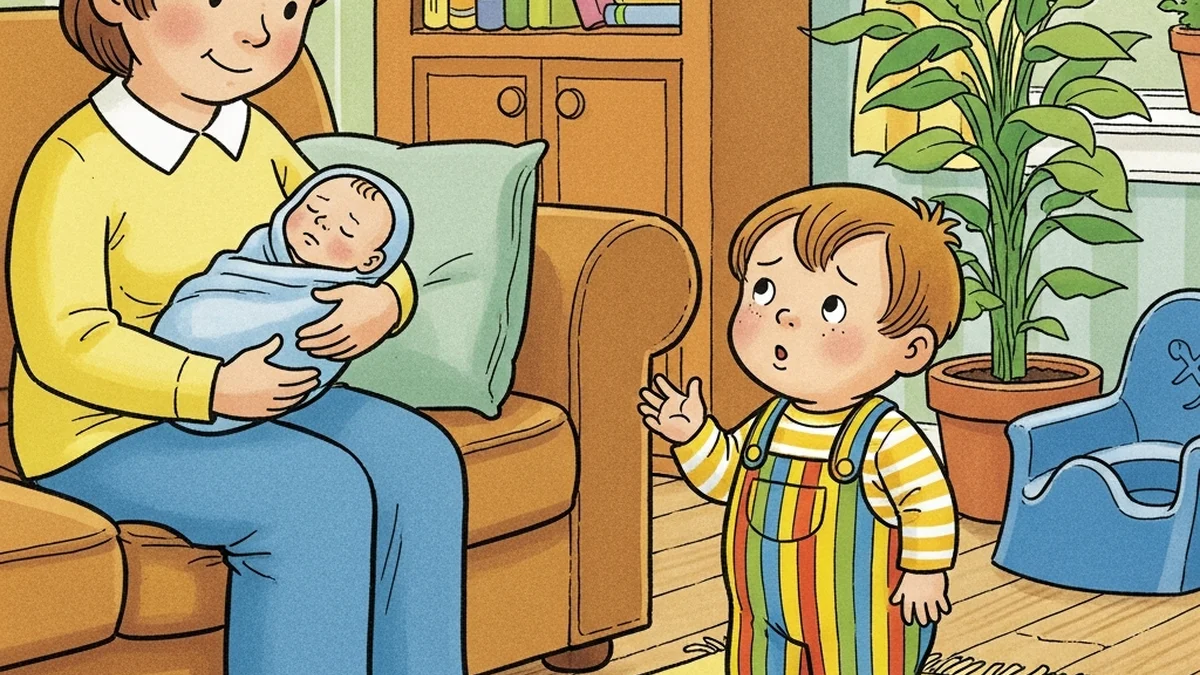
Your toddler had been using the potty for weeks. Maybe even months. You were starting to feel like you'd actually cracked the code. Then the new baby came home, and suddenly your 3-year-old is peeing on the floor and asking for diapers again.
Take a breath. This is one of the most common potty training setbacks out there, and it doesn't mean you're starting over.
Why a New Sibling Triggers Potty Training Regression
A new baby flips your toddler's world upside down. Their routine changes. Your attention shifts. The house feels different. And toddlers between ages 2 and 4 don't have the words to say "I'm feeling scared and left out." So they show you instead.
Potty training regression after a new baby is your child's way of saying, "I need to feel safe again." Going back to diapers or having accidents gives them something familiar when everything else feels new and unpredictable.
There's also a copycat factor. Your toddler watches you change the baby's diaper all day long. The baby gets held, cooed at, and cleaned up with zero expectation. That looks pretty appealing when you're 2.
What Potty Training Regression After a New Baby Looks Like
Not every accident means regression. Here's what to watch for:
- Frequent daytime accidents after weeks or months of being dry
- Refusing to sit on the potty when they used to go willingly
- Asking for diapers or wanting to wear the baby's diapers
- Bedwetting returning after dry nights had become the norm
- Baby talk or clinginess alongside the potty setbacks
If your child is doing one or more of these things within a few weeks of the baby arriving, the connection is pretty clear.
6 Ways to Get Potty Training Back on Track
1. Don't Go Back to Diapers
This is the hardest one, especially when you're sleep-deprived and juggling a newborn. But switching back to diapers sends a confusing signal. Your toddler gains comfort from consistency, and pulling the potty away tells them you've lost confidence in their ability.
Pull-ups for naps and nighttime are fine. But during the day, stick with underwear.
2. Carve Out 15 Minutes of One-on-One Time Daily
This is the single most effective thing you can do. Set the baby down (safely), and spend 15 uninterrupted minutes with your toddler doing something they choose. Read a book. Build blocks. Roll a ball back and forth.
It doesn't have to be fancy. It has to be focused. No phone, no baby, just them. That small deposit of attention can reduce accidents within days.
3. Make Them the "Big Kid" (Without Pressure)
Frame being older as a perk, not a burden. "The baby can't eat ice cream, but you can." "The baby has to sleep in a crib, but you get to pick your pajamas."
Let them help with the baby in small ways if they want to. Fetching a diaper. Picking out the baby's outfit. This gives them a role that feels important instead of replaced.
4. Skip the Punishment, Skip the Big Reactions
When your toddler has an accident, the goal is boring. "Oops, let's clean up." That's it. No lecture. No disappointed sighs. No "you know better than this."
Shame makes regression worse. Your child isn't doing this to annoy you. They're doing it because they're overwhelmed and don't know how to tell you.
5. Keep the Potty Routine Predictable
Offer potty sits at the same times every day: after breakfast, before lunch, after nap, before bath. Keep the rhythm steady even when the rest of the house is chaotic.
If your child refuses, that's okay. Say "The potty's here when you're ready" and walk away. Low pressure, high consistency.
6. Talk About Feelings (Even If They Can't Yet)
Name what you see. "It's hard having a new baby around, huh?" or "I think you might be missing how things used to be." You're not asking them to agree. You're showing them that their feelings make sense.
Kids who feel heard tend to bounce back faster than kids who feel rushed.
How Long Does Regression Last After a New Baby?
Most potty training regressions tied to a new sibling resolve within 2 to 4 weeks. Some kids bounce back in a few days once they feel secure again. Others need a couple of months, especially if the transition is paired with other changes like moving or starting preschool.
If your child's regression lasts more than 6 weeks with no improvement, or if you're seeing signs of pain during urination or bowel movements, it's worth a call to your pediatrician. Urinary tract infections and constipation can look like behavioral regression, and they're easy to rule out with a quick visit.
What If You Haven't Started Potty Training Yet?
If your toddler was showing readiness signs but you haven't officially started, you've got a choice to make. Starting potty training during the first 2 to 3 months after a new baby arrives adds stress to an already stressful time.
There's no shame in waiting. Let the dust settle. Once your toddler has adjusted to their new sibling and your household has found a rhythm, you'll have a much better shot at success. Most pediatricians suggest waiting at least 2 months after a major life change before beginning potty training.
Key Takeaways
- Potty training regression after a new baby is normal and usually resolves within 2 to 4 weeks.
- Don't switch back to daytime diapers. Consistency helps your toddler feel secure.
- Spend 15 minutes of focused one-on-one time with your toddler every day.
- Keep reactions to accidents calm and boring. Shame makes things worse.
- Call your pediatrician if regression lasts longer than 6 weeks or involves pain.
Frequently Asked Questions
Should I put my potty-trained toddler back in diapers when the new baby arrives?
No. Going back to daytime diapers sends a mixed message and can extend the regression. Stick with underwear during the day. Pull-ups for naps and overnight are fine if you were already using them. Your toddler needs to see that you still believe in their ability, even when accidents happen.
Is it normal for a 3-year-old to regress after a sibling is born?
Completely normal. The arrival of a new sibling is one of the most common triggers for potty training regression in children between ages 2 and 4. It's a sign of emotional stress, not a failure in training. Most kids get back on track within a few weeks once they feel secure in their place in the family.
How can I potty train my toddler while caring for a newborn?
Keep it simple and routine-based. Offer potty sits at the same times each day so you don't have to think about it. Ask your partner, a grandparent, or a friend to hold the baby during potty time if possible. And give yourself grace. You're running on less sleep and more stress. A few extra accidents aren't the end of the world.
When should I worry about my toddler's potty training regression?
If your child's regression lasts more than 6 weeks with no signs of improvement, or if they're showing pain during urination or bowel movements, talk to your pediatrician. Constipation and urinary tract infections can mimic behavioral regression and need medical attention.
Does the age gap between siblings affect potty training regression?
It can. Toddlers between 2 and 3 are most likely to regress because they're in the thick of potty training when the sibling arrives. Kids over 4 who've been fully trained for a year or more rarely go backward. The closer the age gap, the more likely you'll see some overlap between potty training and new-baby adjustment.