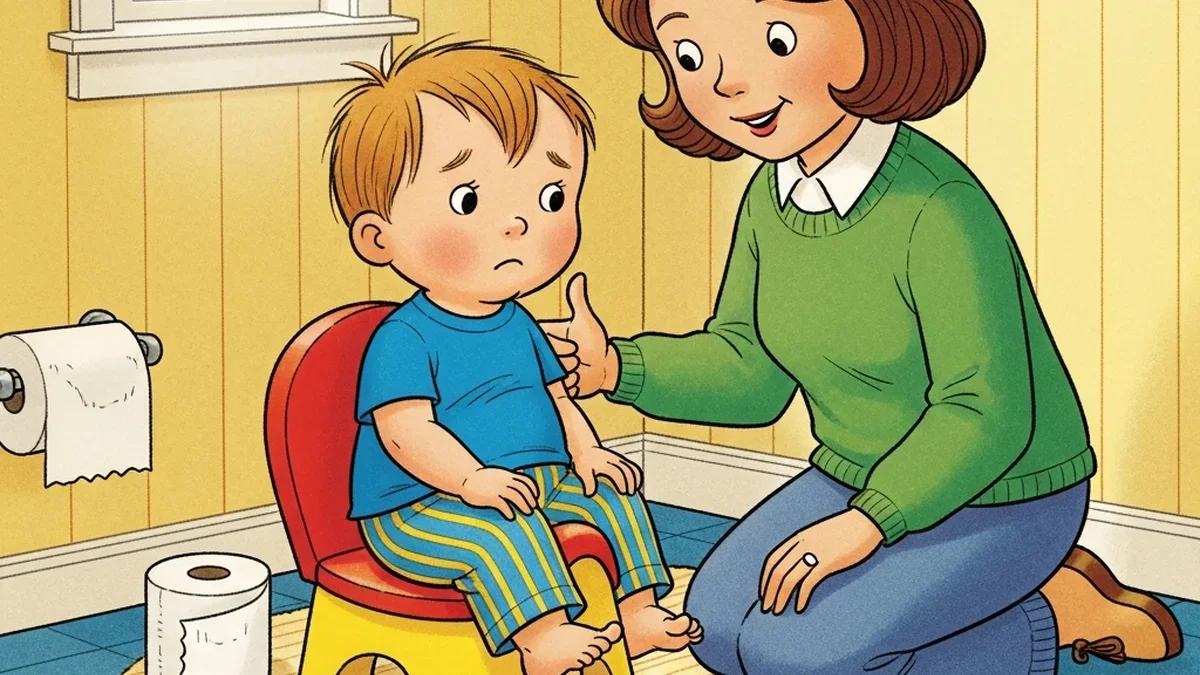
The Wet-Shorts Math Every Parent Does
It's day three. Your toddler made three perfect trips to the potty this morning, and you let yourself feel a little proud. Then they soaked their shorts twice before lunch.
So you start doing the math in your head. How many potty training accidents are normal, and at what point does the count mean something's actually wrong?
Here's the short version. Way more accidents are normal than you'd guess. They aren't a sign you're failing. They're the mess that the learning is made of.
How Many Accidents Are Normal During Potty Training?
The honest answer is that the number drops over weeks, not hours. A child who's been out of diapers for three days and a child who's been trained for three months are at completely different stages, and their accident counts should look nothing alike.
Here's a realistic picture of what most kids do, based on guidance from the American Academy of Pediatrics and what plays out in real living rooms.
The first few days
Expect a lot. Several accidents a day is completely normal in the first 72 hours, and some kids have six or more on day one. They're still connecting the feeling in their body to the word for it and the place it's supposed to go. That's three separate skills, all brand new.
The first two to four weeks
Most kids settle into one or two accidents a day during this stretch. You'll see good mornings and rough afternoons. Progress in potty training is rarely a straight line, and a great Tuesday followed by a soggy Wednesday is the actual pattern, not a setback.
Three to six months in
By now an accident becomes an occasional thing, maybe once or twice a week. The American Academy of Pediatrics notes that even a child who's been trained for six months or more may still have an accident about once a week, and that's still within normal range.
Daytime accidents usually taper off within about six months of finishing training. Plenty of 3- and 4-year-olds still have the odd accident too, especially when they're deep in play. One wet pair of pants on a busy day doesn't erase months of progress.
Why the Accidents Keep Happening
Bladder control is a skill that builds, not a switch that flips. Understanding why accidents happen makes them a lot less stressful to clean up.
The most common reason by far is simple. Your toddler is having too much fun to notice the urge until it's already too late. Play wins. Every time.
Accidents also spike around excitement, big feelings, or anywhere unfamiliar. A new daycare room, a birthday party, a long car trip. Sometimes a kid holds it too long because stopping the game feels like a worse deal than the wet feeling.
A short streak of accidents over a few days is not the same as a true potty training regression, which tends to come with a clear trigger and lasts longer. If you want the bigger timeline picture, our guide to how long potty training really takes sets honest expectations.
How to Cut Down on Accidents
You can't eliminate accidents, but you can lower the count with a few specific moves.
- Run timed potty breaks. For the first few days, head to the potty every 20 to 30 minutes whether or not they say they need to go. Once the catches outnumber the misses, stretch it to every hour, then every two.
- Interrupt the play, don't ask. If you ask "do you need to go," a busy toddler will say no on reflex. Skip the question. Just say "potty time" and walk them over.
- Stay home and low-key the first few days. Two or three quiet days at home, without errands or a rotating cast of caregivers, gives the new skill room to stick.
- Keep your reaction flat and kind. Respond to every accident the same calm way. "Pee goes in the potty. Let's try again next time." No scolding, no big sigh. Have them help carry the wet clothes to the basket.
- Praise the catch, not just dry pants. Make a small deal out of every successful trip so the potty, not the accident, is where the attention lives.
When Accidents Are Worth a Call to the Pediatrician
Most accidents are routine. A few patterns are worth a conversation with your doctor. This is educational coaching, not medical advice, so when something feels off, trust that and ask.
- Pain or burning while peeing, cloudy or strong-smelling urine, or a sudden jump in accidents after weeks of dryness. These can point to a urinary tract infection and deserve a prompt check.
- Constant dribbling, straining, or very hard or infrequent poops. Constipation is a sneaky cause of pee accidents because a full bowel presses on the bladder. Our post on breaking the constipation cycle covers this.
- Frequent daytime accidents in a 3-year-old that aren't shrinking after several months of consistent effort. That's worth mentioning at your next visit.
Key Takeaways
- Several accidents a day is normal in the first week; most kids drop to one or two a day within two to four weeks.
- By three to six months, expect an occasional accident, roughly once or twice a week, even in kids who seem fully trained.
- Daytime accidents usually taper off within about six months of finishing training.
- The top cause is being too absorbed in play, so timed potty breaks every 20 to 30 minutes early on make the biggest difference.
- Call your pediatrician for painful peeing, a sudden spike after dryness, or frequent accidents in a 3-year-old that aren't improving.
Frequently Asked Questions
How many accidents a day is normal when you start potty training?
In the first few days, several accidents a day is normal, and some kids have six or more on day one. By the end of the first month, most children are down to one or two a day.
How long do potty training accidents last?
Daytime accidents usually taper off within about six months of finishing training. An occasional accident after that, around once a week, is still considered normal even for a fully trained child.
Is it normal to still have accidents after being trained for months?
Yes. The American Academy of Pediatrics notes that a child trained for six months or more may still have an accident about once a week. A single wet day, especially during exciting or busy times, isn't a regression.
When should I worry about potty training accidents?
Talk to your pediatrician if there's pain or burning during peeing, cloudy or smelly urine, constant dribbling, signs of constipation, or frequent daytime accidents in a 3-year-old that aren't improving after several months.
Do accidents mean I should stop potty training?
Usually not. Accidents are part of how the skill builds, not a sign to quit. If your child seems genuinely distressed or the accidents climb instead of falling over a couple of weeks, a short pause and reset can help more than pushing through.