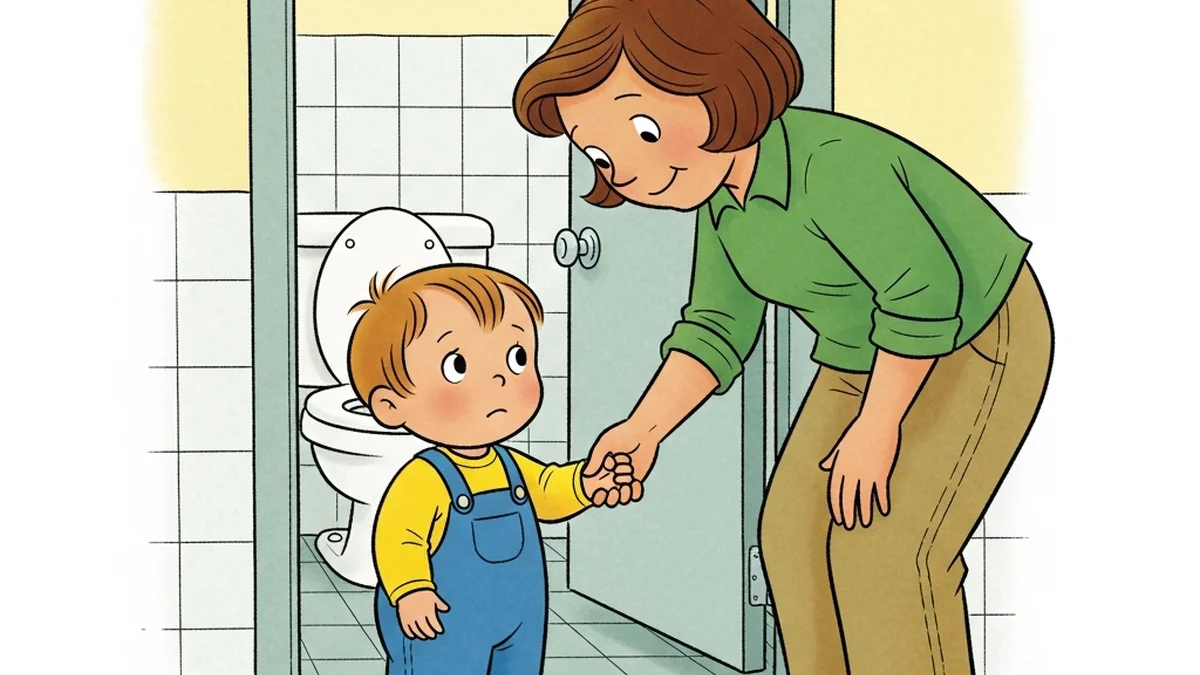
You're at Target. Your toddler announces "potty" with the urgency only a newly trained two-year-old can muster. You sprint to the family restroom, swing them onto the toilet, and the second their bottom shifts even half an inch, the auto-flush rockets off underneath them with a noise that sounds like a small jet engine. Cue the screaming. Cue the refusal to ever sit on a public toilet again.
Auto-flush toilets and potty-training toddlers do not get along. The flush is loud, sudden, unpredictable, and feels like it's happening to them, not for them. For a kid who's already a little nervous about pooping in a strange bathroom, one bad surprise flush can set you back weeks.
Good news: this is one of the most fixable potty training problems out there. A few tricks and you can use just about any public restroom without the meltdown.
Why Auto-Flush Toilets Scare Toddlers So Much
Adults barely notice a public toilet flush. To a small body sitting two feet above the bowl, it's a completely different experience.
Public toilets use commercial flush valves that move 10 to 15 times the water of a home toilet, and they do it in about two seconds. The noise can hit 80 to 90 decibels, which is louder than a vacuum cleaner. The water moves under their bottom. The sensor light blinks red without warning. Sometimes it triggers while they're still sitting. To a toddler who's still figuring out where pee even comes from, it can genuinely feel like the toilet is alive and angry.
If your child is also working through a general fear of flushing, our guide on toddlers who are afraid of the flush covers the home version of this problem in more depth.
The Sticky Note Trick (Your Best Friend)
This is the move every veteran parent will tell you about, and it works on almost every commercial auto-flush sensor.
The sensor is the small dark circle or rectangle on the back of the toilet, usually just above the flush lever. Cover it, the toilet can't see motion, the toilet doesn't flush. Uncover it when you're done, it flushes once. That's it.
What to keep in your bag:
- Sticky notes. The classic. A 3x3 Post-it covers most sensors. Slap it on, the flush is paused for the entire visit.
- Painter's tape or masking tape. A pre-torn strip stuck to the inside of your wallet works in a pinch and peels off cleanly.
- A folded square of toilet paper. The free, always-available backup. Wet it slightly so it sticks for 60 seconds.
- A "potty patch" or sensor cover. A few small companies sell reusable silicone or plastic flush blockers for under $10. Overkill for occasional outings, helpful if you're traveling a lot.
Slap the cover on before your child sits down, not after. The flush usually triggers the second a small body lands on the seat because it's a smaller object than the sensor expected, and any tiny shift mid-pee can trigger it too.
Prep Your Child Before You Walk Into the Stall
Tools handle the toilet. Words handle your kid. Both matter.
Before you open the stall door, kneel down and tell them what's about to happen. Something like: "This bathroom has a noisy toilet, but I'm going to cover the button so it stays quiet while you sit. When we're all done, we'll go out the door and then it makes its big sound."
That short script does three things. It removes the surprise. It tells them you're in charge of the noise. And it puts the loud part after the exit, which lets them brace for it instead of feeling ambushed.
Cover Their Ears at the End
When you do let the auto-flush fire, do it with intention. Stand up, take a step toward the door, gently put your hands over their ears, and count down: "Three, two, one, big roar!" Make it sound silly, not scary. A lot of kids stop fearing the flush once they feel like they're starting it instead of dodging it.
Pick Better Bathrooms When You Can
Not every public restroom is a war zone. Some are dramatically better than others.
Look for these when you have a choice:
- Family or single-occupancy restrooms. Many have a regular manual flush handle, not a sensor.
- Smaller shops, cafes, and boutique stores. They almost always use residential-style toilets.
- Airbnbs and hotels (not the lobby). Home-style flushes, quieter, and lower bowls.
- Newer playgrounds and libraries. A lot of public buildings updated to manual flush with hygiene buttons after the pandemic.
Avoid when possible: airports, stadiums, gas stations, big-box stores, and most fast food chains. Those are commercial-flush territory and the noise is unavoidable. If a long outing is unavoidable, plan your route so a "safer" bathroom is within ten minutes whenever you can.
Bring a Travel Potty as Backup
Sometimes the answer isn't to use the scary toilet at all. A folding travel potty in your car or stroller lets you sidestep the whole problem when your child just won't go into a public bathroom.
Two formats work well:
- A folding potty seat insert that fits on top of an adult toilet so they can sit higher and steadier. Helps with fear of falling in too.
- A standalone collapsible travel potty with disposable liner bags. Use it in the car, in a quiet corner of a park, or in your stroller seat.
For more on travel-friendly gear and stocking the right bag, our list of potty training essentials covers the basics. For longer trips, the car rides guide goes deeper on how to keep accidents out of the car seat.
What to Do After a Bad Flush
If a surprise flush already happened and your child is now refusing public toilets, you haven't ruined anything. You've just got a small fear to work through.
Spend a week or two doing "practice runs." Go into bathrooms together with no pressure to actually go. Show them the sensor. Show them the sticky note. Let them cover it themselves if they want to. The moment a kid feels like they have a tool, the fear shrinks fast.
At home, keep things calm and consistent. Don't quiz them on whether they'll use a public toilet next time. Just stick to your normal routine and offer the travel potty as a backup any time you're out. Most kids are back to using public toilets within a couple of weeks once they trust that you won't let the surprise happen again.
Key Takeaways
- Cover the auto-flush sensor with a sticky note, tape, or wet toilet paper before your child sits down.
- Narrate the plan out loud so they know the loud flush isn't coming until after you leave.
- Cover their ears and count down when you do trigger the flush so they feel in control.
- Choose family restrooms, small shops, and libraries over big-box stores and airports when you can.
- Keep a folding travel potty in the car as a no-stress backup.
- After a bad scare, do low-pressure practice visits with no goal except looking around.
Frequently Asked Questions
Why does the auto-flush trigger while my child is still sitting?
The sensor is calibrated for an adult body. A toddler is smaller, so the sensor sometimes "loses" them mid-pee, especially if they shift their weight. As soon as the sensor thinks the seat is empty, it flushes. Covering the sensor solves this completely.
Is the sticky note trick okay to do? It feels weird.
It's fine. The sticky note doesn't damage anything, the sensor resets the moment you remove it, and the toilet still flushes once you uncover it on your way out. Pediatric occupational therapists who work with sensory-sensitive kids recommend it routinely.
My child is autistic or sensory-sensitive. Any extra tips?
Yes. Bring noise-reducing headphones or earmuffs that the child wears the entire time you're in the bathroom. Practice using them at home so they're a familiar comfort tool, not a new thing introduced under stress. Our sensory-friendly potty training guide has more ideas for kids who need a slower entry point.
What if my toddler still refuses public bathrooms entirely?
Use a travel potty without making it a battle. Don't push the public toilet for a week or two. Many kids cycle out of this fear naturally once they've had a few uneventful potty trips that they were in charge of. If the avoidance lasts more than a month or your child is holding pee for very long stretches, check in with your pediatrician to rule out other issues like constipation or a UTI.
Should I just stay home during potty training to avoid this?
Don't have to. Most parents handle this with a small kit (sticky notes, hand sanitizer, an extra outfit, a travel potty) and a few weeks of practice. Avoiding outings entirely tends to make the fear bigger when it's finally faced. Short, calm trips with the right tools build confidence faster than waiting.