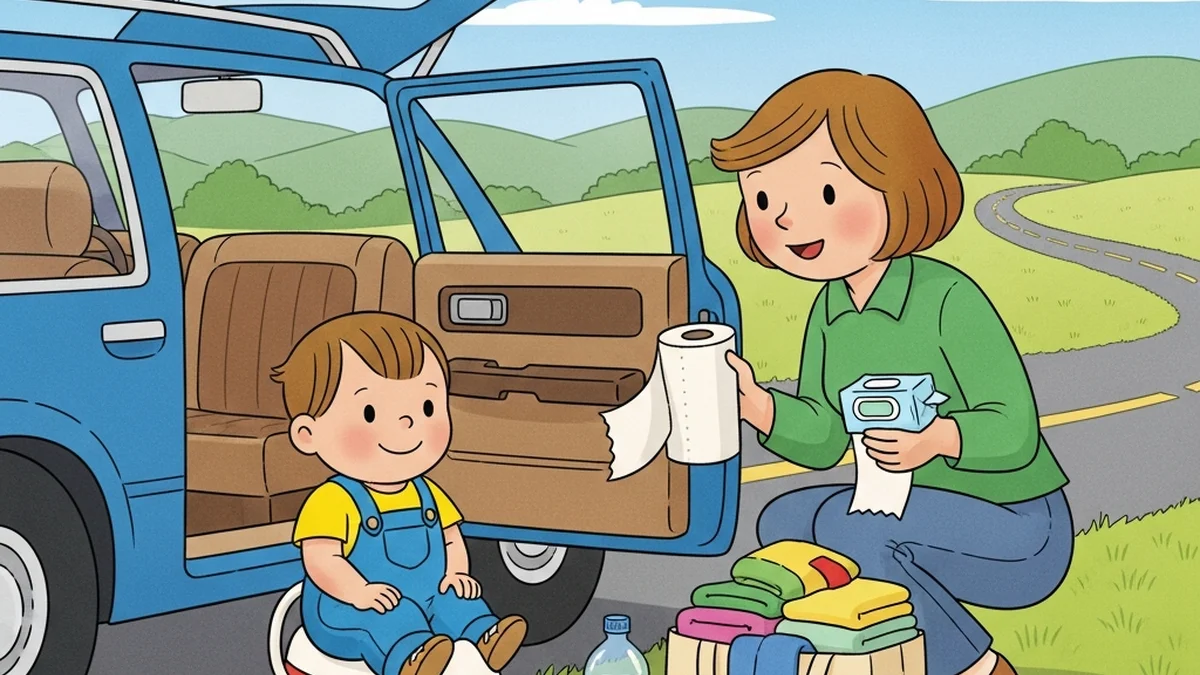
You're two hours into a six-hour drive. Your three-year-old just finished a sippy cup of water, and the next exit with a real bathroom is forty minutes away. Then comes the sentence every potty-training parent dreads from the back seat. "Mom, I have to go potty right now."
Long car rides are one of the trickiest situations for potty training. You can't pull over instantly, your toddler can't hold it very long, and the car seat you love turns into a crime scene if things go sideways. The good news is that almost every accident on the road comes down to planning, not luck.
Here's how to handle potty training on long car rides without ruining your progress, your car seat, or your sanity.
When Is Your Toddler Ready for a Long Car Ride?
If your child only just started training, don't plan a big road trip yet. Most experts suggest waiting at least four weeks after the first day of potty training before attempting a drive over two hours. That gives your toddler time to get steady with self-initiating and recognizing the urge to go.
Rough readiness signal: your child can stay dry for two hours at home, asks for the potty most of the time without a prompt, and has at least one successful trip to an unfamiliar bathroom under their belt. If any of those aren't in place yet, keep trips short for now. For a refresher on readiness, see our guide to the 8 signs your toddler is ready for potty training.
The Two-Hour Rule
Here's the single most useful rule for road trips with a trained toddler. Stop every two hours, and everyone tries. Not just your child. You, your partner, grandma, the dog if you brought one. Everyone goes.
Why? Because toddlers take their cues from what they see. When they watch everyone else use the bathroom at a rest stop, the break feels normal, not special. They're more likely to sit and actually go, even if they said they didn't need to five minutes earlier.
Set the timer before you leave. If your child asks to stop sooner, pull over. When a newly trained toddler says they need to go, they mean right now. That urgency is the whole reason kids have accidents in the car.
What to Pack in Your Car Potty Kit
Stash a single zippered bag in the back seat. When you need it, you don't want to be digging through a trunk full of suitcases. Keep it within arm's reach of whichever adult is not driving.
- A portable travel potty. The Kalencom Potette Plus and the OXO 2-in-1 are both popular because they work as a standalone potty or as a seat reducer on a real toilet.
- Disposable liner bags. Plastic bags with absorbent pads that snap into the travel potty. No cleanup, just toss.
- Three to five full outfit changes. Underwear, pants, socks, and a spare shirt. Accidents soak through more layers than you'd think.
- Baby wipes and hand sanitizer. You won't always have a sink nearby.
- Two or three large trash bags. For soiled clothes or sealed diapers.
- A waterproof puppy pad or two. Great for laying down in the car seat after an accident so you can keep driving while the seat dries.
- A small roll of paper towels. For the inevitable.
If you're heading somewhere for a longer stay, our post on potty training on vacation covers what to pack for the destination once you've survived the drive.
Protecting the Car Seat the Right Way
This part matters. Most aftermarket car seat liners and "piddle pads" are not crash-tested. They can shift during a collision and compromise how the harness fits your child. That's a real safety concern, not a marketing one.
If you want protection, use a liner that's made by the same company as your car seat and labeled compatible with that model. Britax, Clek, Chicco, and Diono all make their own. If your brand doesn't offer one, skip the liner entirely and use these safer alternatives instead:
- A waterproof cloth cover over the child's underwear (like a PUL diaper cover) adds a layer without going near the harness.
- A thin absorbent puppy pad placed only on the seat after an accident, so you can keep driving until the next stop without having to dismantle the seat.
- An old beach towel folded under the child only while parked and changing clothes, then removed before you drive.
Never add padding between your child and the harness. The harness needs to sit flat against their body to work.
Managing Liquids Without Dehydrating Your Kid
The classic mistake is either flooding your toddler with juice (a full bladder in thirty minutes) or cutting all liquids for the whole drive (a cranky, dehydrated toddler). Neither one helps.
Aim for the middle. Offer water in small sips every thirty to forty minutes rather than a big cup all at once. Skip juice and milk during the drive because both fill the bladder faster than water. Save the sippy cup with milk for rest stops when a bathroom is right there.
One more thing. A toddler who's distracted by a snack or a show is a toddler who isn't tuned in to their body. Build in quiet moments every forty-five minutes or so. Ask "Do you need to go potty?" at least once per moment, not while a favorite song is playing.
The Pull-Up Question
Some parents feel guilty about putting a pull-up on for a long car ride. Don't. A pull-up during a six-hour drive isn't backsliding. It's a safety net for a situation where your child can't control timing.
Here's how to use one without confusing your child. Frame it as a special tool for this specific situation. Say something like "These are travel pants. They're only for the car. We'll put on underwear again when we get to Grandma's house." Keep prompting potty stops and behave exactly as if they were in underwear. Most kids will still tell you when they need to go.
If your child is resistant to pull-ups for any reason, skip them and lean harder on the two-hour stop rule with absorbent backup in the seat. Both approaches work. For more on when pull-ups help versus slow things down, see when pull-ups help and when they hurt.
Handling an Accident While Driving
It's going to happen sometimes. No guilt, no panic. Just a plan.
Pull over safely at the next exit, even if that's ten more minutes. A wet car seat for ten minutes is not a crisis. What matters is that you get off the road before changing a toddler. Then:
- Stay calm and matter-of-fact. "Whoops, accident. Let's get dry."
- Change the outfit first, then deal with the seat. A crying, wet toddler is a much bigger problem than a damp cushion.
- Wipe down the harness straps with a baby wipe and pat dry with a towel. Don't soak them.
- Lay a puppy pad or folded towel on the seat and re-buckle tightly. Get to your destination, then deep-clean the seat per the manufacturer's instructions.
- Reset the vibe. Snack, song, short walk around the rest area. Don't rush back in still tense.
Accidents on road trips rarely undo progress. What can undo progress is shame. Kids read tone like radar. Keep yours neutral and they'll bounce back faster than you will.
What to Expect on a Really Long Drive
For drives over four hours, plan on three or four real stops even if no one asks. Expect one accident on any drive longer than five hours, especially if your child has been trained for less than three months. That's not a sign of regression. It's just math. Small bladders, long drives, unfamiliar rules.
If you're driving across time zones or through nap time, know that sleeping toddlers often wake up needing to go immediately. Have the travel potty ready before they rub their eyes.
Key Takeaways
- Wait at least four weeks after starting potty training before attempting a drive over two hours.
- Stop every two hours and have everyone try, even if your toddler says they don't need to go.
- Pack a dedicated potty kit in the back seat with a travel potty, three to five outfit changes, wipes, and waterproof pads.
- Only use car seat protectors made by your car seat's manufacturer. Aftermarket liners aren't crash-tested.
- Pull-ups on a long drive are a tool, not a setback. Frame them as "travel pants" so your child understands the rule.
- If an accident happens, stay calm, pull over safely, change the child first, then deal with the seat.
Frequently Asked Questions
How long should my toddler be potty trained before a long road trip?
Aim for at least four weeks of consistent daytime success before a drive over two hours. Your child should be self-initiating most of the time and able to stay dry for two hours without reminders.
Should I use a pull-up for a long car ride?
Yes, if it lowers your stress and you frame it as a specific tool for the drive. Call them "travel pants" and put underwear back on once you arrive. Keep prompting potty breaks as if your child were in underwear.
Are piddle pads and car seat potty training liners safe?
Only if they're made by the manufacturer of your car seat and labeled compatible with your specific model. Generic aftermarket liners are not crash-tested and can affect how the harness fits your child during a collision.
What should I do if my child has an accident in the car seat while I'm driving?
Pull over safely at the next exit. Change the outfit first, wipe down the harness straps, and place a waterproof puppy pad or folded towel on the seat to get to your destination. Deep-clean the seat per the manufacturer's instructions once you arrive.
How often should I stop on a road trip with a potty-training toddler?
Every two hours at minimum, plus any time your child asks. Newly trained toddlers can't always hold it once they feel the urge, so when they ask, pull over as soon as it's safe.