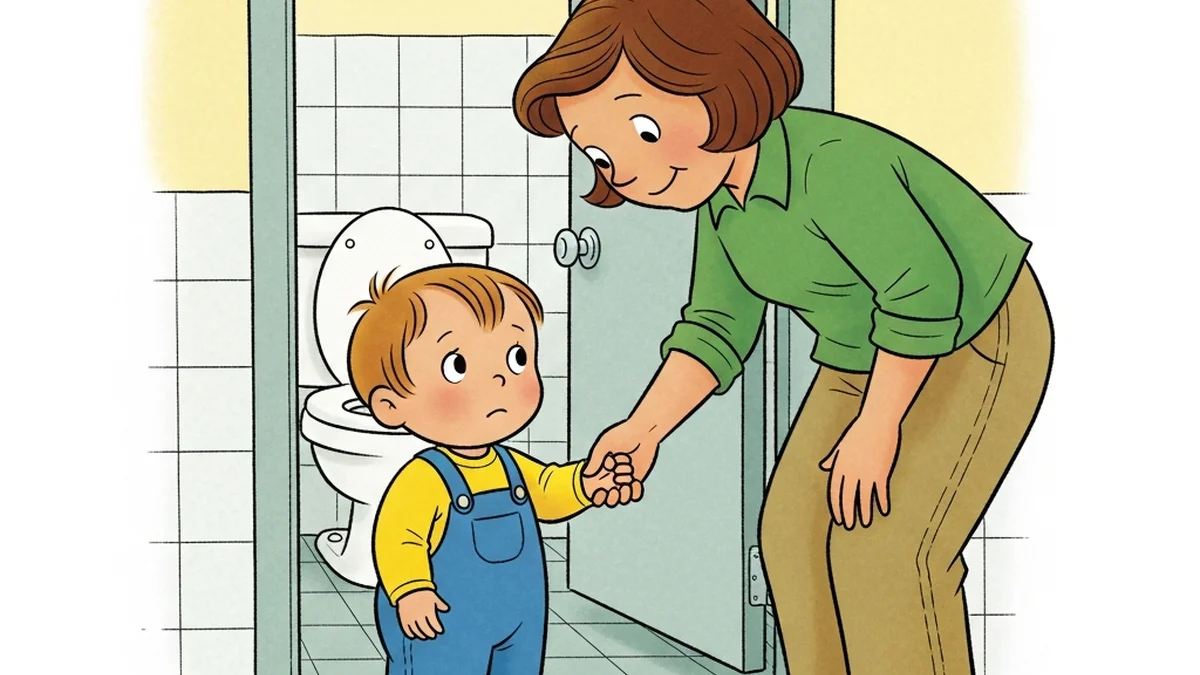
Your toddler did great on the potty at the mall. They told you they had to go, they held it, they made it to the stall. Then a stranger two sinks over hit the hand dryer, and the roar sent your kid clawing up your leg like the floor was lava.
Now they won't even walk into a public restroom. If your potty training toddler is scared of loud hand dryers, you're not dealing with a discipline problem or a step backward. You're dealing with a very normal fear of a genuinely loud machine.
Why Loud Hand Dryers Scare Toddlers So Much
Babies are born with only two built-in fears: falling and loud noises. Everything else is learned. So a sudden, blasting sound isn't a quirky overreaction. It's wired in from day one.
Hand dryers are especially rough on little kids. They go from silent to full roar in an instant, with no warning. Your toddler's ears also sit much closer to the airstream than yours do, so they catch more of the blast at head height.
Then fear conditioning locks it in. The first time a dryer startles them, their brain files it under "scary, avoid." The next time they see one, the fear shows up before the noise even starts. That's why some kids panic the second they spot the silver box on the wall.
The Noise Is Real: What One Teen's Study Found
Here's the part that helps a lot of parents feel less crazy. The fear is backed by actual data.
A Canadian student named Nora Keegan started measuring hand dryer volume when she was in elementary school. She tested 44 dryers in public restrooms and took 880 measurements at different heights. Her research was published in the journal Paediatrics & Child Health in 2020.
What she found: many dryers roared past 100 decibels, and the loudest reading hit 121 decibels with hands in the airstream. Several models were louder at a 3-year-old's ear height than at an adult's. For comparison, the U.S. Environmental Protection Agency recommends hearing protection for children above 85 decibels.
So when your kid says the dryer "hurts my ears," believe them. At their height, it might actually be uncomfortable. Their fear is doing exactly what fear is supposed to do.
Why This Matters for Potty Training
A hand dryer fear sounds small until it starts wrecking your outings. Kids who dread the noise will refuse to use public bathrooms at all. Then they hold it, get uncomfortable, and either have an accident or melt down in the car on the way home.
It can also blur together with other bathroom fears, like the auto-flush toilets that fire without warning or the general worry about strange public restrooms. Stack those together and a toddler decides the whole room is a threat. The goal is to shrink the fear back down to what it actually is: one loud machine you can plan around.
How to Help Your Toddler Cope With Hand Dryers
1. Warn them before you walk in
Surprise is half the problem. Before you open the door, say plainly: "There might be a loud dryer in here. If it goes off, we'll cover our ears and it'll be over fast." A quick heads-up turns a jump scare into something they saw coming.
2. Bring hearing protection they picked out
Toddler-size earmuffs are the single most reliable fix. Let your child choose a color or character so they actually want to wear them. Keep a pair in the diaper bag and have them slip them on before you go in. In a pinch, teaching them to cup their own hands over their ears works too.
3. Wash, dry, and get out before others trigger it
Head for the sink farthest from the dryers. Wash fast, dry hands on a paper towel or your own small towel, and leave before someone else sets one off. Carrying a pack of wipes means you can skip the sink entirely on the worst days.
4. Use the sticky-note trick on automatic dryers
Many hand dryers turn on with a motion sensor. A folded paper towel or a sticky note taped over the sensor keeps it from firing while your child washes nearby. Pull it off on your way out. It takes 5 seconds and buys you a quiet restroom.
5. Practice the sound at home, quietly
Gentle exposure helps the fear fade. Play a hand dryer sound on your phone at very low volume while your toddler does something fun, then raise it a notch every few days as they stay relaxed. You can also let them press the dryer button themselves at a quiet time, so they feel in control of the on switch instead of ambushed by it.
6. Keep your own face calm
Toddlers check your reaction to decide how scared to be. If you flinch and rush, they learn the dryer is dangerous. Narrate it in a bored, matter-of-fact voice instead: "Yep, that's the dryer. Loud. All done now." Your calm is contagious.
What's Normal and When to Watch Closer
This fear is extremely common between the ages of 2 and 4, and most kids grow out of it on their own by the time they start school. It's a noise sensitivity, not a potty training failure. Your child can be fully trained and still hate hand dryers, and that's fine.
Keep a closer eye if the fear spreads to lots of everyday sounds, like blenders, vacuums, flushing toilets, and traffic, or if your child covers their ears constantly and gets extremely distressed by noise most kids shrug off. When strong noise sensitivity shows up across many settings, it's worth mentioning to your pediatrician, who can talk with you about sensory processing. For a single loud machine, though, a little planning is usually all it takes.
Key Takeaways
- Fear of loud hand dryers is normal and wired in. Loud noise is one of only two fears babies are born with.
- The noise is genuinely loud. Research found dryers hitting up to 121 decibels, and louder at a small child's ear height than an adult's.
- Warn before you enter, keep toddler earmuffs in the bag, and head for the sink farthest from the dryers.
- A sticky note or folded towel over the sensor stops automatic dryers from firing while your child washes.
- Most kids outgrow it by school age. Flag it with your pediatrician only if noise sensitivity spreads across many everyday sounds.