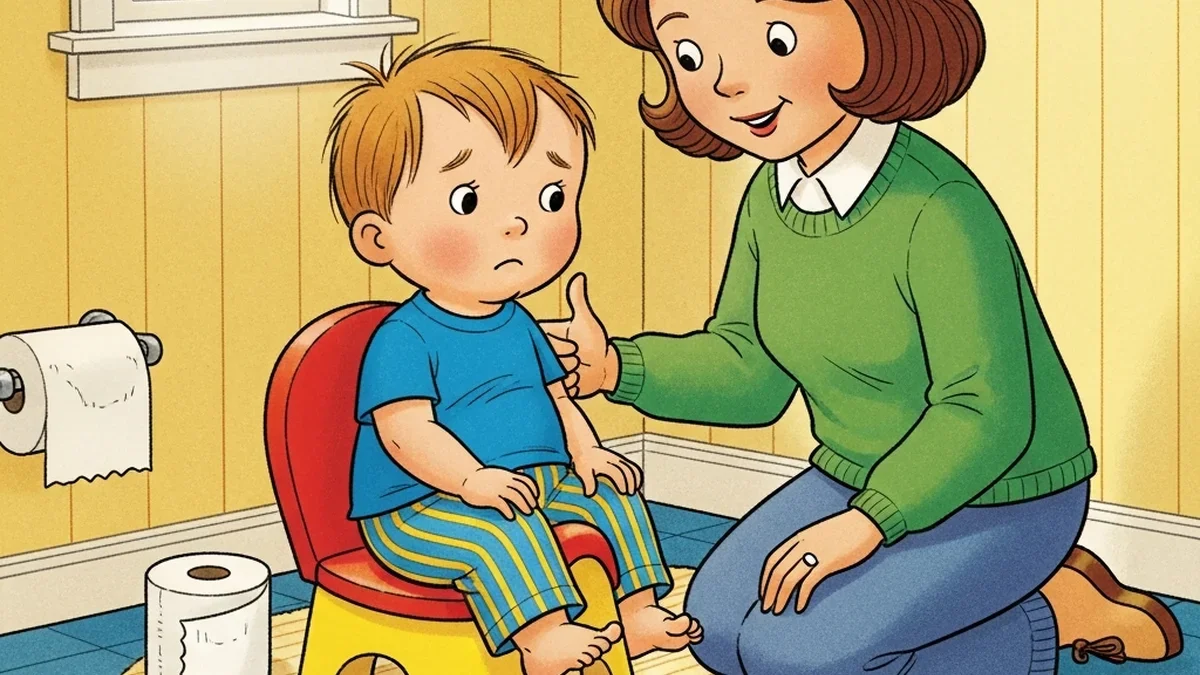
It's Saturday morning. Your toddler has been dry at daycare all week, came home with a sticker chart full of stars, and you're feeling like you finally cracked this thing. By 10 AM they've peed on the couch. By noon they've peed twice on the rug. By bedtime you're wondering if all that "potty trained" progress was a lie.
It wasn't. Weekend accidents are a real, predictable pattern, and almost every parent of a freshly trained toddler runs into them. The fix is less about your kid and more about how weekends actually look in your house.
Why Saturdays and Sundays Are Accident Magnets
Daycares and preschools run on a clock. Most toddler rooms do a group bathroom break every 90 to 120 minutes, plus before snack, before nap, after nap, and before pickup. Your child barely has to think about it because someone else is doing the thinking.
Then Saturday hits and the clock goes away. No teacher saying "potty time, friends!" No line of small bodies marching to the bathroom. Just you, three loads of laundry, a cartoon on the TV, and a kid who's deep in a Magna-Tiles build. The urge shows up, they ignore it because the building is more interesting, and by the time their brain catches up their pants are warm.
There are usually four culprits stacked on top of each other on weekend days:
- No external schedule. The daycare cue is gone. Toddlers under three almost always need an adult prompt to stop and go.
- More distractions. Long unstructured play, screens, visitors, and outings all pull attention away from body signals.
- More fluids. Slow weekend mornings often mean juice with brunch, smoothie at the farmers market, an extra cup of milk on the couch. More in, more out.
- Distracted parents. You're trying to get something done. You're not watching the potty-dance tells the way the teacher does at school.
None of this means your child has lost ground. It means the scaffolding that holds up their weekday wins isn't there on the weekend, and you're the one who has to put it back.
Build a Weekend Potty Rhythm in Five Minutes
You don't need a chart. You need a rhythm that runs in the background of your weekend so neither of you has to keep tracking it.
The simplest version is a 90-minute reset. Set a quiet timer on your phone for every 90 minutes from when they wake up. When it goes off, pause whatever you're doing for 60 seconds and offer the potty. Not "do you have to go?" (the answer is always no). Just "potty break, then back to the train tracks." Keep it light and matter-of-fact.
Around that, anchor three non-negotiable potty moments:
- Within 15 minutes of waking up. Bladders are full after a night of sleep. Catch it before the morning rush.
- Right before leaving the house. "We try potty, then shoes." Make it part of the going-out script.
- Right after coming home. Transitions are the highest-accident moments in the whole day.
If your toddler is the type that needs heavier reminders, our piece on kids who only go when prompted has more ideas for weaning them off the timer over time.
Watch the Drink Creep
Weekend fluids sneak up on you. A juice box at the playground, a sippy of milk during a movie, a few sips of water on a hike, a smoothie at lunch. Each one is fine on its own. Stacked together, it's a lot more liquid than your kid drinks at daycare.
You don't need to ration water. Just notice what's going in.
A practical rule: if your child has had a full drink in the last 30 minutes, the next potty break is non-optional. Walk them over, do the timer chat ("we'll be quick, then back to whatever"), and move on. This is especially useful before screen time or a car ride, because both of those are accident factories during weekend hours.
Pre-Game Every Outing
The errand routine matters more than you'd think. Most weekend accidents happen in three places: in the car seat on the way somewhere, at the destination right after arrival, or 20 minutes into the activity when their bladder catches up.
Try this sequence before any weekend outing longer than 30 minutes:
- Potty try at home before shoes.
- Quick "potty check" the moment you arrive, before anything else fun starts.
- One more potty try if you're going to be out longer than 90 minutes.
Throw a folding travel potty in the trunk and a spare outfit in the diaper bag. For more on what to pack for outings without a backslide, our guide on handling public accidents has the full kit list.
Stop Comparing to the Weekday Record
Here's the thing nobody at daycare pickup tells you: the teacher who reports "dry all day!" is doing the heavy lifting. They've prompted, scheduled, watched, and reminded. A 2- to 3-year-old child can be fully potty trained and still have two or three accidents on a busy weekend day. That's not regression. That's developmentally normal until somewhere between three and four.
If you'd like a deeper look at how outside-the-home routines build potty independence faster, our piece on potty training at daycare goes into why structured environments are so much easier on toddler bodies than free-range weekend days.
When to Adjust, Not Just Push Through
Weekend accidents are normal. A few patterns deserve a closer look:
- More than 4 or 5 accidents in a single day. Could be a fluid spike, but also worth ruling out a UTI if it lasts more than two days.
- Accidents only on Saturday, then back to dry on Sunday. Usually means Saturday is your busiest, most distracting day. Add an extra prompt or two before lunch and after naps.
- Accidents at home but never out. The "novelty" of being out keeps them alert. At home, build in slightly more frequent prompts during long play stretches.
- Suddenly going from dry weekends to wet ones. Look for a new stressor (visitor, schedule change, new sibling, new bed) before assuming it's a bathroom issue.
Check with your pediatrician if accidents come with pain, fever, blood-tinged underwear, or a sudden change in how often they're peeing. Otherwise, give your rhythm two full weekends to take hold before deciding it isn't working.
The Reassuring Truth
You haven't lost potty training. You're running into the difference between a kid who can go when reminded and a kid who can fully self-cue without any structure. That gap closes on its own, usually somewhere between three and four years old. Your job between now and then is just to be the gentle clock until their own brain takes over.
Tighten the rhythm. Watch the drinks. Catch the transitions. Most parents see weekend accidents drop by half within two to three weekends of running a simple schedule.
Key Takeaways
- Weekend accidents happen because the daycare schedule disappears, not because your child regressed.
- Run a quiet 90-minute timer plus three anchor potty breaks (wake-up, before going out, after coming home).
- Pre-game every outing with a potty try at home and a potty check on arrival.
- Watch the slow drip of juice, milk, and smoothies that builds up across a weekend morning.
- Most toddlers under 4 still need adult prompts on unstructured days, and that's developmentally normal.
- Give a new weekend rhythm two full weekends before deciding it isn't helping.
Frequently Asked Questions
Is my toddler regressing if they have more accidents on weekends?
Almost never. Regression usually looks like accidents across all settings (daycare and home) and often comes with a clear trigger like a new sibling, illness, or move. Pure weekend accidents are a scheduling and attention problem, not a developmental backslide.
Should I put them back in pull-ups on weekends?
Don't go back to pull-ups for daytime if they're reliably dry at daycare. It sends the message that the rules are different at home, and that confusion can extend the accident phase for weeks. Use underwear with a backup outfit in the bag instead.
How long until weekend accidents stop on their own?
Most kids who are accident-free at daycare by 30 to 36 months catch up on weekends within three to six months. By age 4, the gap between weekday and weekend dryness usually closes without any extra work from you.
What if my child only has accidents when we have visitors?
Excitement is its own bladder problem. Grandparents, friends, and birthday parties all pull focus away from body cues. Add one extra prompt every hour during high-excitement events and ask other adults to give you a quick heads-up if they see the potty dance.
Do screens make accidents worse on weekends?
Yes, reliably. A toddler watching a screen will hold a full bladder for far longer than they will during regular play because the screen blocks out body signals. Build a potty try into every episode break, or run the timer through screen time too.