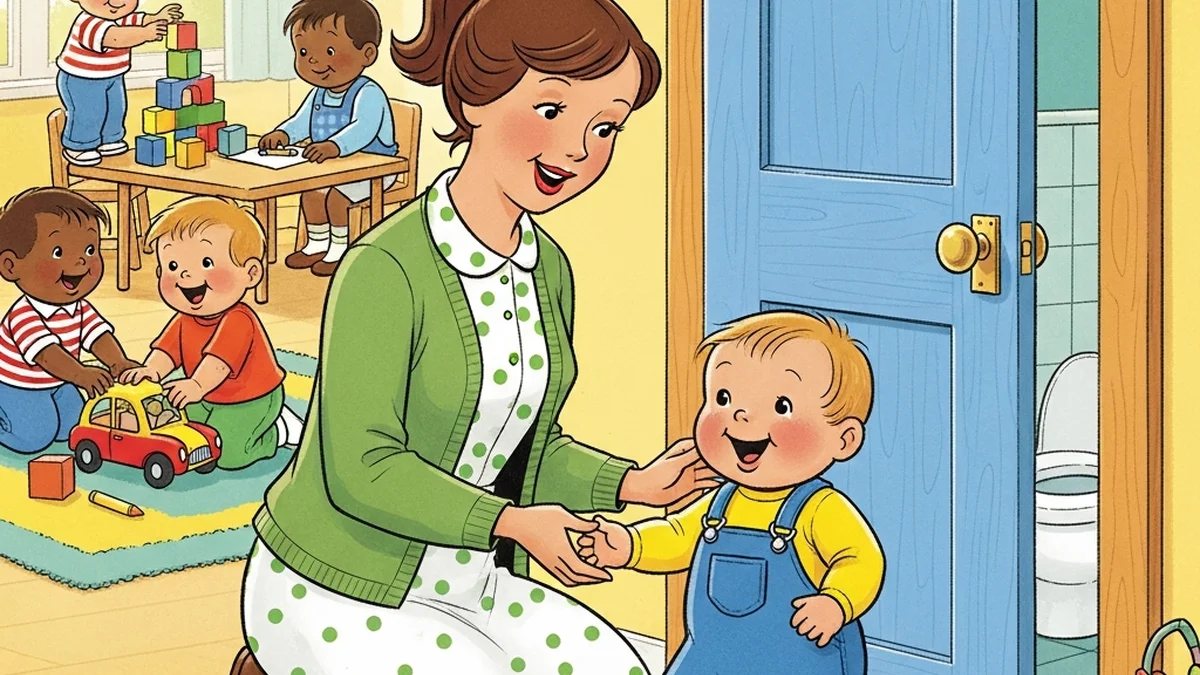
When Home Progress Doesn't Follow Them to Daycare
Your toddler's been doing great at home. Dry pants all morning, telling you when they need to go, even flushing by themselves. Then you pick them up from daycare and they're in their third pair of backup pants. Sound familiar?
Potty training at daycare is one of the most common friction points parents hit. You've got a system that works at home, but your childcare provider is doing something completely different. Maybe they're still putting your kid in pull-ups "just in case." Maybe the bathroom schedule doesn't line up with your child's pattern. Maybe nobody's talked about it at all.
The fix isn't complicated, but it does require a real conversation. Here's how to make it happen.
Why Daycare and Home Often Fall Out of Sync
It's not that your provider doesn't care. Most daycare teachers are managing 8 to 12 toddlers at once, and potty training isn't always at the top of their priority list. They have safety ratios, nap schedules, mealtimes, and a room full of 2-year-olds who all need something at the same time.
Here's what usually causes the disconnect:
- Different schedules. At home, your child goes to the potty whenever they show signs. At daycare, bathroom breaks might happen on a fixed schedule, like every 90 minutes.
- Different language. You say "potty," they say "bathroom." You say "Do you need to go?" and the teacher says "It's time to try." Small differences, but they confuse a 2-year-old.
- Different expectations. You've ditched pull-ups entirely. Daycare still uses them during nap or outdoor play.
- No communication at all. This is more common than you'd think. Many parents assume daycare will follow their lead, and providers assume parents will ask if they want something specific.
None of this is anyone's fault. It just means you need to start a conversation.
How to Start the Conversation with Your Provider
Don't wait for a problem to bring this up. The best time to talk to your daycare provider about potty training is before you start training at home, or as soon as you notice your child is showing signs of readiness.
Here's a simple way to open the conversation:
"We've started potty training at home and [child's name] is doing really well. I'd love to talk about how we can keep things consistent here too. Can we set up 5 minutes to chat about what would work best?"
That's it. You're not telling them what to do. You're asking for a partnership. Most providers appreciate this because it shows you respect their expertise and their schedule.
What to Cover in Your First Conversation
Keep it practical. You don't need a 30-minute meeting. Aim to agree on these five things:
- Language. What words does your family use for pee, poop, and the toilet? Ask what words daycare uses. Pick one set and stick to it everywhere.
- Schedule. Ask how often bathroom breaks happen at daycare. Share your child's natural pattern if you've noticed one. Most kids between 2 and 3 need to try every 60 to 90 minutes.
- Clothing. Agree on what your child will wear. Elastic waistbands are easier for teachers to manage quickly. Skip overalls, rompers, and anything with buttons.
- Pull-ups vs. underwear. This is the big one. If you've moved to underwear at home, let the provider know. Some daycares require pull-ups until a child has had 2 weeks of dry days. Others will follow your lead.
- Accident response. How will accidents be handled? No shaming, no big reactions. Agree on a calm, matter-of-fact approach.
What to Send with Your Child Every Day
Make your daycare provider's job easier by sending a well-stocked bag every single day. This isn't optional during potty training. It's your contribution to the partnership.
- 3 to 5 full changes of clothes (underwear, pants, socks)
- A bag for soiled clothes (wet bags or large zip-lock bags work great)
- Extra wipes if your daycare allows them
- Pull-ups for nap time if that's what you've agreed on
Label everything. Teachers are juggling supplies for a dozen kids, and unlabeled clothes end up in the lost-and-found fast. Check out our potty training essentials for parent-tested supplies.
The Daily Check-In That Makes Everything Easier
This takes 30 seconds at drop-off and 30 seconds at pickup. It's the single best thing you can do to keep training on track.
At drop-off, tell the teacher:
- When your child last went to the bathroom
- How the morning went (dry? accident? refused to try?)
- Anything unusual (didn't sleep well, skipped breakfast, seems off)
At pickup, ask:
- How many times did they use the potty successfully?
- How many accidents?
- Did they tell a teacher when they needed to go, or were they prompted?
This isn't micromanaging. It's giving both sides the information they need to help your child succeed. Most teachers actually want these updates because it helps them do their job better.
When Your Daycare's Policy Doesn't Match Your Approach
Some daycares have strict policies. They won't let kids wear underwear until they've been accident-free for a set number of days. They might require pull-ups during certain activities. They might not start potty training until a child turns a specific age.
This can be frustrating when your child is ready and making progress at home. Here's how to handle it:
- Ask why the policy exists. Most policies are there for practical reasons, like staffing ratios or state licensing requirements. Understanding the "why" makes it easier to work within the system.
- Look for compromise. Maybe they'll let your child wear underwear during structured indoor time but switch to pull-ups for outdoor play. Maybe they'll add an extra bathroom prompt for your child.
- Don't go behind their back. Sending your child in underwear when daycare has asked for pull-ups creates tension and puts your child in the middle. Work together, even when you disagree.
If you've had the conversation and you're still stuck, it's okay to ask for a more formal meeting with the center director. Frame it as wanting to find a solution together, not as a complaint.
It's Normal for Kids to Do Better in One Place
Here's something that catches a lot of parents off guard: your child might be totally trained at home and still have multiple accidents at daycare. Or the reverse. Both are normal.
At daycare, there are more distractions, different routines, and the bathroom might look different or feel less private. Some kids hold it all day at daycare and then have accidents the minute they walk through the front door at home. That's their way of releasing the tension of "holding it together" all day.
This doesn't mean training isn't working. It means your child is still learning to generalize the skill across different settings. Most kids figure this out within 2 to 4 weeks of consistent practice in both places.
What to Do If Daycare Wants to Pause Training
Sometimes a provider will suggest pausing potty training. Maybe your child is having too many accidents, or the stress is causing regression in other areas like behavior or sleep.
Before you push back, listen to their reasoning. They're with your child for 8+ hours a day and they see things you don't. If they're seeing genuine distress, not just normal accidents, a short pause might be the right call.
But "short" is the key word. Agree on a specific timeline: "Let's try pull-ups for one week and then reassess." Open-ended pauses tend to turn into full stops, and restarting after a long break can be harder than pushing through a rough patch.
Key Takeaways
- Start the conversation early. Talk to your daycare provider before or right when you begin training at home.
- Agree on the basics. Same language, similar schedule, clear plan for accidents. Five minutes of alignment prevents weeks of confusion.
- Send enough supplies. Pack 3 to 5 changes of clothes, wet bags, and labeled extras every day.
- Do the 30-second check-in. A quick update at drop-off and pickup keeps everyone in sync.
- Be patient with differences. It's normal for kids to do better in one setting at first. Give it 2 to 4 weeks.
Frequently Asked Questions
When should I tell daycare we're starting potty training?
Give them at least a week's notice before you start training at home. This gives them time to adjust their routine and prep supplies. If your child is already showing readiness signs, bring it up at the next drop-off so you can plan together.
What if my daycare won't let my child wear underwear yet?
Ask about their specific criteria. Most daycares require a certain number of consecutive dry days before allowing underwear. Work toward meeting their threshold at home first, then provide that track record when you ask again. If the policy feels unreasonable, request a meeting with the center director.
Should I keep my child in pull-ups at home to match daycare?
Not necessarily. It's okay for the approach to differ slightly between settings, as long as you're both working toward the same goal. If your child does well in underwear at home, keep that going. Just communicate clearly with daycare about what's happening in each setting.
My child is trained at home but has accidents every day at daycare. Is that normal?
Yes, especially in the first 2 to 4 weeks. Daycare is a more stimulating environment with more distractions and a different bathroom setup. Most children adapt once the routine becomes familiar. If accidents persist beyond a month with no improvement, talk to your provider about adjusting the schedule or approach.
What if my daycare provider and I disagree on the best method?
Focus on the outcome, not the method. You both want your child to be trained. Find the 2 or 3 things you can agree on (like language and schedule) and let the smaller differences go. Consistency on the big stuff matters more than matching every detail perfectly.