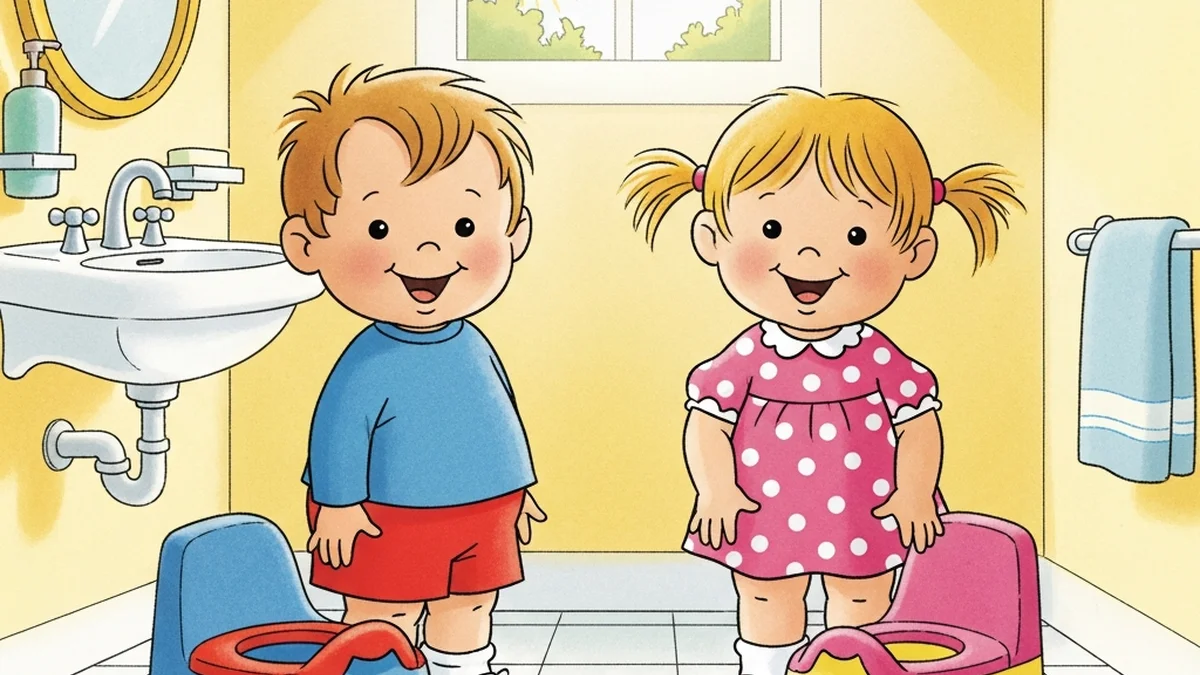
The Bathroom Question Every Boy Parent Asks
Your son is doing great on the potty. Then his older cousin visits, pees standing up like a little pro, and suddenly your two-year-old wants to do the exact same thing. Cue the puddle on the floor.
So here's the question almost every parent of a boy runs into: should boys sit or stand to pee? The short answer is sit first, stand later. Start him seated for both pee and poop, then teach standing once he's fully trained.
That order isn't random. It makes the whole thing easier, and it lines up with what most pediatric sources recommend.
Why Boys Should Learn Sitting First
Sitting keeps things simple while your son learns the hardest part: noticing the urge and getting to the potty in time. Adding aim to that to-do list too early just gives him one more thing to juggle.
There's a physical reason too. Sitting helps the pelvic floor muscles relax, which empties the bladder more completely. A rushed standing pee can leave him half-empty, and that means more accidents and more trips.
Then there's poop. Kids have to sit and relax to have a bowel movement. If a boy decides the potty is a stand-up station, he's more likely to hold his poop or ask for a diaper. Teaching him to sit for everything first heads off that mix-up.
One more bonus: less mess. A brand-new stander sprays in every direction. Keeping him seated for the first few weeks saves your bathroom while he builds the core skills. Boys and girls actually train on similar timelines, and this sit-first foundation matters for both, as we cover in potty training boys vs girls.
When Is He Ready to Stand?
There's no magic birthday. Most boys are ready to try standing somewhere between ages 3 and 4, after they've been reliably trained sitting down for a few weeks to a couple of months.
Look for these signs:
- He stays dry and uses the potty consistently while seated.
- He's pooping on the potty without a fight.
- He's tall enough to reach the bowl comfortably, with or without a stool.
- He's genuinely interested, usually because he's watched Dad, an older brother, or a friend do it.
If he's not interested yet, there's no rush. Plenty of boys happily sit until kindergarten. Standing is a convenience, not a milestone.
How to Teach a Boy to Pee Standing Up
Once he's ready, the switch is usually quick. Here's what actually works.
1. Let him watch a role model
Boys learn this one by copying. If there's a dad, uncle, or older brother around, let your son watch how it's done a few times. Our dad's guide to potty training digs into why this kind of modeling makes such a difference.
2. Use a sturdy step stool
Most toddlers can't reach the bowl on their own. A wide, non-slip step stool gets him to the right height and lets him stand stable while he aims. Wobbly equals messy.
3. Teach the one rule that matters: point down
The whole trick is sending the stream into the bowl. Show him how to gently point down toward the water. That single instruction prevents most of the over-the-rim spray.
4. Make aiming a game
Targets work wonders. Toss three or four pieces of cereal in the bowl and tell him to sink them. Some parents add a drop of food coloring so he can watch the water change color as he goes. Fun beats nagging every single time.
5. Keep cleanup low-drama
He's going to miss. A lot, at first. Keep wipes nearby, treat spills as no big deal, and have him help wipe up. Calm cleanup teaches responsibility without shame. If accidents away from home worry you, our guide to handling public accidents uses the same calm-first approach.
What If He Wants to Stand Right Away?
Some boys see standing and decide, on day one, that it's the only way. You don't have to fight it.
If he insists, let him stand to pee and sit to poop. Just keep the poop-sitting rule clear and consistent. The goal is a relaxed, trained kid, not a perfect order of operations.
And if standing turns into chaos and he loses interest in the potty altogether, go back to sitting for a week or two. You can always try standing again later. Reset, breathe, keep going.
Here's the reassuring part. Whatever order it happens in, almost every boy lands in the same place: trained, confident, and proud of himself. The sitting-versus-standing debate feels huge right now, but in six months you won't remember which week he switched.
Key Takeaways
- Teach boys to sit first for both pee and poop. It keeps early training simple and helps the bladder empty fully.
- Most boys are ready to try standing between ages 3 and 4, after a few weeks of reliable seated success.
- Use a sturdy, non-slip step stool and teach one rule: point the stream down into the bowl.
- Turn aim into a game with cereal targets or a drop of food coloring instead of nagging.
- If he wants to stand early, let him stand to pee and sit to poop, and keep cleanup calm.
Frequently Asked Questions
At what age should boys learn to pee standing up?
Most boys are ready to try standing between ages 3 and 4, after they've been reliably trained sitting down for a few weeks to a couple of months. There's no fixed age. Follow your son's interest and consistency, not a birthday on the calendar.
Is it bad for boys to pee sitting down?
Not at all. Sitting to pee is healthy and actually helps the bladder empty more completely because the muscles relax. Plenty of boys sit comfortably until kindergarten, and there's no downside to it.
How do I stop my son from making a mess when he stands?
Teach the one rule that matters: gently point the stream down into the bowl. Give him a stable, non-slip step stool so he's at the right height, and turn aiming into a game with cereal targets. Expect plenty of misses early on and keep cleanup calm.
Should my son sit or stand to poop?
Always sit to poop. Sitting lets the muscles relax so a bowel movement can actually come out, and it helps prevent withholding. Even after he learns to pee standing up, keep the rule that poop happens sitting down.
My son refuses to sit on the potty at all. What do I do?
Back off the pressure for a bit and make the potty boring, not a battle. Let him keep his clothes on at first, read a book together near it, and praise any small step. If the refusal lasts for weeks or comes with pain, check in with your pediatrician.