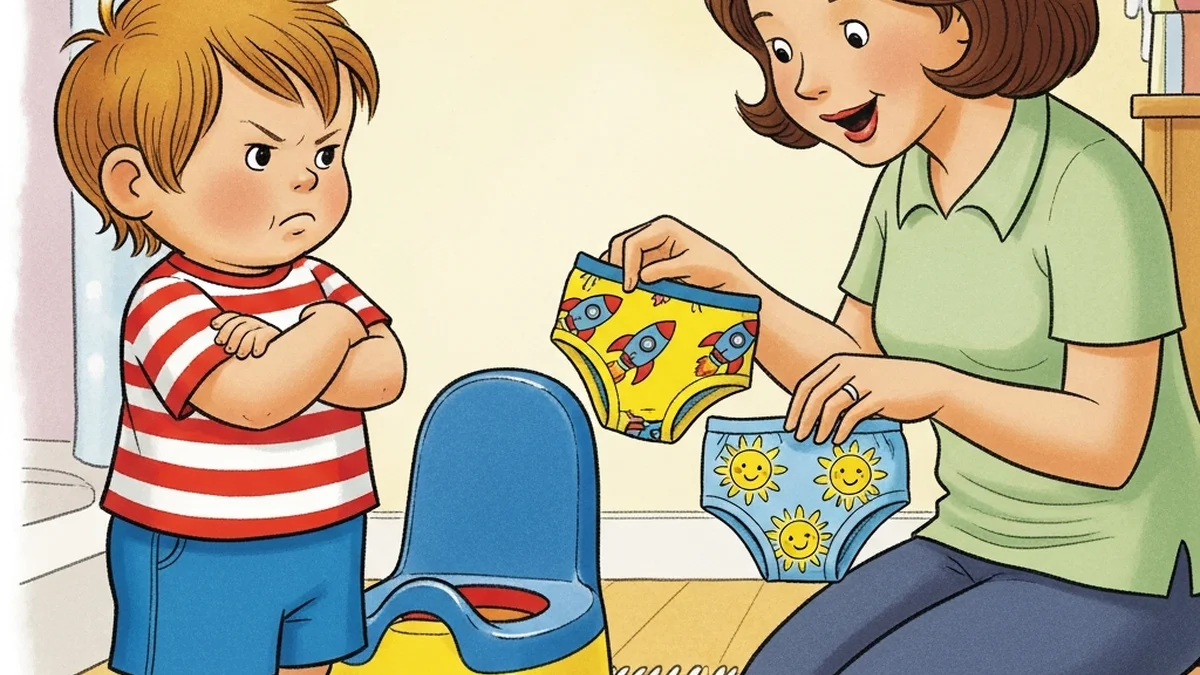
You've tried stickers. You've tried the potty dance. You've tried sitting them on the toilet every 30 minutes like clockwork. And your kid looks you dead in the eye, crosses their arms, and says "no." Again.
If you're potty training a strong-willed child, you already know the standard advice doesn't quite cut it. These are the kids who won't do something just because you want them to. And honestly? That trait is going to serve them well someday. Just not today, when you're on your fourth load of laundry.
Why Strong-Willed Kids Resist Potty Training
Strong-willed children between ages 2 and 4 often resist potty training for one simple reason: control. Their whole world is run by adults who tell them when to eat, sleep, and get in the car seat. The potty is one of the few places where they have real power.
You can't physically make a child go to the bathroom. They know that. And for a kid who craves autonomy, that fact becomes a tool.
This isn't defiance for the sake of it. It's a normal developmental drive for independence. The problem comes when parents push harder, and the child pushes back harder, and suddenly potty training becomes a full-blown power struggle.
The Biggest Mistake Parents Make
Pushing. Forcing. Reminding every ten minutes.
Here's the truth: the more pressure you apply to a strong-willed kid, the more they dig in. Bribing might work once or twice, but it won't build a habit. Threatening ("no iPad until you sit on the potty") turns the toilet into a punishment zone. Neither gets you anywhere lasting.
Research from the American Academy of Pediatrics supports a child-oriented approach, meaning the child leads the process, not the parent. For strong-willed kids, this isn't optional. It's the whole strategy.
6 Strategies That Actually Work
1. Let Them Think It's Their Idea
Stop asking "Do you want to use the potty?" The answer will be no. Instead, plant seeds. Leave a potty chair in the bathroom without fanfare. Read potty books at bedtime. Let them see older kids or siblings use the toilet.
When they show interest on their own terms, that's your opening. Don't jump on it too hard or you'll spook them.
2. Offer Choices, Not Commands
Strong-willed kids respond to choices because choices feel like control. Try these:
- "Do you want to sit on the big potty or the little one?"
- "Do you want to try before or after your snack?"
- "Which underwear do you want to wear today, the dinosaurs or the trucks?"
The key: both options lead to the potty. You're not asking if they'll use it. You're asking how.
3. Use a Timer Instead of Your Voice
Set a timer for every 60 to 90 minutes. When it goes off, it's the timer telling them to try, not you. Strong-willed kids are more willing to listen to an object than a parent. It sounds silly. It works.
Say: "The timer says it's potty time!" and leave it at that. No nagging. No follow-up questions. Just the timer.
4. Drop the Diapers for a Weekend
Some strong-willed kids stay in diapers simply because diapers are comfortable and familiar. Going cold turkey for a weekend (bare bottom at home, underwear when going out) can create enough discomfort to shift their thinking.
This works best for kids who are showing clear readiness signs but refusing to engage. Two to three days of bare-bottom time at home, with the potty always visible and accessible, gives them the chance to connect the sensation with the action.
5. Celebrate Without Going Overboard
A fist bump works. A quiet "you did it" works. A full marching band every time they sit on the potty? That can actually backfire with strong-willed kids, because now using the potty becomes a performance for you, not something they own.
Keep rewards low-key and focus on the feeling: "Doesn't it feel good to be dry?" That's internal motivation, and it's what sticks long-term.
6. Walk Away When It Gets Heated
If your child is screaming, crying, or physically resisting the potty, stop. Walk away. Try again later. Forcing the issue in a heated moment guarantees they'll associate the potty with stress.
This isn't giving up. This is strategy. You're showing them the potty isn't a battleground. It's just a toilet.
What If Nothing Is Working?
If you've tried for two to three weeks and your strong-willed child is still completely refusing, it might be time for a potty training break. Put diapers back on for two to four weeks. No guilt. No commentary. Just a reset.
Some kids need a longer runway. Strong-willed children who start later (closer to age 3 or even 3.5) often train faster once they decide they're ready, sometimes in just a few days. The waiting feels endless, but the payoff is real.
If your child is over 4 and still completely resistant, or if you notice signs of constipation or pain, talk to your pediatrician. There may be a physical issue making the process uncomfortable.
The Silver Lining of a Strong-Willed Kid
Here's what nobody tells you: once a strong-willed child decides they're done with diapers, they're done. They commit fully. Fewer accidents. Less regression. They own the decision because it was theirs.
The same stubbornness that's making you want to pull your hair out right now? It's going to make them persistent, self-motivated, and confident later. You're not raising a difficult kid. You're raising a determined one.
Key Takeaways
- Strong-willed kids resist potty training because they crave control, not because they're being bad.
- Offer choices instead of commands ("Which potty?" not "Sit on the potty now").
- Use a timer every 60 to 90 minutes so the reminder comes from an object, not from you.
- Keep celebrations low-key to build internal motivation rather than performing for praise.
- If nothing works after two to three weeks, take a break and try again in a month. Some kids train fast once they decide they're ready.
Frequently Asked Questions
At what age should a strong-willed child be potty trained?
Most strong-willed children are ready between 2.5 and 3.5 years old. Some aren't truly ready until closer to 4. Starting before they're ready often leads to longer battles and more frustration. Watch for readiness signs like staying dry for 2-hour stretches, showing interest in the bathroom, and being able to pull pants up and down independently.
Should I use rewards to motivate a stubborn toddler?
Small rewards like stickers can help in the beginning, but avoid big bribes. Strong-willed kids figure out the game fast and start negotiating for bigger prizes. Focus on building internal motivation instead: "Look, you kept your underwear dry all morning!" That feeling of pride works better long-term than a candy reward.
How long does it take to potty train a strong-willed child?
It varies widely. Some strong-willed kids train in three to five days once they're truly ready and decide it's their idea. Others need four to six weeks of gradual progress. The timeline often depends more on when you start relative to their readiness than on the method you use.
What if my strong-willed child has accidents on purpose?
Intentional accidents are usually a sign that potty training has become a power struggle. Stay neutral. Clean up without commentary or frustration. Say something simple like "Oops, pee goes in the potty. Let's clean up." Then drop it. Reacting emotionally gives them exactly the control they're looking for.
Can I potty train a strong-willed child in 3 days?
The 3-day method can work for some strong-willed kids, but only if they're fully ready and somewhat interested. If your child is actively resistant, cramming it into a weekend will likely backfire. A flexible approach that follows their pace tends to work better for this personality type.