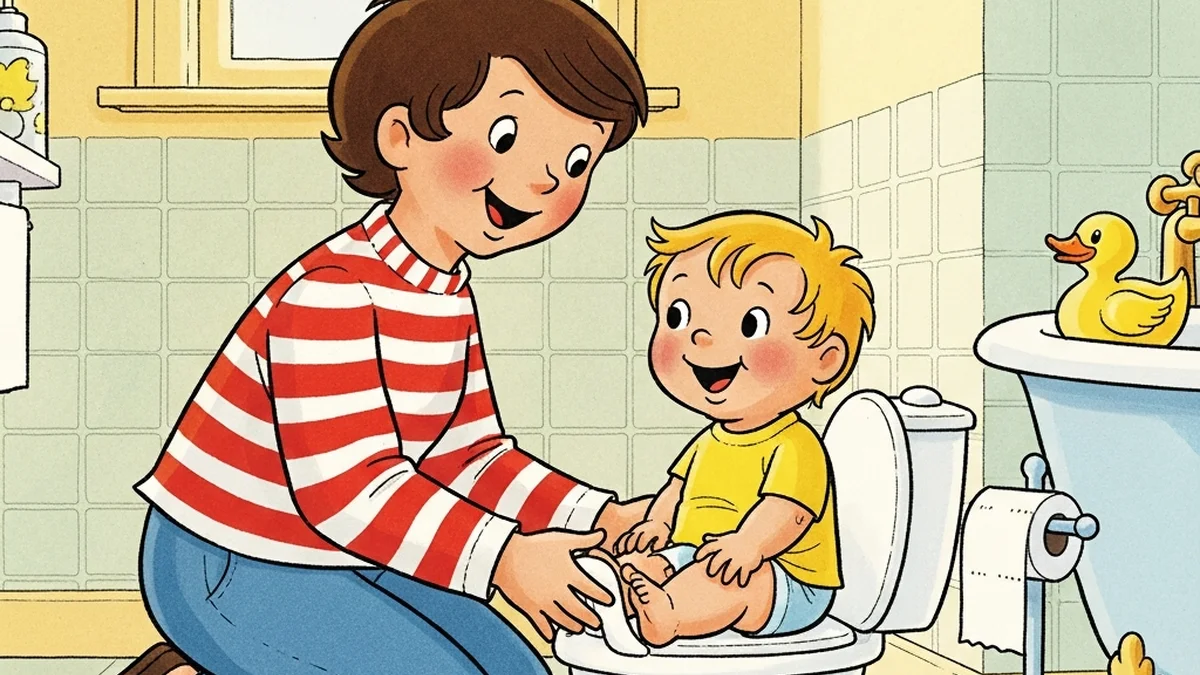
Your toddler ignores you when you explain how the potty works. But hand them a doll, and suddenly they're the boss. They feed it, they burp it, they put it down for a nap. They copy everything you do, just smaller.
That instinct is exactly why a potty training doll can teach a 2-year-old what a lecture never will. Instead of being told what to do, your child gets to be the teacher. And kids learn a lot faster when they're in charge.
So is the doll trick worth it, or is it just one more thing to buy? Here's the honest answer.
What a Potty Training Doll Actually Is
A potty training doll is a simple drink-and-wet doll. You give it a bottle of water, and a few seconds later it "pees" into a tiny potty. Some versions go number two with a little squeeze of putty. That's the whole trick.
The magic isn't the doll itself. It's what the doll lets your child practice. Your toddler watches the doll go potty, cheers for it, helps it pull its pants down, and wipes up the misses. They're rehearsing every single step before they ever have to do it themselves.
You don't even need a fancy one. A regular baby doll plus an extra potty works fine. The point is the play, not the price tag.
Where the Doll Trick Comes From
This isn't a TikTok invention. The doll method goes back to a 1974 approach by psychologists Nathan Azrin and Richard Foxx, written up in their book "Toilet Training in Less Than a Day."
Their research found that modeling the steps with a doll, then having the child copy them with praise, helped most typically developing kids learn quickly. It's one of the few potty training methods that's actually been studied. The doll later became the centerpiece of the modern 3-day potty training method a lot of parents try today.
So if a doll feels gimmicky, know that it's one of the older, better-tested tricks in the book.
How to Use a Potty Training Doll, Step by Step
You don't need a script. But a loose routine helps it land. Here's a version that works for most toddlers around 24 to 36 months.
1. Introduce the doll as a friend who's learning
Give the doll a name. Tell your child the doll is a big kid now and wants to learn the potty, just like them. Keep it light and playful, like any other pretend game.
2. Demonstrate the full routine
Walk the doll through every step out loud. Feel the urge, walk to the potty, pull pants down, sit, "go," wipe, flush, wash hands. Narrate it like a sportscaster so your child hears the order of operations.
3. Let the doll have an accident on purpose
Have the doll miss and pee on the floor. Then stay calm, say "uh oh, that's okay, let's try again," and clean it up without any drama. This quietly teaches your child that accidents aren't a big deal, which matters more than any win.
4. Hand the job over to your child
This is the part that actually works. Let your child take charge of the doll. They give the bottle, they rush it to the potty, they cheer. When kids teach, they remember.
5. Celebrate the doll, then celebrate the child
Throw a tiny party when the doll succeeds. A clap, a "yay," a sticker for the doll. Pretty soon your toddler wants that same party for themselves, which is the whole idea behind using small rewards during potty training.
Does the Doll Method Actually Work?
For a lot of kids, yes. It lowers the pressure, turns an abstract idea into a game, and gives your child a sense of control over something that usually feels out of their hands.
But let's be honest about the limits. A doll doesn't replace readiness. If your child isn't staying dry for two or more hours, hiding to poop, or showing interest in the bathroom, no doll will speed that up. The doll is a teaching tool, not a magic switch. Watch for the signs your toddler is ready first.
It also fades fast. Most kids lose interest in the doll within a few days, and that's fine. You're not building a long-term habit with the toy. You're using it to plant an idea, then getting out of the way.
Which Kids It Helps Most
The doll method tends to click best for certain types of toddlers:
- Pretend-play lovers. If your child already feeds dolls and drives toy cars around, they'll take to this instantly.
- Kids who hate being told what to do. Putting them in the teacher role sidesteps the power struggle entirely.
- Anxious or hesitant kids. Watching the doll go first makes the real thing less scary.
- Younger starters. For kids on the early end, around 22 to 28 months, play-based learning often beats verbal explanation.
If that sounds like your kid, a doll is a low-risk thing to try. Worst case, they get a new toy.
When to Skip the Doll
Not every child needs one, and some do better without it.
Skip it if your toddler isn't into pretend play. Forcing a doll game on a kid who'd rather stack blocks just adds friction. Some children also do better watching a real person, so letting them watch you use the bathroom may teach more than any toy.
And if your child is already self-initiating and doing well, you don't need to add a step. Don't fix what isn't broken.
A Quick Word of Reassurance
If you've tried the doll and your kid shrugged, you didn't do it wrong. Tools work differently for different children, and a flop with one approach tells you something useful: this kid learns another way.
Potty training almost never comes down to one trick. It comes down to readiness, repetition, and a parent who stays calm through the messes. The doll is just one friendly shortcut. It's normal for it to help a little, a lot, or not at all.
Key Takeaways
- A potty training doll teaches by letting your child be the teacher, which sticks far better than being told what to do.
- Use it around 24 to 36 months: demonstrate the full routine, model a calm accident, then hand the doll over to your child.
- The method is research-backed (Azrin and Foxx, 1974) but it doesn't replace real readiness signs.
- Expect interest to fade within a few days. That's normal, not a failure.
- Skip the doll if your child dislikes pretend play or is already self-initiating.
Frequently Asked Questions
What age is a potty training doll best for?
Most kids respond best between 24 and 36 months, when pretend play is in full swing. You can introduce one as early as 22 months if your child is already showing readiness signs and loves imaginative play.
Do I need to buy a special doll that wets?
No. A drink-and-wet doll makes the "going potty" part more vivid, but a regular baby doll and a spare potty work just as well. The teaching happens through the play, not the plumbing.
How long should I use the potty training doll?
Just a few days, usually. Use it heavily at the start to plant the idea, then let your child lose interest naturally. The doll is a launch pad, not a daily routine you need to keep up for weeks.
My child ignored the doll completely. Did I do something wrong?
Not at all. Some kids learn better from watching a real person or just from doing it themselves. If the doll flops, drop it and lean into whatever your child does respond to. One method not working is information, not failure.
Can a doll fix poop withholding or accidents?
A doll can model calm, pressure-free pooping, which sometimes helps a nervous child relax. But ongoing withholding or frequent accidents usually point to readiness, constipation, or routine issues that a toy won't solve on its own.