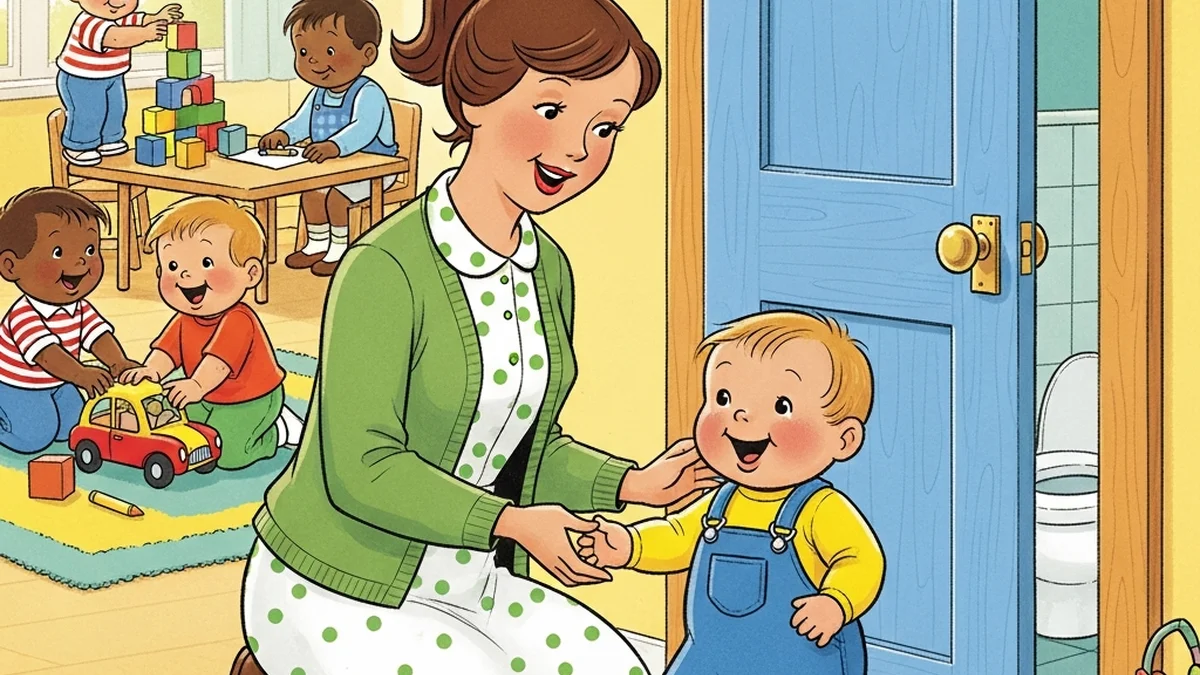
It's late July. The acceptance letter is stuck to the fridge, the first day of preschool is circled in September, and there's one line in the parent handbook you keep rereading. Children must be toilet trained. And your kid? Still in a diaper, still very much a fan of the diaper.
Take a breath. Potty training before preschool starts is completely doable on a summer timeline, as long as you start now and skip the panic. You don't need a perfect kid by day one. You need a solid plan and a few weeks of runway.
How Much Time Do You Actually Need?
Here's the honest answer: start about 6 to 8 weeks before the first day. Most kids need at least six weeks of steady practice to get reliable during the day, and full independence keeps developing for months after that.
That gap matters. Daytime training usually takes 3 to 6 months to become truly hands-off, but "ready for preschool" is a lower bar than "never has an accident." You're aiming for good enough, not flawless.
One catch worth naming. This only works if your child is actually showing signs of readiness. If they're not there yet, pushing harder won't speed things up, and it usually backfires into a standoff. If you're unsure, run through the 8 signs your toddler is ready before you start the clock.
What "School Ready" Really Means
Perfection isn't the goal. The real bar is whether your child can handle a bathroom trip mostly on their own, in a room where one teacher is watching a dozen other kids. That's a different skill than going potty with you two feet away.
For most preschools, "trained enough" looks like this:
- Stays dry for about 2 to 3 hours at a stretch
- Can tell a grown-up they need to go, using words, a sign, or a gesture
- Pulls pants down and back up with little help
- Sits and actually goes, then gets back to playing
- Has occasional accidents, not constant ones
Notice what's not on that list. Wiping perfectly, staying dry overnight, and never having an accident are not the standard. Most teachers expect to help with wiping, and nighttime dryness is a whole separate process that can take months or years longer. For the full breakdown of what schools can and can't require, see our guide on whether your child needs to be potty trained for preschool.
Your Week-by-Week Countdown
Think of this less as a crash course and more as a ramp. Each stage builds on the last, and summer does a lot of the heavy lifting for you. Fewer layers, more bare-bottom time, and accidents that wipe up off a patio instead of soaking into a winter coat. Here's exactly why warm weather makes potty training easier.
Weeks 6 to 8 out: lay the groundwork
Don't rip the diaper off yet. Start by naming pee and poop out loud every time it happens, and let your child watch how the whole thing works. Put a potty where they play so it's a normal object, not a scary event. Pick the long weekend when you'll go all in.
Weeks 4 to 6 out: the intensive stretch
This is where you go bare-bottom for 2 to 3 hours each morning at home. Offer the potty every 60 to 90 minutes, and after drinks and meals when the urge is strongest. Expect a messy first few days. That's not failure, that's the learning curve doing its job.
Weeks 2 to 4 out: move to underwear and real clothes
Switch to underwear during the day and start dressing them in what they'll actually wear to school. Practice the routine a teacher will use, including pulling pants down, going, and washing hands after. If getting dressed is the sticking point, our tips on teaching your toddler to pull their pants up and down will save you a lot of frustration.
The final week: dress rehearsal
Practice using a bathroom that isn't yours, like one at a friend's house, the library, or a store. A strange toilet on day one is a lot to handle, so take the surprise out of it early. Keep the whole thing low key and boring, because calm is what you want them to remember.
The Skills School Needs That Home Doesn't
At home, you're the reminder. You catch the potty dance, you ask "do you need to go," you handle the whole thing. At school, nobody knows your kid's tells, and one teacher can't track every bladder in the room. So the highest-value skill you can teach is speaking up.
Practice having your child announce it out loud to a grown-up who isn't you. Let grandparents, a sitter, or another parent be the one who takes them at playdates, so telling a different adult feels normal. The more people who hear "I have to go potty," the easier day one gets.
A few more school-specific things to rehearse:
- Group bathroom time. Many classes go as a group at set times, so practice sitting and trying even when they don't feel a strong urge.
- Waiting a minute. A teacher can't always come the exact second your child asks, so a little holding practice helps.
- Clothes they can manage solo. Elastic waistbands only. Skip overalls, belts, tight jeans, and tricky snaps for the first few months.
Getting everyone using the same words also makes a big difference. Our advice on getting your child's teacher on the same page works just as well for preschool, since matching routines at home and school is what makes training stick.
Pack the Backpack Before Day One
Accidents in the first few weeks are normal, even for kids who were solid at home. The trick is being ready so a wet pair of pants is a two-minute fix, not a crisis. Stock the backpack before the first day.
- Two to three full changes of clothes, including socks
- A large wet or dry bag for soggy clothes to come home in
- Everything labeled with your child's name
- A quick note to the teacher with the exact words your child uses for pee and poop
If You're Down to the Last Two Weeks
Short on runway? Don't cram. Trying to force a fully trained kid in 14 days usually creates a power struggle that sets you back further than doing nothing.
Instead, do two things. First, call the director this week and ask about their pull-up policy and accident grace period, because many schools are far more flexible than the handbook sounds. Second, focus only on the two skills that matter most: telling an adult and pulling pants down. Here's a reassuring truth: peer pressure does real work at preschool, and plenty of kids get inspired to ditch diapers within a couple of weeks once they see friends using the toilet.
When It Doesn't Go to Plan
Some kids won't be fully trained by the first day, and that is not a failure, not yours and not theirs. A child who's still working on it in September isn't behind for life. Pediatric experts actually warn that hard deadlines tend to backfire, because they push families to train before a kid is ready.
If your child fights the potty for a week or more, that's a signal to pause, not push harder. Take a short break, talk to the school about options, and come back to it. The goal is a confident kid, not a checked box by an arbitrary date.
Key Takeaways
- Start 6 to 8 weeks before the first day, and only if your child is showing readiness signs.
- "School ready" means dry for 2 to 3 hours, telling an adult, and pulling pants up and down. Wiping help and nighttime pull-ups are still fine.
- Use the summer for bare-bottom mornings, then move to underwear and rehearse the exact routine school uses.
- Teach your child to announce it out loud to grown-ups who aren't you, since that's the skill they'll need most at school.
- Pack two to three full changes of clothes and a wet bag, and never rush training to hit a deadline.
Frequently Asked Questions
How long before preschool should I start potty training?
Start about 6 to 8 weeks before the first day. Most children need at least six weeks of steady practice to become reliable during the day, and starting earlier gives you room for the normal messy stretch without a last-minute scramble.
Can I potty train in two weeks before school starts?
You can lay real groundwork in two weeks, but fully training a child that fast usually backfires into a power struggle. If you're down to the wire, focus on the two highest-value skills, telling an adult and pulling pants down, and talk to the school about their pull-up and accident policy.
Does my child need to be fully potty trained for preschool?
It depends on the program. Many private preschools for 3-year-olds expect daytime independence, while many state-funded pre-K programs legally can't require it. "Trained" usually means dry for a few hours and able to ask to go, not perfect and never wiping help.
What if my child has accidents at preschool?
Accidents in the first few weeks are completely normal, even for kids who did well at home. Pack two to three changes of clothes and a wet bag, keep your reaction calm, and know that most schools give a grace period of around four weeks to settle in.
My child trained at home but won't go at school. Why?
Home and school are different skills. At home you catch the cues and remind them, but at school they have to notice the urge and tell a teacher themselves. Practice having them announce it to other adults before school starts, and it usually clicks within the first couple of weeks.