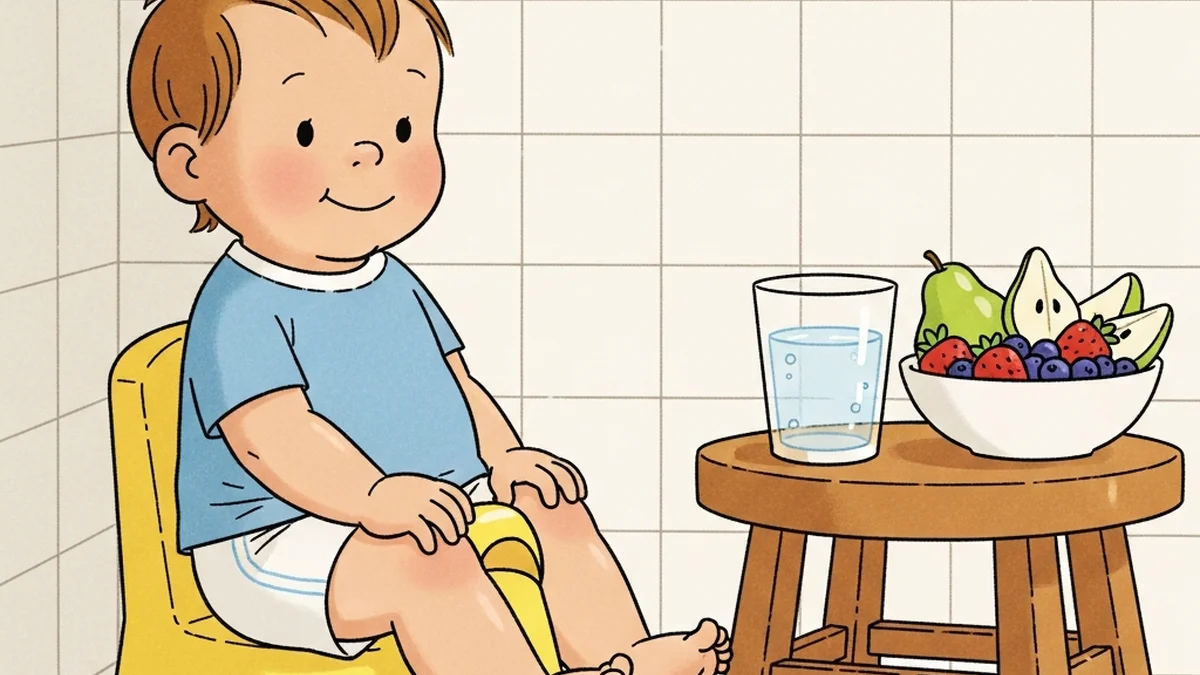
Your toddler was doing great on the potty. Then the poops got hard, one of them hurt, and now they cross their legs and beg for a diaper every time they feel one coming.
Sound familiar? Constipation is one of the quietest ways potty training goes sideways. And a lot of the time, the fix starts on the plate, not on the potty.
The foods and drinks you can use to prevent potty training constipation are simple, cheap, and probably already in your kitchen. Here's how to feed a body that poops without a fight.
How Constipation Sneaks Into Potty Training
Potty training asks a toddler to do something brand new: hold it, then let it go on purpose. Some kids get so focused on holding that they hold the poop too, sometimes for days.
Then one hard, painful poop teaches them a lesson they take seriously. Poop hurts, so they clench. Clenching makes the next poop bigger and drier, which hurts more. That's the withholding cycle, and it's the root of most potty training constipation.
Diet won't fix a full-blown holding pattern on its own. If your child is already stuck in that loop, our guide on breaking the constipation cycle walks through the cleanout and reset. But keeping poops soft in the first place is what stops the cycle from ever starting. This is where food does the heavy lifting.
The Fiber Number to Aim For
Fiber is the part of food that doesn't get digested. It holds water in the stool and keeps things soft and moving. Most toddlers don't get enough.
A rough daily target is about 19 grams of fiber for toddlers, climbing toward 25 grams by age 4. You don't need to count every gram. The old "age plus 5" rule (your child's age in years plus 5) gives you a quick floor to clear, so a 3-year-old should get at least 8 grams before you even think about doing better.
One tip that trips people up: add fiber slowly. Dumping a pile of beans and bran on a kid who's used to crackers and cheese can cause gas and bloating. Bump it up over a week or two, and always pair it with more water.
The Best Foods to Keep Poops Soft
You don't need special products. You need a handful of everyday foods that show up on the plate most days.
The Four "P" Fruits
Prunes, pears, plums, and peaches are the all-stars. They're loaded with fiber plus sorbitol, a natural sugar that pulls water into the gut and softens stool.
A medium pear with the skin on has about 5.5 grams of fiber, which is a big chunk of the day in one snack. Prunes are the strongest of the bunch, so start with one or two and see how your child responds.
Berries, Veggies, Beans, and Whole Grains
These fill in the rest of the day. Good picks toddlers usually accept:
- Berries: raspberries and blueberries are high in fiber and easy to grab.
- Beans and lentils: stir them into pasta, soup, or quesadillas.
- Veggies: broccoli, peas, and sweet potato with the skin.
- Whole grains: oatmeal, whole wheat bread, and bran cereal instead of white versions.
- Apples with the skin on: a small apple has about 3.6 grams of fiber.
Sneaky Add-Ons
When your kid won't touch a vegetable, hide the fiber. Sprinkle a teaspoon of ground chia or flaxseed onto yogurt, oatmeal, or a smoothie. They add fiber without changing the taste much, and the seeds soak up water to soften things further.
Water Does Half the Work
Here's the part parents skip. Fiber without enough water can actually make constipation worse, not better. Soft stool needs water to stay soft.
Toddlers ages 1 to 3 need roughly 32 to 40 ounces of fluid a day, and more in summer heat or after active play. Most of that should be plain water. Keep a cup within reach during play so sipping becomes automatic instead of a battle.
If your child is truly backed up, a small dose of 100% prune, pear, or apple juice can help. A common starter is 1 ounce of juice mixed with 1 ounce of water, once or twice a day. Kids over age 1 can have up to about 4 ounces of juice a day. Check with your pediatrician before making it a daily habit.
The Milk Trap Nobody Warns You About
Milk is the surprise culprit in a lot of toddler constipation. It fills them up, has zero fiber, and crowds out the fruits and veggies that keep poop soft.
The American Academy of Pediatrics suggests capping milk at 16 to 24 ounces a day for toddlers. Go much past 24 ounces and you often see harder stools, a smaller appetite for real food, and low iron on top of it.
If your kid is a milk fiend and also constipated, this is the first lever to pull. Trim milk back toward 16 ounces, offer water in its place, and watch what happens over the next few days. For many families, that one change is the whole fix.
Foods That Back Things Up
A few foods are famous for firming up stool. You don't have to ban them, but during a hard stretch, ease off:
- Too much dairy: big servings of cheese, yogurt, and milk in one day.
- Underripe bananas: greenish ones bind more than spotty ripe ones.
- White bread, white rice, and plain pasta: low fiber, easy to overdo.
- Processed snacks: crackers, chips, and most kid "puffs" have almost no fiber.
The goal isn't a perfect diet. It's balance. If half the plate is cheese and crackers, there's no room left for the stuff that keeps things moving.
A Sample Day That Keeps Things Moving
You don't need a meal plan taped to the fridge. Here's what an easy, poop-friendly day can look like:
- Breakfast: oatmeal topped with blueberries and a sprinkle of chia, plus water.
- Snack: a few slices of pear with the skin on.
- Lunch: whole wheat quesadilla with mashed beans and a side of raspberries.
- Snack: one or two prunes, or apple slices.
- Dinner: sweet potato, peas, and chicken, with water on the table.
- Milk: kept to two small cups across the whole day.
Hit most of that most days and you've quietly stacked the deck toward soft, easy poops.
Give It a Little Time
Food changes aren't instant. It usually takes a few days to a week of steady fiber and water before poops loosen up, so don't panic if day one looks the same.
And if your toddler already had one scary poop, remember that fear takes longer to fade than the constipation itself. Soft stools rebuild trust, one painless trip at a time. If they'll pee but clamp down on poop, our post on why some kids pee but won't poop covers the emotional side that food alone can't reach.
When to Call the Pediatrician
Diet handles most mild constipation. Call your doctor if you see any of these:
- Hard, painful poops or blood on the stool or toilet paper.
- No poop for four or more days despite diet changes.
- A hard, swollen, or painful belly.
- Streaks of poop in the underwear, which can signal a backup leaking around it.
- Constipation that keeps coming back no matter what you feed them.
These can point to a stubborn backup that needs more than pears. This is educational coaching, not medical advice, so loop in your pediatrician when something feels off. For more on the pattern behind chronic holding, see our guide to why poop withholding happens.
Key Takeaways
- Aim for around 19 grams of fiber a day, and add it slowly so it doesn't cause gas.
- Lean on the four "P" fruits: prunes, pears, plums, and peaches.
- Pair every bit of fiber with water. Toddlers need about 32 to 40 ounces of fluid a day.
- Cap milk at 16 to 24 ounces a day. Too much is a common hidden cause of hard poops.
- Ease off cheese, white bread, and processed snacks during a constipated stretch.
Frequently Asked Questions
How fast do foods work for toddler constipation?
Give it a few days to a week of steady fiber and water before you expect softer poops. Prune or pear juice can work faster, sometimes within a day, but food-based changes build up gradually. If nothing shifts after a week, call your pediatrician.
Can too much milk really cause constipation?
Yes. Milk has no fiber and fills toddlers up, which crowds out fruits and veggies. More than about 24 ounces a day is a common hidden cause of hard poops, so cap it at 16 to 24 ounces and offer water instead.
What's the single best food for a constipated toddler?
Prunes. They pack fiber plus sorbitol, a natural sugar that pulls water into the gut to soften stool. Start with one or two and pair them with a cup of water, since fiber without fluid can backfire.
Should I give my toddler a fiber supplement?
Most kids do fine on food alone. Whole fruits, veggies, and grains cover it for the majority of toddlers. Ask your pediatrician before starting a supplement, especially if constipation keeps coming back.
My child eats plenty of fruit but is still constipated. Why?
Usually it's not enough water, too much milk, or a fear-driven holding pattern that food can't fix on its own. Check fluids first, trim the milk, and if they're clenching from a past painful poop, the issue is emotional as much as dietary.