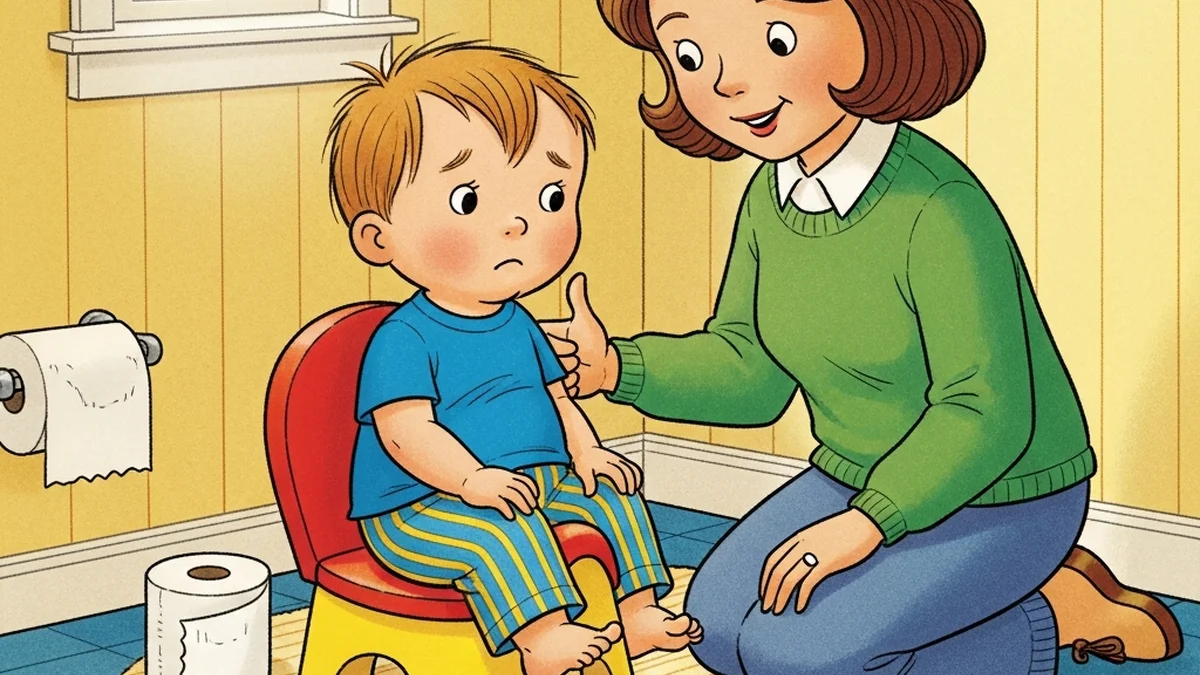
Your toddler just peed on the potty for the third time today. You're feeling great. Then you notice the red face, the squirming, the retreat to the corner behind the couch. They need to poop. But there's no way they're doing it on that potty.
Sound familiar? You're not alone, and this isn't a sign that potty training has failed. Peeing and pooping on the potty are two very different skills for a toddler, and it's completely normal for one to click before the other.
Why Peeing and Pooping on the Potty Are Different
From a toddler's perspective, peeing on the potty isn't that big a deal. It happens fast, it doesn't feel scary, and the sitting position is similar to what they already do. Pooping is a different story.
Pooping requires your child to relax muscles they've been clenching. It takes longer. It feels different. And for a kid who's spent their whole life pooping in a diaper while standing or squatting, sitting on a potty and letting go feels genuinely strange.
There's also a psychological piece. Many toddlers between ages 2 and 3 think of their poop as part of their body. Watching it drop into a potty or toilet can feel unsettling, like something is falling off of them. That's not silly. That's normal toddler brain development.
The Most Common Reasons Your Toddler Won't Poop on the Potty
1. A past painful poop
This is the number one reason. If your child had even one hard, painful bowel movement on the potty, their brain filed that under "potty = pain." Now every time they feel the urge, they tense up and hold it. That holding makes the next poop harder, which makes it hurt more. It's a cycle, and it's the same pattern behind poop withholding.
2. They need privacy
Lots of toddlers develop a need for privacy around pooping earlier than parents expect. If your child hides behind furniture or goes to another room to poop in their diaper, that's a clue. They're not being sneaky. They need space to relax enough to go.
3. The position feels wrong
Sitting on a potty or toilet with feet dangling makes it physically harder to poop. Your child can't engage the right muscles. A step stool that lets their feet rest flat and their knees sit slightly above their hips makes an enormous difference. It's the same squatting position that makes pooping easier for adults, too.
4. Fear of the toilet itself
The flush is loud. The seat is big. Some toddlers are genuinely afraid of falling in. If your child has shown signs of potty fear, pooping feels even riskier than peeing because they have to sit longer.
5. They're not ready to give up the diaper for poop
Some kids will happily pee on the potty all day and then ask for a diaper to poop. That's actually a good sign. It means they know when they need to go, they have control over the process, and they trust you enough to ask. They just haven't made the leap to doing it on the potty yet.
How to Help Your Toddler Poop on the Potty
Start where they are
If your child asks for a diaper to poop, say yes. Then gradually change the where. First, have them poop in the diaper in the bathroom. After a few days, have them sit on the potty while wearing the diaper. Then try loosening the diaper. Then remove it. This gradual approach works for most kids within 2 to 3 weeks.
Fix the physical setup
Make sure their feet are flat on a step stool, their knees are above their hips, and the seat feels secure. If they're on a full-size toilet, use a seat insert with a sturdy step stool. If they're on a potty chair, make sure it doesn't wobble. Stability equals safety in a toddler's mind.
Use the gastrocolic reflex
Your child's body naturally wants to poop after eating. This is called the gastrocolic reflex, and it's strongest after breakfast and dinner. Have your child sit on the potty for 5 to 10 minutes after meals. Don't force it. Let them look at a book or play with a small toy. The goal is relaxed sitting, not straining.
Give them privacy
Try stepping out of the bathroom. Tell them you'll be right outside the door. Some kids poop within minutes once the audience leaves. If they're too young to be alone, sit quietly in the corner and look at your phone. No eye contact, no coaching, no "are you going yet?"
Make poop soft and easy to pass
If you suspect constipation, address it before pushing potty training for poop. Add fiber-rich foods like pears, berries, and oatmeal. Aim for 4 to 5 cups of water a day. Talk to your pediatrician about a stool softener if diet changes don't help within a week. Soft, painless poops break the fear cycle faster than any reward chart.
Celebrate without overdoing it
When that first poop on the potty happens, celebrate. But match their energy. Some kids want a big reaction. Others get embarrassed by too much attention. A genuine "You did it! That's awesome!" and maybe a small reward is usually enough.
What Not to Do
- Don't force them to sit until they poop. Long, pressured sits create negative associations. Keep it to 5 to 10 minutes max.
- Don't punish accidents or holding. Shame makes withholding worse. Always worse.
- Don't refuse the diaper if they ask for one to poop. Saying no turns poop into a power struggle, and you won't win that one.
- Don't compare them to other kids. Your neighbor's kid who trained in a weekend is irrelevant to your child's process.
When to Talk to Your Pediatrician
Most kids figure out pooping on the potty within a few weeks to a couple of months after mastering pee. But call your doctor if:
- Your child hasn't pooped in 5 or more days
- They're in pain when they do poop
- You see blood in their stool
- They're having stool leakage in their underwear (this can signal encopresis)
- The refusal has lasted more than 2 to 3 months with no progress
Don't feel weird about calling. Pediatricians handle poop questions every single day. They'd rather hear from you now than after months of a worsening cycle.
Key Takeaways
- Peeing and pooping on the potty are separate skills, and it's normal for pee to come first.
- The most common cause of poop refusal is a past painful bowel movement that created a fear cycle.
- Use a gradual approach: diaper in bathroom, then sitting on potty with diaper, then without.
- Fix the physical setup (feet flat, stable seat) and use post-meal sitting to work with your child's body.
- If constipation is involved, soften the stool before pushing potty training for poop.
Frequently Asked Questions
Is it normal for a toddler to pee on the potty but refuse to poop?
Yes. Pediatricians call this "stool toileting refusal," and it affects up to 25% of potty-training toddlers. Peeing and pooping use different muscles and involve different levels of comfort. Most kids who pee successfully on the potty will figure out poop within a few weeks to a couple of months.
Should I let my toddler wear a diaper just for pooping?
Yes, temporarily. Letting them poop in a diaper while you gradually move the process to the bathroom is a proven strategy. Refusing the diaper often leads to withholding, which causes constipation and makes the problem worse.
How long does it usually take for a toddler to start pooping on the potty?
Most toddlers start pooping on the potty within 2 to 8 weeks after mastering peeing, depending on the cause of the refusal. If pain or constipation is involved, fixing the stool consistency first can speed up the process. The gradual diaper-to-potty transition typically works within 2 to 3 weeks.
Does a reward chart help with poop refusal?
It can, but only if the poop isn't painful. No sticker chart in the world will motivate a toddler to do something that hurts. Fix the physical side first (soft, easy-to-pass stool, proper positioning), then add rewards for sitting and trying. Reward the effort, not just the result.
When should I worry about my toddler not pooping on the potty?
Talk to your pediatrician if your child hasn't pooped in more than 5 days, has blood in their stool, is losing weight, or has been refusing to poop on the potty for more than 2 to 3 months with no improvement. Stool leakage in underwear is also a sign that the issue needs medical attention.