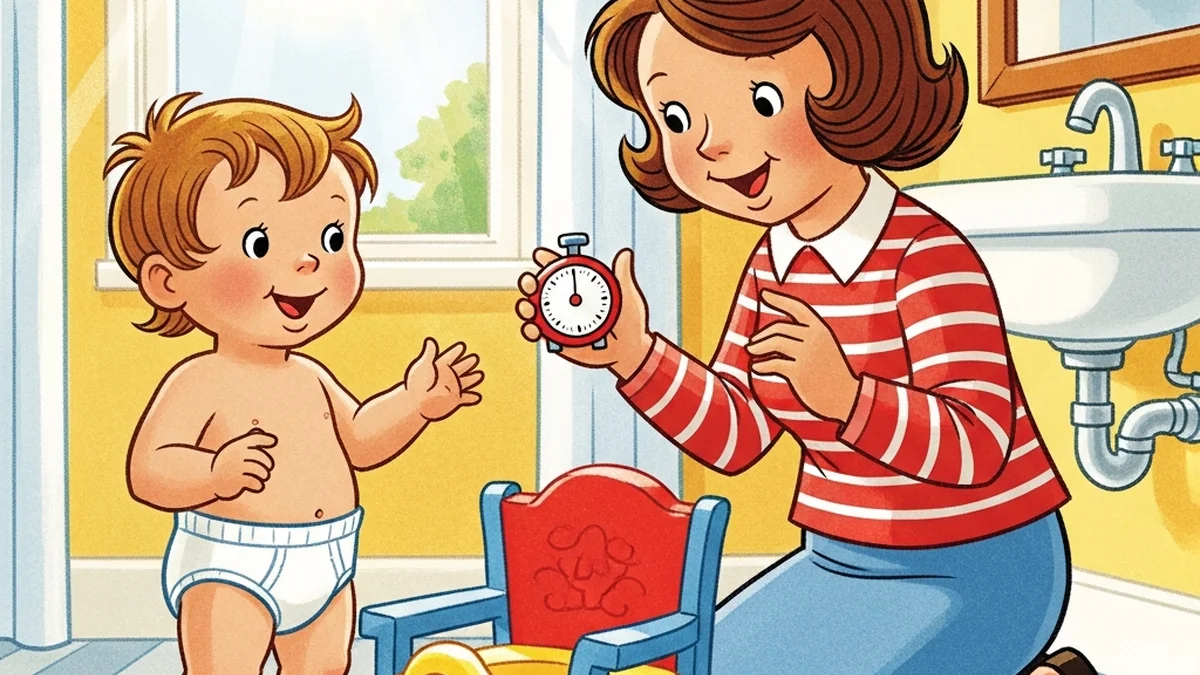
It's 6:45 AM. You've cleared your calendar, stocked up on underwear, and the potty chair is sitting in the bathroom like a tiny throne. Today's the day. But now that it's actually here, you're staring at your toddler thinking... what do I actually do for the next 12 hours?
The first day of potty training doesn't need a script. But having a loose plan helps you stay calm when the accidents pile up (and they will). Here's what a realistic first day looks like, broken down hour by hour.
Before You Start: Set Yourself Up
Before your toddler wakes up, get a few things ready. You'll want the potty chair in the bathroom (or wherever you're training), 8 to 10 pairs of underwear, a kitchen timer or phone timer, cleaning supplies within reach, and a change of clothes for yourself. Yes, for you.
Make sure your child is actually showing signs of potty training readiness before you pick this day. Starting before they're ready turns day one into a frustrating mess for everyone.
Wake-Up to Mid-Morning (7:00 to 10:00 AM)
7:00 AM: Ditch the Diaper
The moment your toddler wakes up, take off the diaper and sit them on the potty. Most kids wake up needing to go, so this is your best shot at an early win. Keep it casual. "Let's try sitting on the potty!" works better than a big speech.
If they go, celebrate. A big smile, a high five, genuine excitement. If they don't go after 3 to 5 minutes, that's fine. Move on with your morning.
7:30 to 10:00 AM: Timer Every 15 Minutes
For the first few hours, set a timer for every 15 minutes. When it goes off, walk your toddler to the potty and let them sit for 2 to 3 minutes. Don't ask "Do you need to go?" because they'll say no every single time. Just say "Timer went off, let's go sit."
Go bare-bottom during this stretch. Underwear and pants add a layer that can feel like a diaper, and your toddler won't feel the urgency the same way. Bare bottom helps them connect the "I need to go" feeling with actually getting to the potty.
Expect one to three accidents during this window. Stay neutral. "Oops, pee goes in the potty. Let's clean up together." No big reactions, no frustration. They're learning.
Late Morning (10:00 AM to 12:00 PM)
By now, you've been at this for three hours. Stretch the timer to every 20 to 25 minutes. Your toddler is starting to understand the pattern, even if they haven't had a successful potty trip yet.
Offer a snack and a drink around 10:00 AM. More fluids means more chances to practice. About 15 to 20 minutes after they drink, take them to the potty again. This is when the body's natural signals are strongest.
If your toddler's getting frustrated or resistant, take a break from the timer. Let them play for 30 minutes and keep the potty chair nearby. Forcing it creates resistance that's harder to undo than a few extra accidents.
Lunchtime and Early Afternoon (12:00 to 2:00 PM)
12:00 PM: The Post-Meal Window
Lunch is a golden opportunity. The body's gastrocolic reflex (the urge to poop after eating) kicks in about 15 to 30 minutes after a meal. Feed your toddler lunch, then sit them on the potty around 12:30. This is your best shot at catching a poop.
Don't force them to sit longer than 5 minutes. If nothing happens, try again in 15 minutes.
1:00 to 2:00 PM: Nap Time
Put a diaper or pull-up on for nap. Daytime bladder control and nap/nighttime bladder control are two different things. Your toddler's body isn't ready for both on day one. That's completely normal.
Right before the nap, try a potty sit. Right after they wake up, go straight to the potty again. These transition moments are easy wins.
Afternoon Stretch (2:00 to 5:00 PM)
Your toddler's awake and you're back at it. By now, you can stretch the timer to every 25 to 30 minutes. You might notice them doing a little dance, grabbing themselves, or suddenly going quiet. Those are their cues. When you spot one, head to the potty right away.
Add underwear during this stretch if your toddler had a few successes this morning. If they're still having frequent accidents, stay bare-bottom for the rest of the day. There's no rush.
Offer another snack and drink around 3:00 PM. Same routine: fluids in, potty trip 15 to 20 minutes later.
Evening and Bedtime (5:00 to 7:30 PM)
Dinner at 5:30 or 6:00, then another post-meal potty sit around 6:15. Bath time can be a trigger for accidents, so try a potty sit right before the bath too.
Put a diaper on for bedtime. Nighttime dryness typically comes months (or even years) after daytime training. If you're curious about that timeline, here's why kids stay dry all day but wet at night.
End the day on a positive note. Tell your toddler you're proud of them for trying, no matter how many accidents happened. Tomorrow you'll do it again.
What a Realistic Day One Actually Looks Like
Here's what most parents can expect on the first day of potty training:
- 5 to 8 accidents (totally normal, even on a "good" day)
- 1 to 3 successful potty trips (some kids get zero on day one, and that's okay too)
- At least one poop situation that catches you off guard
- A tired, slightly frustrated parent who deserves a treat after bedtime
Day one isn't about perfection. It's about introducing the concept, building the habit, and staying calm while your toddler figures out brand-new body signals.
Three Mistakes That Wreck Day One
- Asking "Do you need to go?" on repeat. Toddlers say no reflexively. Just take them. "It's potty time" works much better than a question.
- Using screen time on the potty. It keeps them sitting longer, but they stop paying attention to their body. The goal is awareness, not distraction.
- Reacting to accidents with frustration. Even a sigh or an eye roll tells your toddler this is stressful. Stay boring about accidents. Save the energy for celebrations.
Key Takeaways
- Set a timer for every 15 minutes in the morning, then stretch to 20 to 30 minutes as the day goes on.
- Go bare-bottom for the first day to help your toddler feel the urge more clearly.
- Use the post-meal window (15 to 30 minutes after eating) for your best chance at catching a poop.
- Keep diapers for naps and bedtime on day one. Daytime and nighttime training are separate skills.
- Expect 5 to 8 accidents. That's not failure. That's learning.
Frequently Asked Questions
How long should my toddler sit on the potty each time?
Keep potty sits to 3 to 5 minutes max. If nothing happens, let them get up and try again later. Forcing a long sit makes the potty feel like a punishment, not a skill they're building.
What if my toddler has zero successful potty trips on day one?
That's more common than you'd think. Some kids need two to three days before they connect the feeling with the action. If they're sitting on the potty willingly and not fighting it, you're making progress even without a "win."
Should I use rewards like stickers or candy on day one?
Small rewards can work well in the first few days. A sticker chart or a single M&M after a successful potty trip gives a quick dopamine hit that reinforces the behavior. Just keep it simple and plan to phase it out within a week or two.
When should I worry that day one went badly?
One tough day isn't a sign of anything. But if your child is screaming at the sight of the potty, holding their pee for hours, or showing real distress, it might be worth pausing for a few weeks. Talk to your pediatrician if you're unsure.
Can I leave the house on the first day of potty training?
It's best to stay home for the full first day. Your toddler needs easy, fast access to the potty while they're learning the signals. Plan your first short outing for day three or four, once they've had a few successful trips at home.