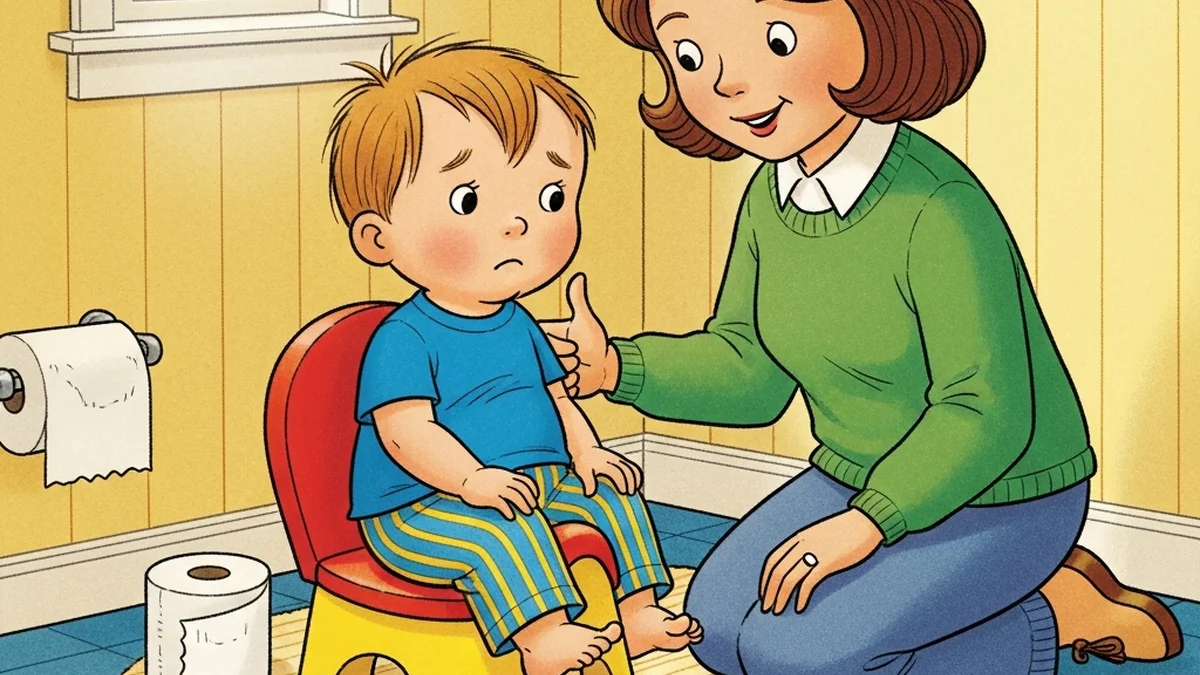
You pick up your three-year-old from daycare. They've been there nine hours. The teacher says they had a great day. You buckle them into the car seat, drive home, walk in the front door, and before you've even kicked off your shoes, they're hollering "I have to poop!" from the hallway. Every day. Like clockwork.
You're not imagining it. Plenty of potty-trained toddlers will pee anywhere but save every single bowel movement for the home toilet. It's one of the most common potty training puzzles parents bring up, and it usually has a very fixable explanation.
Here's why it happens, what to actually do about it, and when it crosses from quirky to something worth a pediatrician call.
Why Some Toddlers Save Their Poops for Home
This pattern usually shows up between ages 2.5 and 4, often a few months after a child seems "done" with training. The body is on board. The brain just doesn't trust any toilet that isn't the home one. Three things are usually going on, sometimes all at once.
It's About Control
Pooping is one of the few things a toddler fully controls. They decide when, where, and whether at all. When they walk into a new bathroom, the unfamiliar setting can feel like one more thing being decided for them. Holding it is how a small person says "I'm in charge of this one."
The Bathroom Feels Wrong
Daycare and preschool bathrooms are loud. Hand dryers blast, automatic flushers fire without warning, and many have no doors on stalls. Grandma's toilet might be a different height, with no step stool and no familiar potty seat insert. A toddler's body reads "this is not where I poop" before the brain even has time to think it.
Pain Locked the Door
If your child had even one hard, painful poop, the brain filed that experience away as "pooping equals pain." After that, the muscles tighten on instinct anywhere that feels off. The home toilet feels safe enough that the body lets go. Everywhere else, the sphincter slams shut.
How to Tell If This Is a Phase or a Problem
Most kids who hold poops at school still go regularly at home, usually within an hour or two of pickup. That's an inconvenient quirk, not a medical issue. The pattern becomes a real problem when the holding stretches across multiple days and the stools get hard.
Watch for these red flags:
- More than two days between bowel movements on a regular basis
- Hard, pebble-shaped stools or unusually large painful poops
- Belly pain, bloating, or loss of appetite
- Small streaks of soft stool or wetness in underwear between bowel movements (this is encopresis, a sign of impaction)
- Tears, crying, or refusing to go even at home
If you're seeing any of that, the issue isn't behavior anymore. It's constipation, and it needs your pediatrician.
7 Strategies That Actually Help
If your child is otherwise pooping fine at home, these are the moves that work, in order of how often parents say they cracked it.
1. Time the Morning Sit
Most toddlers feel a poop urge 20 to 30 minutes after a meal. Build in a calm 10-minute sit after breakfast, before you leave the house. No pressure, no demands. A book, a song, a fidget toy. If they go, the day is set. If they don't, no big deal. Doing this every morning resets the rhythm to "home is where it happens" without holding it as the goal.
2. Bring Home With You
Pack a "potty bag" for daycare or grandma's house. Inside: a foldable travel potty seat that fits the bigger toilet, the same step stool feel as home (a portable one or a duplicate kept at grandma's), and a favorite bathroom book. The familiar gear shrinks the gap between "home toilet" and "this toilet." Small changes, big difference.
3. Loop In the Teacher
Talk to your daycare or preschool teacher and ask for three specific things: bathroom access whenever your child asks, a quieter single-stall bathroom if one exists, and a heads-up before any automatic flushers fire. Most teachers are happy to help once they know what's going on. Write the plan down so it gets handed off across staff.
4. Drop the Pickup Question
Stop asking "did you poop today?" the second you see them. It loads the moment with pressure. Your toddler can tell that you care about the answer, and that pressure feeds the hold. Just say hi, ask about their day, and move on. The poop topic can come up later, casually, if at all.
5. Keep Stools Soft on Purpose
Up the fiber and water. Fruit, veggies, whole grains, and at least 4 to 5 cups of water a day for a three-year-old. If diet alone isn't doing it, ask your pediatrician about a short course of MiraLAX (pediatric PEG 3350) to keep stools soft while you work through the behavior side. Soft stool slips out. Hard stool teaches kids to hold harder.
6. Practice in Low-Stakes Places First
Go visit grandma's house on a weekend. Have your child use the bathroom (just for pee at first). Take a "potty tour" of the daycare bathroom during drop-off on a quiet morning. Familiarity is the antidote to "this place is wrong." A bathroom a child has used calmly five times in low-pressure visits feels different than one they've only seen in a stressful moment.
7. Praise the Going, Not the Place
When they do poop, anywhere, keep your reaction casual and warm. Don't make a parade out of the daycare poop and a shrug out of the home poop, or vice versa. Pooping is pooping. Big celebrations can backfire by making the next sit feel like a performance.
The Counterintuitive Move That Often Fixes It
Here's the one nobody wants to hear: if your child is starting to get constipated from holding, a temporary pull-up for poops can be the fastest fix. Not all-day pull-ups. Just for poops, just for a few weeks.
The reason is simple. The longer a child holds, the more painful the eventual poop, and the deeper the fear locks in. Letting them poop comfortably (even in a pull-up) breaks the pain cycle. Once they've had several easy, painless bowel movements in a row, the body relaxes and you can quietly transition back to the toilet. Pediatricians and trainers like Jamie Glowacki of Oh Crap! both back this approach when withholding is at risk of becoming impaction.
It feels like going backward. It isn't. It's protecting your child from a much bigger problem.
The Reassurance Part
If your child is healthy, growing, and pooping daily-ish at home, they're fine. This is a phase, and most kids grow out of it on their own by age 4 to 5. Your daycare teacher has seen this a hundred times. Grandma will not be offended. The pediatrician would tell you the same thing.
Stay calm. Build the morning routine. Pack the potty bag. Let the rest unfold. Most parents who come at this with curiosity instead of frustration are watching their kid poop at school within a month or two.
If you want help building a daily routine that gets the morning sit dialed in (or want a step-by-step plan for the transition off pull-ups), check out the how Potty Pal works section on our homepage. It's the same kind of personalized coaching you'd build with a friend who happens to know all the research.
Key Takeaways
- Holding poops until home is common between ages 2.5 and 4 and usually resolves with patience plus a few small tweaks.
- Build a 10-minute post-breakfast sit at home to shift the natural rhythm before the day starts.
- Pack home comforts (travel potty seat, familiar book, quieter bathroom plan) to shrink the gap between home and other bathrooms.
- Drop the pickup interrogation. Asking "did you poop?" loads the pressure that feeds the hold.
- If stools are getting hard or painful, talk to your pediatrician about MiraLAX and consider a short-term pull-up for poops to break the pain cycle.
Frequently Asked Questions
How long can a toddler safely go without pooping?
One to two days without a bowel movement is usually fine if the child seems comfortable. Three or more days, or any sign of belly pain, hard stool, or appetite loss, is the point to call the pediatrician. Chronic holding can stretch the rectum and dull the urge signal, which is why early intervention matters.
Should I put my child back in a pull-up for poops?
Short term, yes, if holding has caused painful, hard stools. The goal is to break the pain-fear cycle so your child can poop comfortably again. Once they've had several easy bowel movements in a row, you can transition back to the toilet without forcing the issue. Pediatricians and many potty training experts recommend this as a temporary tool, not a regression.
Is it normal for my toddler to only poop at home?
Yes, it's extremely common between ages 2.5 and 4. The home toilet feels safe, familiar, and private in a way no daycare or preschool bathroom can match yet. Most kids outgrow this on their own by age 4 to 5 as they get more comfortable with unfamiliar bathrooms.
What should I do if my child poops the second we walk in the door after daycare?
Honestly, just take the win. It means your child's body knows where it feels safe to release. Build in a calm morning sit at home before daycare so they have an earlier chance to go, and keep working on familiarity with the daycare bathroom. The after-school poop is not the problem. It's the system working in a quirky way.
How do I help my child poop at grandma's house or on vacation?
Bring familiar gear (travel potty seat, step stool, favorite book) and visit for low-stakes practice runs before the actual stay if you can. Stick to the morning sit routine wherever you are. Keep meals, fiber, and water consistent. Most of the work is making the new bathroom feel a little more like home, not pushing your child to go.