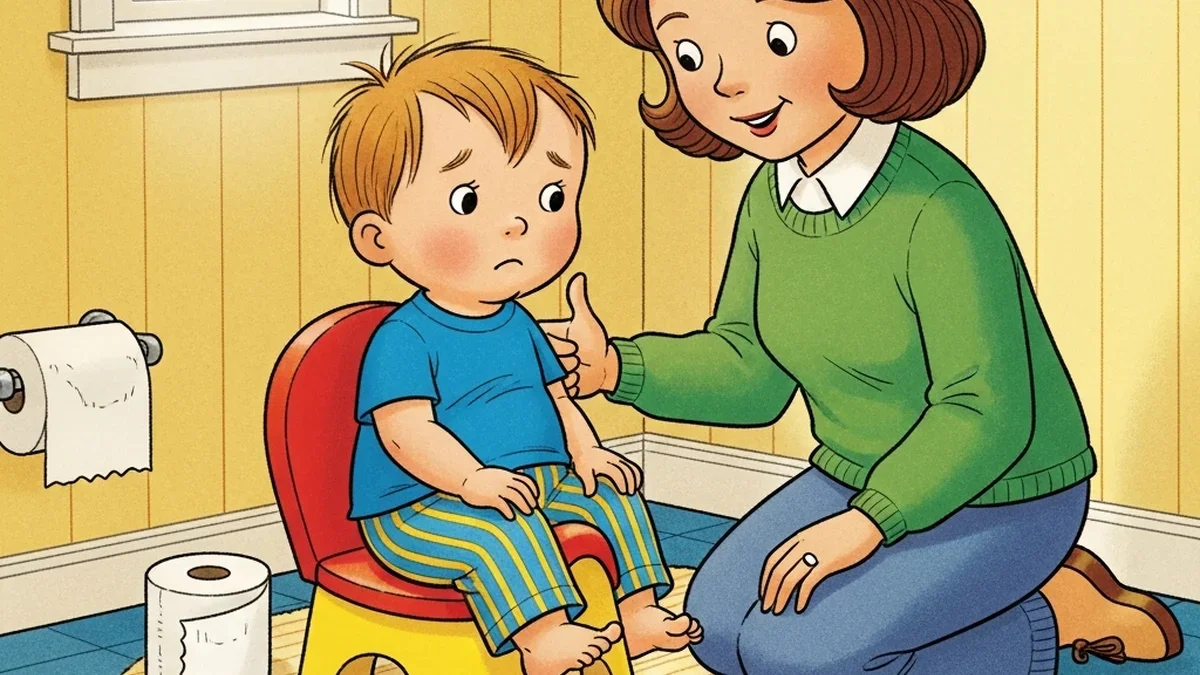
You're three days into potty training and you've turned into a human alarm clock. "Do you need to go potty?" every fifteen minutes. Your toddler says no, then pees on the rug four minutes later. By dinner you're exhausted from asking, and they're tired of hearing it.
Then you see an ad for a potty training watch. A little wristband that lights up, plays a song, and tells your kid it's potty time so you don't have to. It sounds like the thing that finally gets you off reminder duty.
So do potty watches actually work? Sometimes, yes. But not the way the packaging suggests, and not for every kid. Here's the honest version.
What a Potty Training Watch Actually Is
A potty training watch is a kid-sized wristband with a built-in countdown timer. You set it to go off at a chosen interval, and when the time's up it flashes colored lights and plays a short tune. Some buzz with a gentle vibration instead. Most reset themselves and start the next countdown automatically.
Most models let you pick from intervals like 30, 60, or 90 minutes. Some go as short as a few minutes or as long as a couple of hours. The fancier ones also tell the actual time, so the watch keeps earning its keep long after training ends.
That's really all it is. It's not magic. It's a friendly, wearable reminder that takes the nagging voice out of your mouth and puts a song on your kid's wrist instead.
Do Potty Watches Actually Work?
Here's the honest answer: it depends on the kid.
For some toddlers, the watch is a hit. The lights and music feel like a game, and "the watch said it's potty time" lands better than mom asking for the tenth time. The reminder comes from a fun gadget, not a tired parent, so there's nothing to push back against. That small shift can melt a surprising amount of resistance.
For other kids, the watch is background noise by day two. They learn to ignore the song the same way they ignore your voice. And a few toddlers get genuinely upset by the sudden lights and sound, especially if they're sensitive to noise.
A watch also can't teach the one thing that matters most. It can't make your child feel a full bladder. It prompts the trip, but recognizing the body's signal is still something they learn on their own time. The watch is a scaffold, not the lesson.
Who Potty Watches Help Most
Potty watches tend to shine for specific situations rather than every child across the board.
- The "I forgot" kid. Some toddlers can absolutely make it to the potty, but they get so deep into play that they forget to stop. A timer interrupts the fun before the accident does.
- Kids who tune you out. If your reminders have turned into a power struggle, handing the job to a neutral gadget removes you from the fight. If that sounds like your house, our guide on when your toddler only goes potty when reminded digs into the dependency side of this.
- Neurodivergent and sensory kids. For children who struggle to notice or interpret body signals, a predictable external cue can be a real bridge. Our sensory-friendly potty training guide covers how to do this gently, including picking a vibrate-only watch for sound-sensitive kids.
- Daycare and shared care. A watch keeps the schedule consistent when your toddler bounces between you, a partner, and a provider who can't track timing all day.
The One Real Downside: Dependency
The biggest knock on potty watches is dependency, and it's a fair one.
If a child only ever heads to the bathroom when a song plays, they're not learning to read their own body. They're learning to obey a beep. The goal of potty training isn't a kid who responds to alarms. It's a kid who feels the urge, recognizes it, and acts on it without anyone, or anything, telling them to.
The fix is simple: treat the watch as training wheels, not a permanent fixture. Use it to build the habit, then fade it out on purpose. A watch that comes off after a few weeks is a tool. A watch your six-year-old still needs is a crutch.
How to Use a Potty Watch the Smart Way
If you want to try one, here's how to get the upside without the dependency trap.
Start at 60 to 90 minutes, not every 20
Super-short intervals create false alarms, where your kid sits down and nothing happens. That teaches them the watch is wrong and trains them to ignore it. Start around 60 to 90 minutes for most toddlers, and only shorten it if they're having accidents between reminders.
Pair the buzz with a body question
When the watch goes off, don't just march them to the potty. Ask, "The watch says it's time. Do you feel anything in your tummy?" That tiny question keeps their attention on the real signal, so the watch is teaching awareness instead of replacing it.
Don't force a sit on every alarm
If they truly don't need to go, a quick try-and-done is fine. Battling them onto the potty every single time turns a helpful nudge into a fight, which is the opposite of what the gadget is for.
Plan the fade from day one
Once your child is staying dry between most reminders for about a week, stretch the interval longer, then switch to using it only at the trickiest times, like after meals or before leaving the house. Within a few weeks, many kids drift off the watch without noticing it's gone.
Do You Even Need to Buy One?
Honestly, no. A potty watch is a convenience, not a requirement. A free kitchen timer, a phone alarm, or a recurring reminder does the same job. The only thing the watch adds is the kid-friendly packaging, which is exactly what makes it click for some toddlers and pointless for others.
So before you spend the money, ask what's actually going wrong. If accidents come from forgetting, a timer of any kind helps. If they come from your child not yet feeling the urge, no watch will fix that, and pushing one might just add pressure. Matching the tool to the real problem matters more than the gadget itself. That's the kind of thing Potty Pal AI helps you sort out, and our potty training essentials page covers the gear that's actually worth it.
You're Not Failing if You Need a Reminder
Reaching for a timer doesn't mean you're doing potty training wrong. Toddlers are busy, distractible little people, and almost all of them need outside reminders before the internal ones kick in. That's developmentally normal, not a shortcut.
Whether the reminder comes from a watch, a phone, or you, the path is the same. They get nudged, they practice, and one day they head to the bathroom on their own without a sound going off first. The reminders are just a bridge to that day.
Key Takeaways
- A potty training watch is a wearable countdown timer that flashes and plays music to prompt bathroom trips. It works for some kids and gets ignored by others.
- Watches help most with kids who forget mid-play, who've started tuning you out, or who are neurodivergent and need a predictable cue.
- The real risk is dependency. Use it to build the habit, then fade it out within a few weeks so your child learns to read their own body.
- Start at a 60- to 90-minute interval to avoid false alarms, and pair each buzz with a "do you feel it?" question.
- You don't have to buy one. A free phone alarm does the same job. Match the tool to the real problem first.
Frequently Asked Questions
What age is a potty training watch good for?
Most kids who are old enough to potty train, roughly 2 to 4 years old, can use one. The watch only helps once your child is already showing readiness signs. If they're not ready to train, the watch won't speed that up.
How often should the potty watch go off?
Start around every 60 to 90 minutes for most toddlers. Shorten it only if they're having accidents between reminders. Intervals under 20 minutes usually cause false alarms and teach kids to ignore the watch.
Will my child become dependent on the watch?
They can if you use it forever. Treat it as a temporary tool. Once your child stays dry between most reminders for about a week, stretch the interval and start fading the watch out so they learn to act on their own body's signals.
Are potty watches worth the money?
Only if the kid-friendly packaging is what gets your toddler to respond. A free phone alarm or kitchen timer does the exact same job. The watch's only real advantage is that lights and music feel like a game instead of a chore.
My toddler ignores the watch. Now what?
That usually means the reminder isn't the problem. If they ignore the buzz, the issue may be that they don't yet feel the urge, or that potty time has become a power struggle. Step back from forcing sits and focus on catching natural signals instead.